
Marine and Coastal Restoration
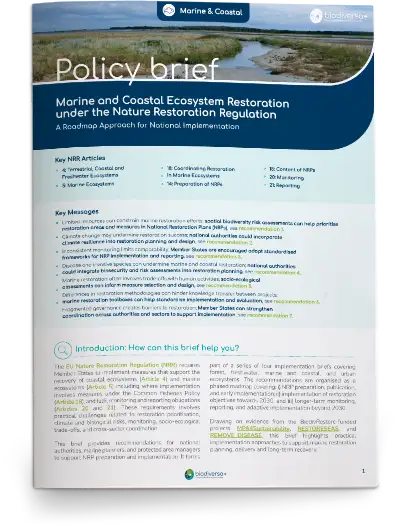
Restoring marine ecosystems is not simply about restoring more places. With limited resources and rapidly changing oceans, the priority question is not whether to restore but…
Restoring marine ecosystems is not simply about restoring more places. With limited resources and rapidly changing oceans, the priority question is not whether to restore but…
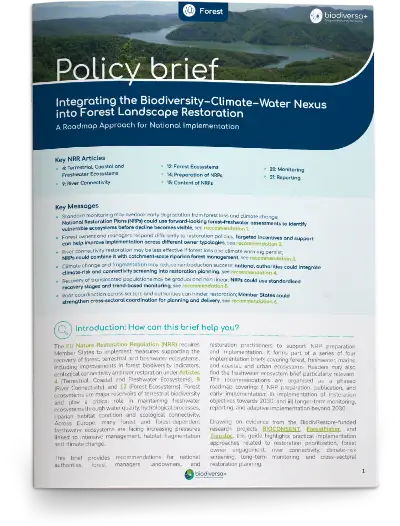
Forest ecosystems are home to much of the Earth’s biodiversity. They play a key role in maintaining healthy freshwater ecosystems by improving water quality, regulating the…
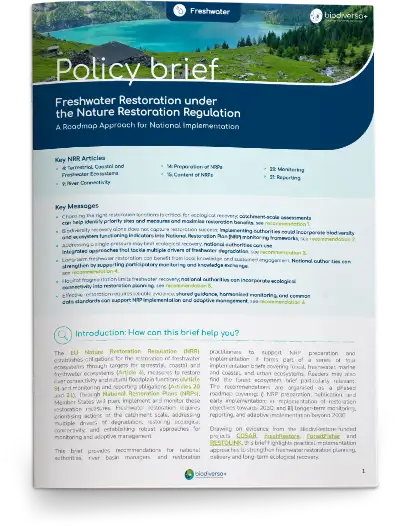
Restoring rivers and wetlands can’t just happen site by site. It requires taking care of the whole area of land that drains into a river, not just one isolated stretch, tackling several causes of degradation…
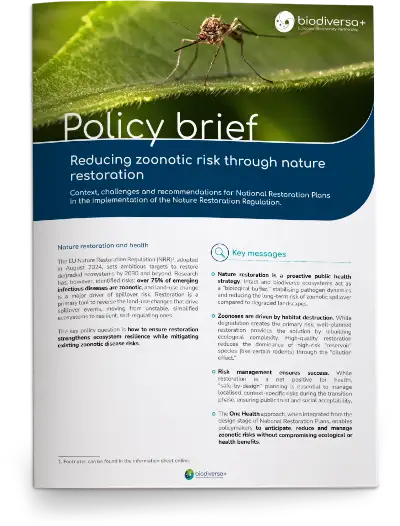
Over 75% of emerging infectious diseases are zoonotic, and land-use change is a major driver of zoonotic spillover risk. Restoration can strengthen ecosystem resilience while…
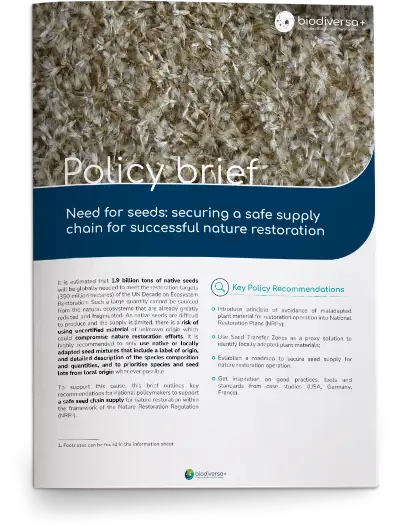
Seeds lie at the foundation of ecosystem restoration: because plants form the structural basis of ecosystems, the choice of seeds used in restoration is a critical policy decision, not a minor…
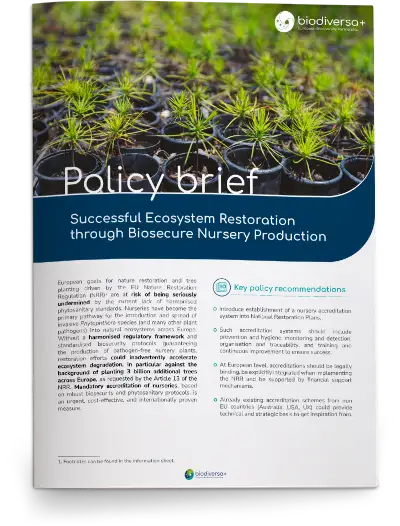
At least 3 billion additional trees will be planted across Europe in the coming years. At this scale, restoration activities need to be particularly cautious about invasive soilborne pathogens…
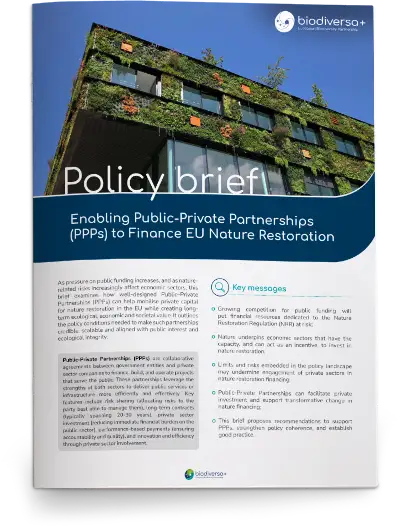
Public-Private Partnerships are collaborative agreements between government entities and private sector companies to finance, build, and operate projects that serve the public. As pressure…

Biodiversa+ has published a new White Paper contributing scientific evidence to the ongoing discussion around the European Commission’s 2026 stress test of the EU Birds and Habitats Directives.
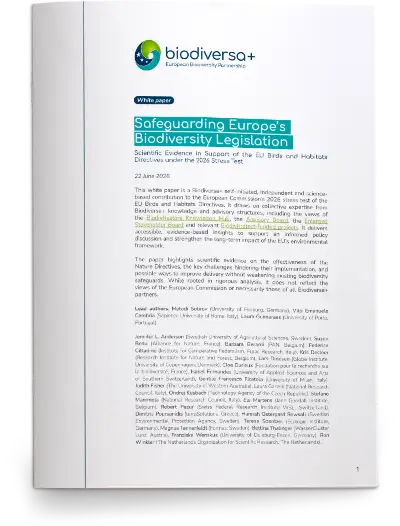
Scientific Evidence in Support of the EU Birds and Habitats Directives under the 2026 Stress Test.

This webinar will help you get familiar with the Second Global Assessment and how to navigate the IPBES reviewing process.