Other languages
These translations are provided for information purposes. In the event of any discrepancy, please refer to the original English version.
Policy Brief: “Reducing zoonotic risk through nature restoration”
Published: June 2026 | DOI: 10.5281/zenodo.20750160
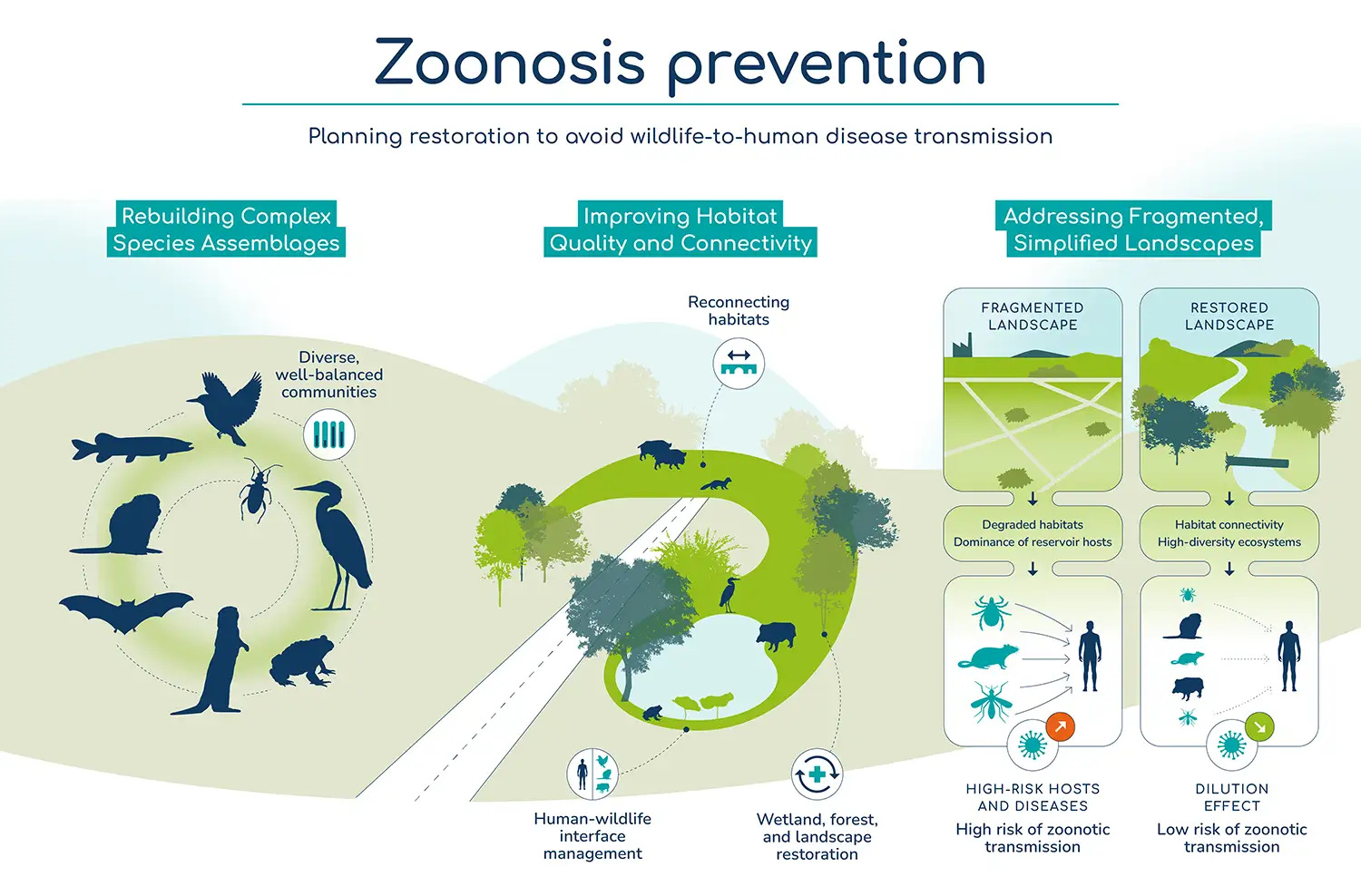
Over 75% of emerging infectious diseases are zoonotic, and land-use change is a major driver of zoonotic spillover risk. Restoration can strengthen ecosystem resilience while mitigating existing disease risks; it is a primary tool to reshape habitats, wildlife populations, and human-wildlife interactions, moving from unstable, simplified ecosystems to resilient, self-regulating ones. Nature restoration is a proactive public health strategy: intact, biodiverse ecosystems act as a “biological buffer” that stabilises pathogen dynamics, unlike degraded, fragmented landscapes where risks are consistently higher.
This brief emerged from the BiodivRestore Knowledge Hub, a network of researchers and stakeholders collaborating to empower countries in developing and implementing National Restoration Plans. It is part of a series of eight briefs about Nature Restoration. This Policy Brief provides recommendations on how to ensure restoration strengthens ecosystem resilience while mitigating existing zoonotic disease risks, to move forward toward the implementation of the Nature Restoration Regulation.
Key messages:
- Zoonoses are driven by habitat destruction. While degradation creates the primary risk, well-planned restoration provides the solution by rebuilding ecological complexity. It reduces the dominance of high-risk reservoir species (species that host, maintain and transmit pathogens to vectors, like certain rodents or deer).
- Risk management ensures success. While restoration is a net positive for health, safe‑by‑design planning (restoration that promotes trophic recovery and complex species assemblages) is essential to manage localised, context-specific risks during the transition phase.
- The One Health approach acknowledges the interdependence of human, animal and ecosystem health. When integrated from the design stage of National Restoration Plans, it enables policymakers to anticipate, reduce and manage zoonotic risks without compromising ecological or health benefits.