Policy Brief: “Successful Ecosystem Restoration through Biosecure Nursery Production”
Published: June 2026 | DOI: 10.5281/zenodo.21359641
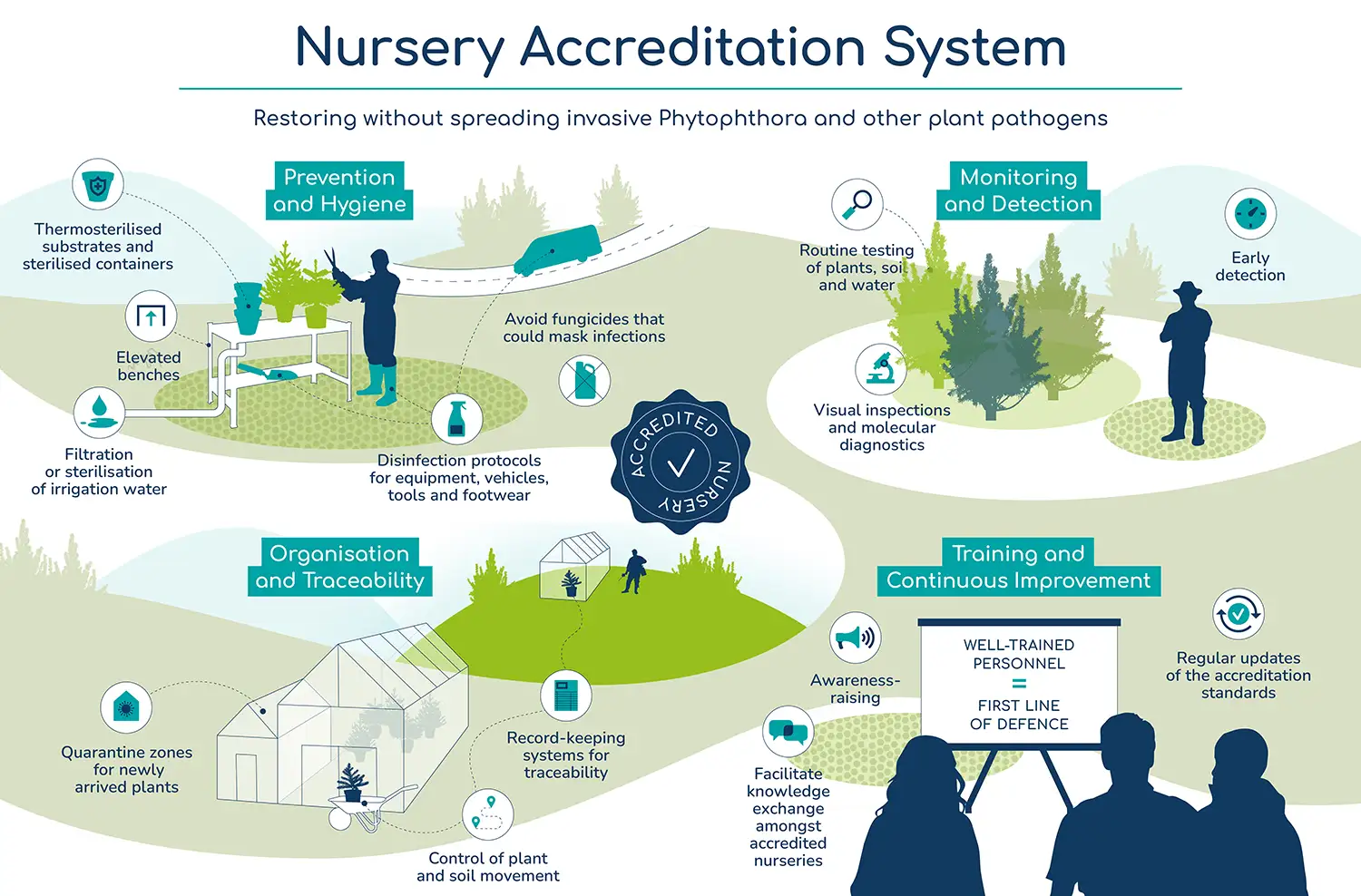
To align with the European Biodiversity Strategy for 2030, at least 3 billion additional trees will be planted across Europe in the coming years. At this scale, restoration activities need to be particularly cautious about invasive soilborne pathogens, to ensure that restoration activities do not become a pathway for the spread of diseases, potentially causing ecosystem degradation. As nurseries constitute the main entry point for pathogens such as Phytophthora, the implementation of biosecurity measures through an EU Voluntary Code of Conduct and a Nursery Accreditation System is needed to ensure pathogen-free plant production.
This brief emerged from the BiodivRestore Knowledge Hub, a network of researchers and stakeholders collaborating to empower countries in developing and implementing National Restoration Plans. It is part of a series of eight briefs about Nature Restoration. This Policy Brief provides recommendations on how to avoid risky restoration, highlighting good practices for nurseries, based on proven solutions already in place in Australia, in the United Kingdom and in the United States. It can help moving forward toward the implementation of the Nature Restoration Regulation.
Key messages:
- Visual inspections and plant passports, which the European plant protection system primarily relies on, are not suitable for detecting latent infections.
- An effective nursery accreditation system pursues four key objectives. It guarantees the production of pathogen-free plants, secures supply chains for the horticultural and forestry industry, protects natural ecosystems and public restoration investments and recognises producers who adhere to high biosecurity standards.
- Such accreditation systems are essential to avoid forest diebacks and mortality of a wide range of plant species, and should be included in National Restoration Plans.