
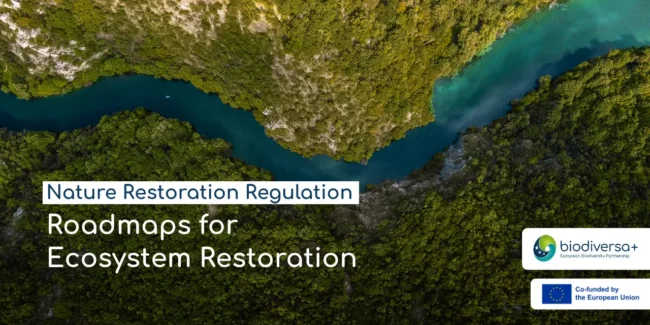
How to restore marine, freshwater, urban water and forest ecosystems?
Four roadmaps to restore freshwater and marine ecosystems.
Four roadmaps to restore freshwater and marine ecosystems.
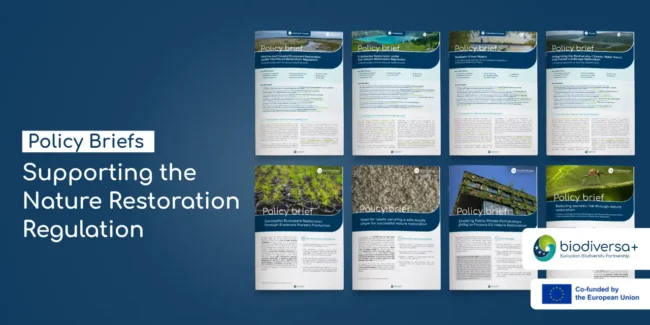
Biodiversa+ just released a series of eight Policy Briefs to help Member States implement the Nature Restoration Regulation effectively.
A special session “SS2 – Supporting NRR implementation through restoration knowledge hubs” is organised by the BiodivRestore Knowledge Hub at SERE 2026
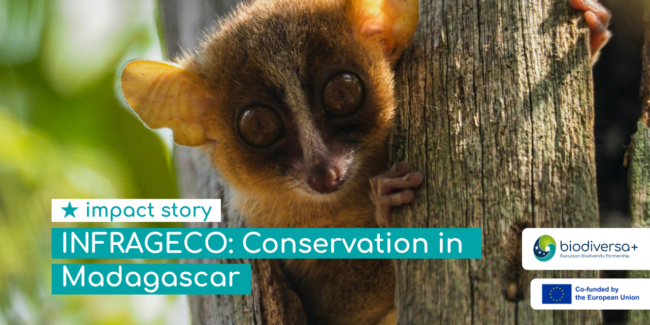
Habitat fragmentation: INFRAGECO turned genetic studies in conservation and restoration actions in Madagascar.
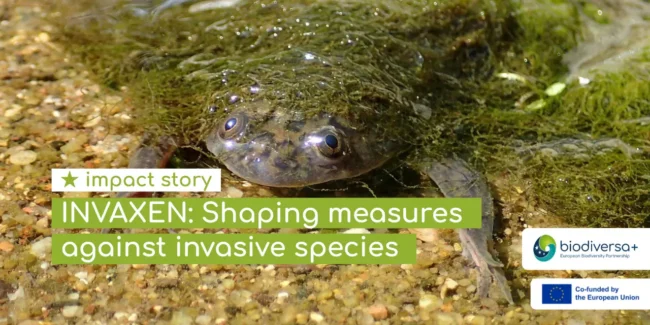
Invasive species: here’s how the INVAXEN project turned scientific research into policy change, and one rare eradication success.
Urban rivers, ponds, and wetlands deliver multiple benefits, from biodiversity and water quality to flood regulation and climate resilience, but only when designed and managed as functioning…
Restoring marine ecosystems is not simply about restoring more places. With limited resources and rapidly changing oceans, the priority question is not whether to restore but…
Forest ecosystems are home to much of the Earth’s biodiversity. They play a key role in maintaining healthy freshwater ecosystems by improving water quality, regulating the…
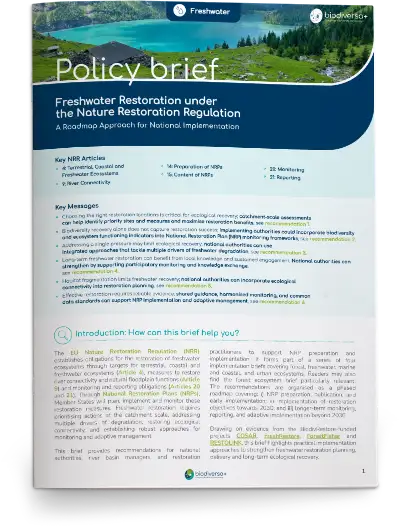
Restoring rivers and wetlands can’t just happen site by site. It requires taking care of the whole area of land that drains into a river, not just one isolated stretch, tackling several causes of degradation…
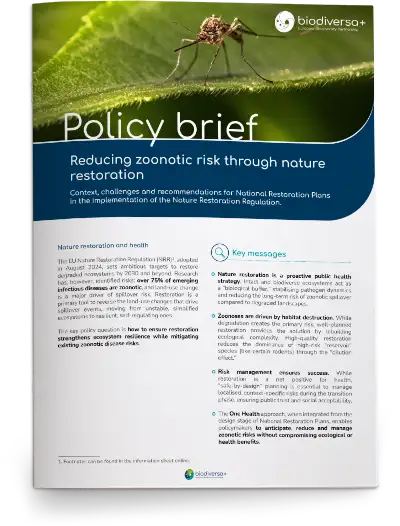
Over 75% of emerging infectious diseases are zoonotic, and land-use change is a major driver of zoonotic spillover risk. Restoration can strengthen ecosystem resilience while…