
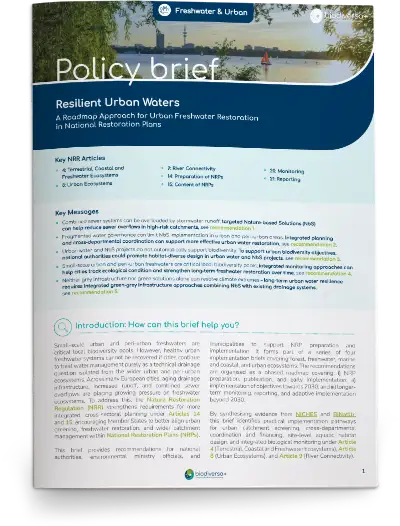
Policy Brief: “Resilient Urban Waters”
Published: June 2026 |
Urban rivers, ponds, and wetlands deliver multiple benefits, from biodiversity and water quality to flood regulation and climate resilience, but only when designed and managed as functioning ecosystems rather than drainage infrastructure. Urban freshwater systems are often under-resourced and underplanned. Climate change and urbanisation are compounding existing pressures: more frequent heavy rainfall, ageing drainage systems, increased runoff, combined sewer overflows, and fragmented urban planning are increasing flood risks while degrading biodiversity across European cities.
This policy brief provides recommendations for national authorities, environmental ministry officials, and municipalities to support National Restoration Plans, required in the context of the EU Nature Restoration Regulation. It brings together insights from two BiodivRestore research projects:
- NICHES, on nature’s integration in cities’ hydrologies, ecologies and societies.
- BiNatUr, on biodiversity-friendly nature-based solutions in cities.
This brief is part of a series of eight policy briefs on Nature Restoration.
Key messages:
- Urban water governance integrating planning, financing and infrastructure management supports coordination between water management, urban water restoration, urban planning and multifunctional green infrastructure planning.
- Design urban waterways for biodiversity, not just drainage, creating diverse aquatic habitats that support ecological quality alongside water management functions.
- Screening the whole city and urban catchment helps planning and identifying high-risk overflow hotspots, where Nature-based Solutions can address the greatest mitigation benefits.
- Habitat heterogeneity, vegetation, shallow and deep-water zones, and naturalised banks support high ecological quality and broad urban biodiversity.