This summer, Biodiversa+ looks back at research projects supported through its predecessor, BiodivERsA, exploring how scientific collaboration has contributed to policy, practice and innovation. Each story highlights what changed, how researchers worked with stakeholders, and what future projects can learn from their experience.
In the Indian Ocean, along the African East coast, Madagascar is a living island home to some of the world’s most unique and endangered species. But the island has also faced increasing threats from habitat fragmentation and deforestation.
Researchers from Portugal, Madagascar, Germany, and France wanted to understand how these environmental changes affect the genetic diversity and long-term survival of the island’s wildlife. Together, they launched the INFRAGECO (Inference, Fragmentation, Genomics, and Conservation) project, integrating fieldwork, genomics, and statistical modelling. The project has provided critical insights into conservation strategies and fostered collaborations with local stakeholders.
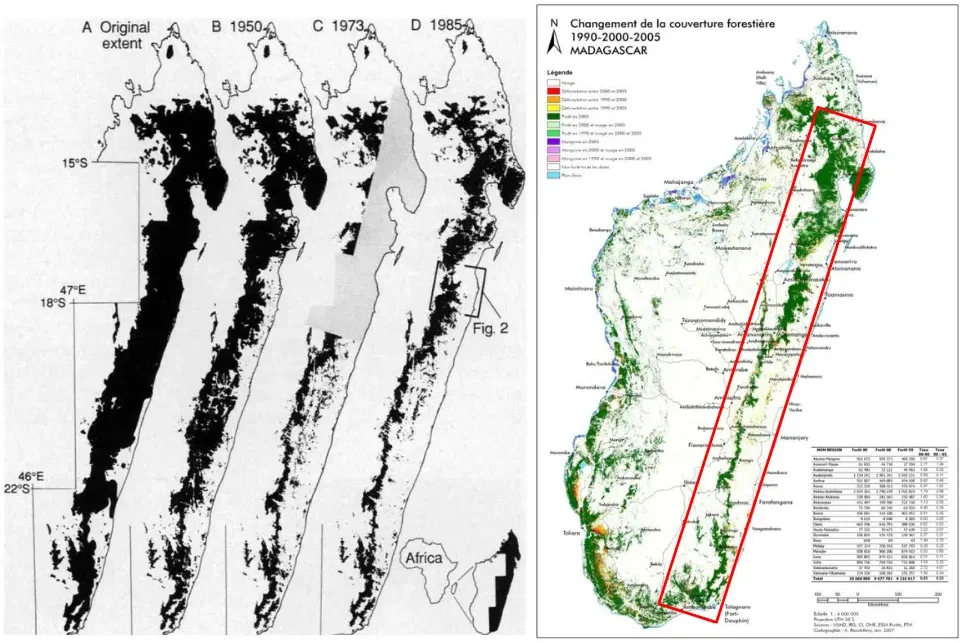
Changes in forest cover along the East coast of Madagascar (1950, 1973, 1985, 1990-2005). Credit: INFRAGECO
By studying the genetic diversity of species in northern and northwestern Madagascar, the INFRAGECO team aimed to understand how landscape changes have influenced populations over different spatial and temporal scales. They focused on studying non-flying mammals, particularly lemurs, and used Noronhia as a case study.
They demonstrated that fragmentation reduces genetic connectivity between wildlife populations, leading to increased vulnerability. By reconnecting fragmented habitats, they argue, it is possible to maintain gene flow and preserve genetic diversity—key factors in species survival.
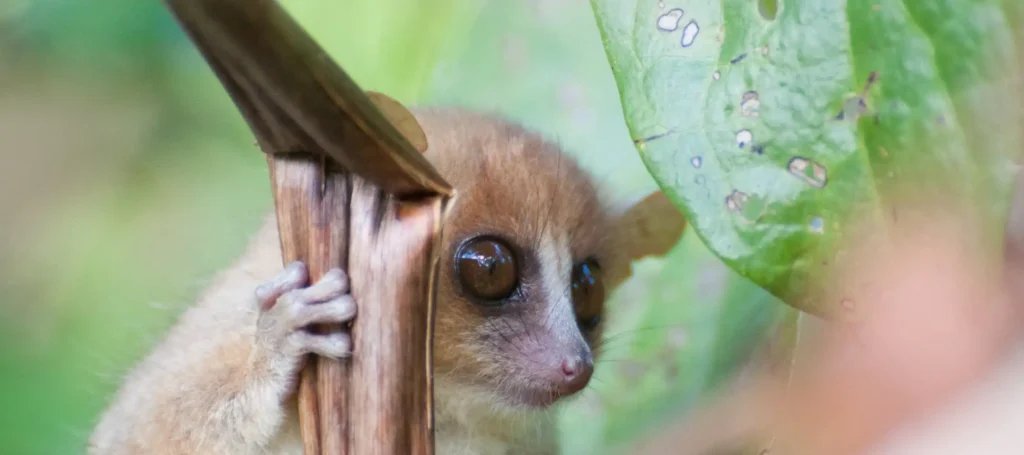
A mouse lemur, one of the species studied during the INFRAGECO project. Credit: INFRAGECO.
INFRAGECO went beyond the lab. By collaborating with local communities and authorities, and demonstrating the threat that fragmented landscapes pose to species survival, the project ensured long-term engagement and concrete restoration actions. The influence of the project extended to local as well as international policies.
Collaboration
By engaging for years with Malagasy institutions, local universities, conservation groups, and governmental agencies, INFRAGECO provided a solid foundation for the project’s success. This long-term engagement helped in building trust and ensuring that the research findings translated into actionable conservation measures.
On the field
An essential partnership emerged with Madagascar National Parks (MNP), particularly within Ankarafantsika National Park. While MNP does not create legislation, it plays a crucial role in implementing conservation strategies. The INFRAGECO team actively shared their research outcomes with these authorities and invited them to a final workshop in Antananarivo. The discussions that followed demonstrated a strong interest from policymakers in integrating scientific findings into conservation initiatives.
Scientific findings driving conservation actions
A key message from the project emphasized the importance of maintaining ecological connectivity to counteract habitat fragmentation. The researchers highlighted that fragmented landscapes pose severe threats to species survival by isolating populations and reducing genetic diversity. Their findings underscored the need for reforestation and habitat restoration efforts to reconnect fragmented areas, ensuring wildlife populations remain viable in the long term.
On the field
Following the workshop, a series of reforestation initiatives were launched in the targeted regions. While Madagascar had existing reforestation programs, the specific actions taken in these areas were newly implemented, and the INFRAGECO team believes their research contributed to the momentum behind these conservation efforts. Additionally, NGOs working in the same regions began reforestation projects aimed at increasing connectivity between forest fragments.
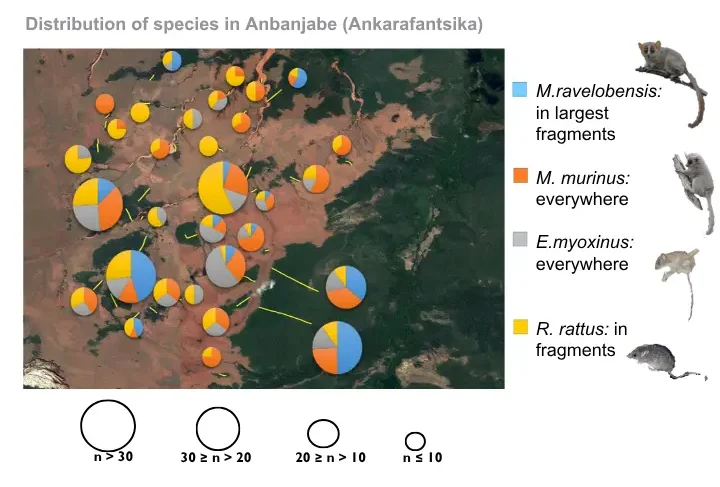
Long-term commitment and influence on policy
Research dating back to 2010 already demonstrated how habitat fragmentation increases genetic differentiation beyond the effects of geographic distance alone. By building upon past findings, the project reinforced the urgency of maintaining ecological corridors to sustain Madagascar’s biodiversity.
On the field
Long-term collaboration with Malagasy NGOs like Fanamby helped integrate conservation priorities into local policies. The team’s expertise was recognized by the International Union for Conservation of Nature (IUCN), where they contributed to estimating lemur population sizes and updating Red List assessments. The participation of Malagasy scientists and students in this process ensured local ownership of conservation efforts.
The INFRAGECO team remains committed to supporting Madagascar’s conservation efforts, even after the end of the project. They continue collaborations with Malagasy scholars, conservationists, and institutions, ensuring that their research informs long-term biodiversity protection strategies.
Two Malagasy PhD students have already received funding to further investigate the impact of natural and human-modified landscapes on genetic diversity in endangered species. Additionally, the researchers will maintain their involvement in training and capacity-building programs for Malagasy students, ensuring that local expertise continues to drive conservation science in the region.
One of the upcoming initiatives includes a field course organised with Mahajanga University, reinforcing their dedication to educating the next generation of conservation leaders. Regular visits and teaching engagements will help sustain their long-term relationships and ensure the ongoing exchange of knowledge and resources.