
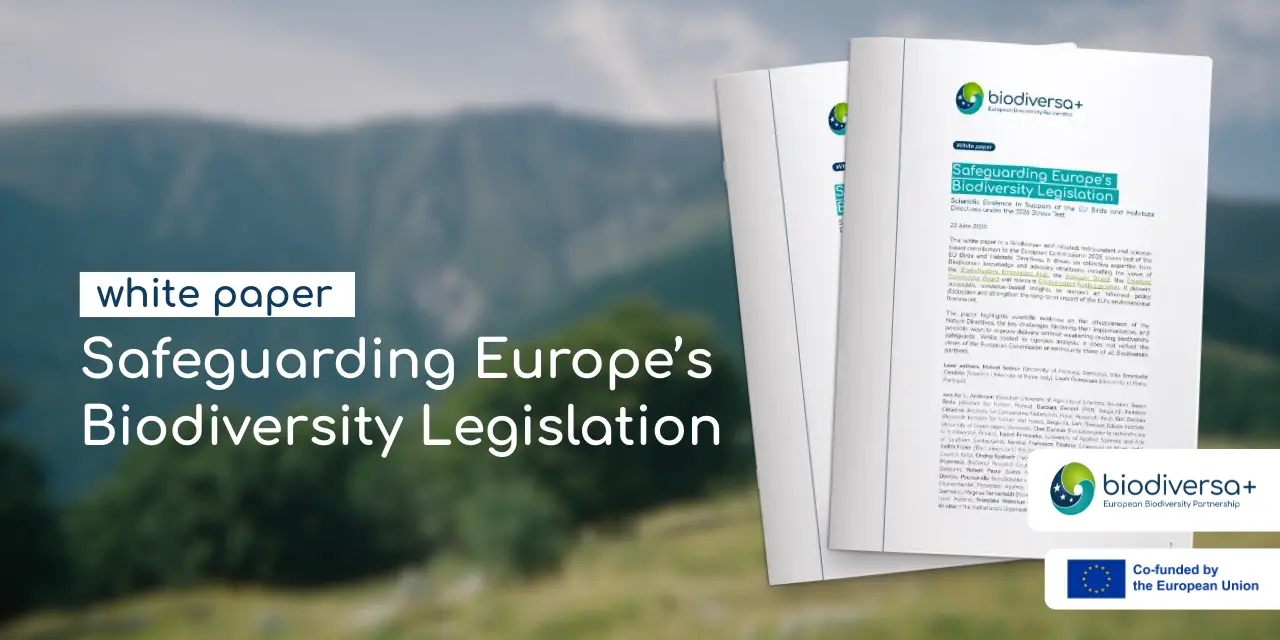
Biodiversa+ has published a new White Paper contributing scientific evidence to the ongoing discussion around the European Commission’s 2026 stress test of the EU Birds and Habitats Directives.
Conducted in the context of the Commission’s agenda on simplification, the stress test seeks to assess whether the Directives remain fit for purpose and cost-effective, while identifying opportunities to reduce administrative burden.
For members of the BiodivRestore Knowledge Hub (KH), a group of experts aiming to empower countries in developing and implementing National Restoration Plans (NRPs), this exercise raises important questions. At a time when Member States are preparing and finalising their NRPs, changes to core elements of EU biodiversity legislation could introduce uncertainty and affect the long-term conditions needed for implementation.
To contribute to the debate, members of the KH, the Advisory Board, the Enlarged Stakeholder Board and relevant BiodivProtect-funded projects reviewed existing scientific evidence and policy evaluations and brought them together in this White Paper. The paper looks at what current evidence tells us about the conditions that support conservation.
Among the questions addressed:
- What does current scientific evidence tell us about the effectiveness of the Birds and Habitats Directives?
- What implementation barriers continue to limit conservation and restoration?
- How can governance, funding and cross-sectoral policy coherence better support biodiversity objectives?
- What improvements in monitoring, data systems and administrative capacity could strengthen implementation without weakening existing safeguards?
By bringing together scientific evidence and policy evaluations, the White Paper contributes to the discussion around the 2026 stress test and highlights the importance of improving implementation, strengthening policy coherence and reinforcing the long-term impact of biodiversity conservation and restoration measures.