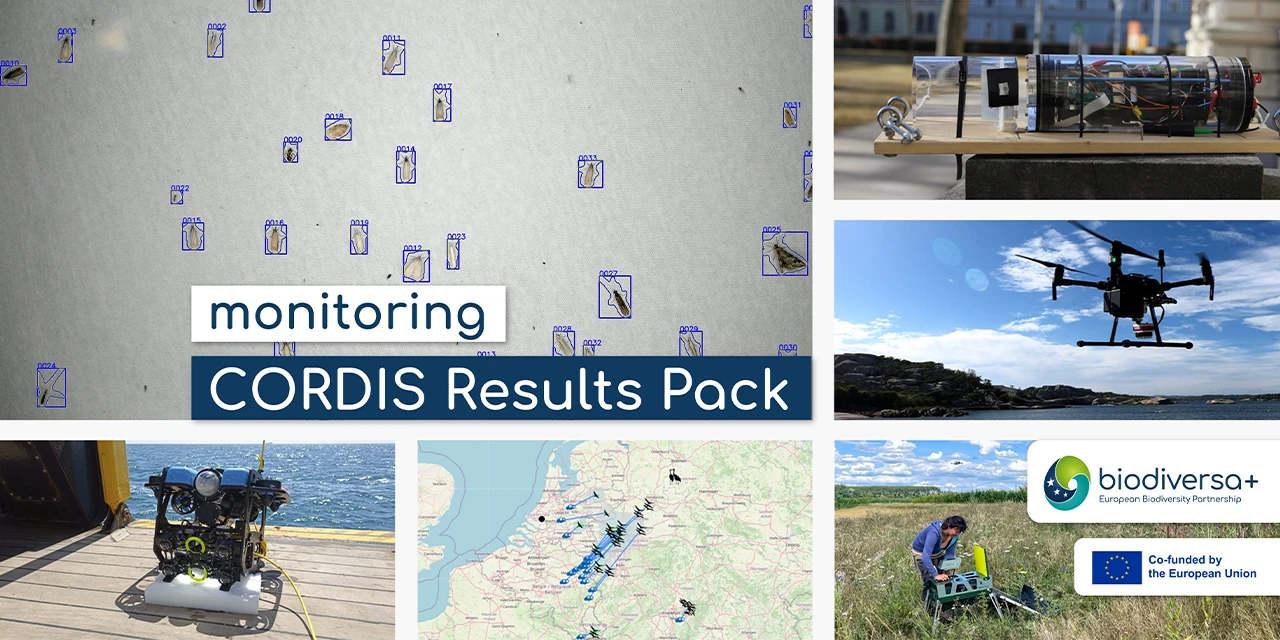
A new CORDIS Results Pack highlights how European research is advancing biodiversity monitoring. The Pack brings together 12 EU-funded projects exploring new approaches, from environmental DNA and artificial intelligence to Earth observation and digital tools.
While many of these projects focus on developing new technologies, they also point to a broader challenge: ensuring that monitoring efforts can be connected, compared and used effectively across countries.
Why coordination matters
Biodiversity monitoring underpins policies aimed at protecting and restoring ecosystems. It provides the evidence needed to assess trends, evaluate measures and guide decisions. Yet across Europe, monitoring systems have developed in parallel, often using different methods, indicators and reporting cycles.
This fragmentation makes it difficult to compare data across borders, detect emerging risks or build a coherent picture of ecosystem change at European scale. As European policies increasingly rely on robust and comparable data, improving coordination has become essential.
Moving from comparison to co-design
Rather than trying to reconcile existing datasets after the fact, Biodiversa+ supports a shift towards co-designed monitoring. This means bringing together data producers, data users and policy actors to agree on what should be measured, how, and for what purpose.
As part of this work, the partnership develops thematic monitoring pilots based on shared protocols. These pilots are implemented across countries using common methodologies, with limited adaptation to local contexts. This enables data to be comparable from the outset, while remaining applicable in different national settings.
One of these pilots focuses on invasive alien species, where timely and consistent data are essential. It explores how monitoring can be both scientifically robust and scalable within existing monitoring systems. This includes integrating automation, such as image recognition, to support faster and more standardised data collection. By combining shared protocols with technological tools, the pilot tests how monitoring coverage can be expanded without relying solely on resource-intensive fieldwork. Designed to go beyond experimentation, the outputs include protocol templates, workflows and cost estimates that can be directly used by national authorities and monitoring organisations.
Connecting research to usable data
Biodiversa+ also supports research projects that improve how monitoring data are collected, processed and shared. For example, ANTENNA develops transnational data pipelines that turn observations into policy-relevant indicators, while involving scientists, practitioners and decision-makers to ensure uptake beyond research settings.
Another project, MetaPlantCode, is working on harmonising DNA-based monitoring approaches for plants. Rather than enforcing identical methods, the project focuses on agreeing on best practices that are scientifically sound and applicable across different contexts.
These efforts contribute to aligning data and metadata standards, enabling results to be shared through platforms such as Global Biodiversity Information Facility (GBIF) and interpreted consistently.
Building a European monitoring system
Taken together, these activities point to a broader shift. Biodiversity monitoring in Europe is evolving from a collection of national efforts into a more coordinated system, supported by shared approaches, interoperable data and collaboration across actors.
By connecting research, policy and practice, Biodiversa+ helps make this transition operational. It provides a framework where methods can be tested, aligned and adopted, while ensuring that monitoring remains relevant to real-world constraints and decision-making needs.
As part of this broader dynamic, BioMonWeek 2026 will bring together the monitoring community to exchange approaches and explore how these solutions can be implemented more widely.