
Living systems, living solutions
Nature-based solutions, when grounded in local knowledge and participation, offer effective ways to address Europe’s climate, biodiversity, and land use challenges…

Nature-based solutions, when grounded in local knowledge and participation, offer effective ways to address Europe’s climate, biodiversity, and land use challenges…
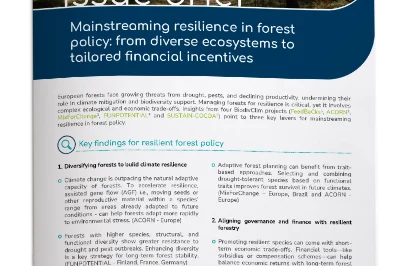
Diversifying forests, aligning governance and finance, and improving data systems are key to making Europe’s forests more resilient to climate change…
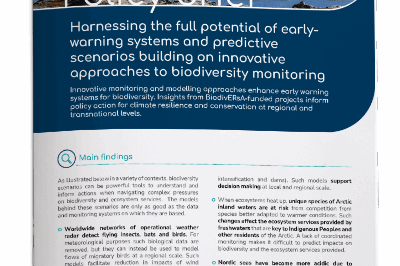
Predictive scenarios and innovative monitoring offer powerful tools to anticipate changes, reduce biodiversity loss, and build a more resilient future.
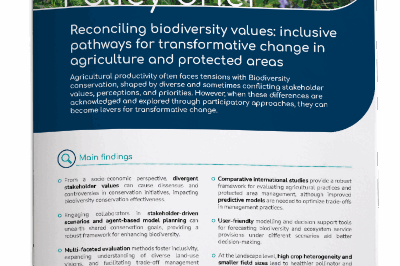
By embracing diverse stakeholder values through participatory approaches, agriculture and biodiversity actors can turn tensions into opportunities for transformative change.
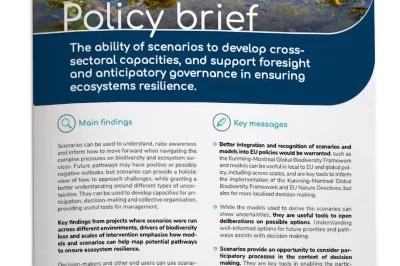
This policy brief shows how scenarios focused on biodiversity can map potential pathways to enhance ecosystem resilience.
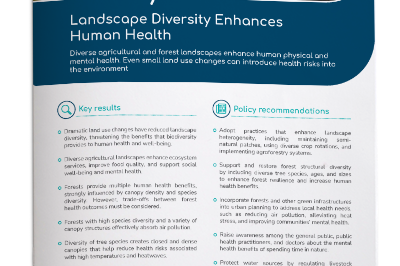
Diverse agricultural and forest landscapes enhance human physical and mental health. Even small land use changes can introduce health risks into the environment.
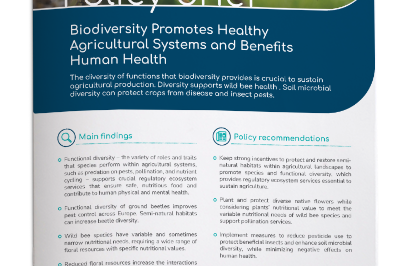
The diversity of functions that insects provide is crucial to sustain agricultural production. Diversity supports wild bee health. Soil microbial diversity can protect crops from disease and insect pests.
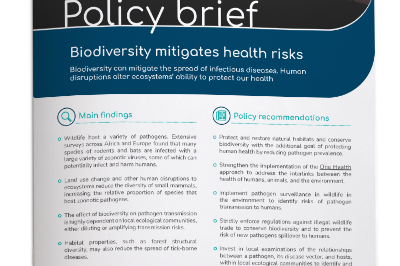
Biodiversity can mitigate the spread of infectious diseases. Human disruptions alter ecosystems’ ability to protect our health.
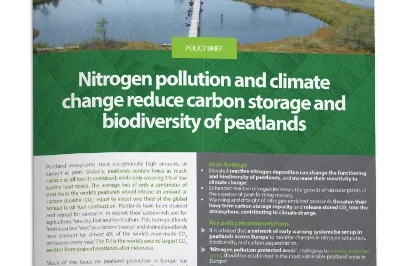
This brief is based on findings of the PEATBOG project, illustrates a “win-win” between biodiversity-conservation and climate-change mitigation.
This brief is derived from the LinkTree project, which examined the genetic variation within forest tree populations in five European countries, and assessed how this variability and its management could help forests adapt to environmental changes.