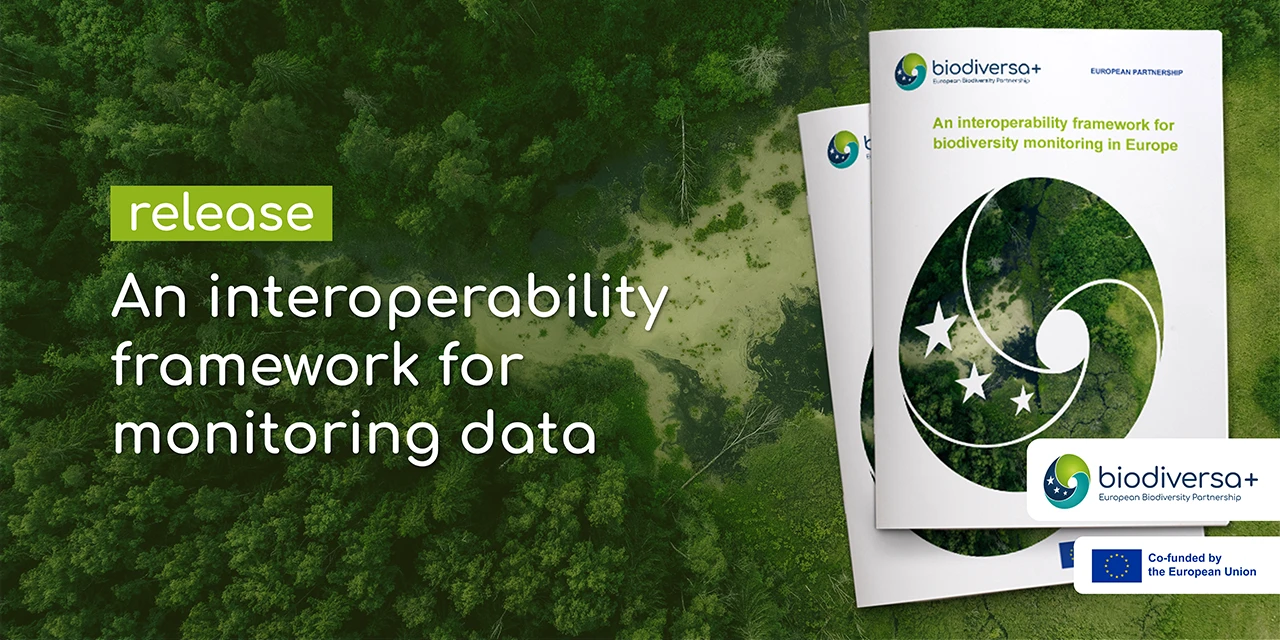
Biodiversa+ has published a report proposing an interoperability framework to help biodiversity monitoring organisations across Europe make their data easier to find, access and combine.
Monitoring data are indeed held across many institutions, using different structures, descriptions and access methods. These differences make it difficult to bring datasets together for research, reporting and decision-making, limiting the use of information already being collected. Developed through a review of existing approaches and expert workshops, the framework builds on established standards and infrastructures and supports the FAIR principles: making data Findable, Accessible, Interoperable and Reusable. The report sets out 24 recommendations covering shared data models and vocabularies, standardised dataset descriptions, persistent identifiers and interfaces for automated access.
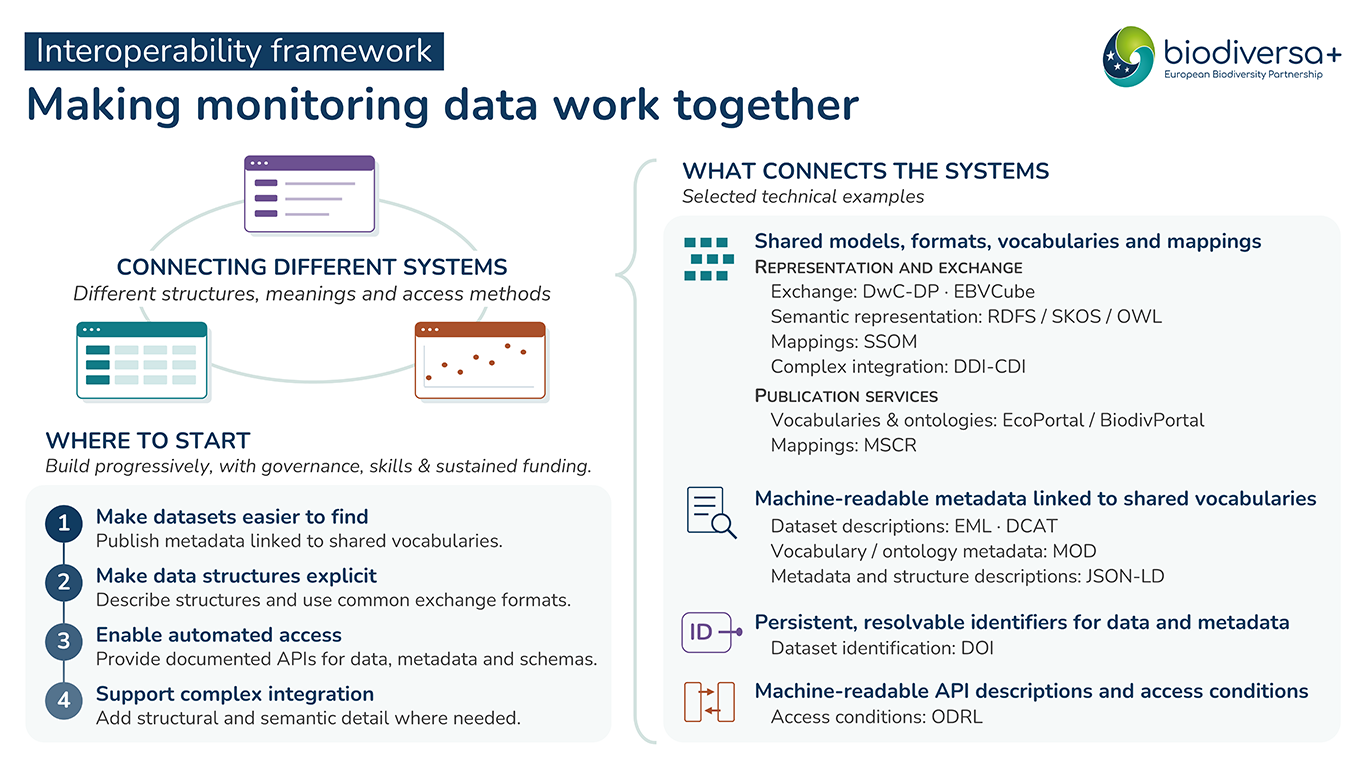
Key technical components and a progressive pathway to help biodiversity monitoring systems work together.
Organisations can implement the recommendations progressively, beginning with improvements that make existing datasets easier to discover. Further steps address how data structures are described, how software accesses information and how more complex datasets can be integrated. The report also emphasises the importance of capacity building, coordination and long-term funding, particularly for organisations with limited data management resources. Collaboration with research infrastructures can further support implementation by providing access to expertise, shared tools and cost-effective solutions.