Biodiversa+ has published an updated edition of its roadmap looking at how novel technologies are being used for biodiversity monitoring and what is needed to integrate them into routine monitoring programmes across Europe.
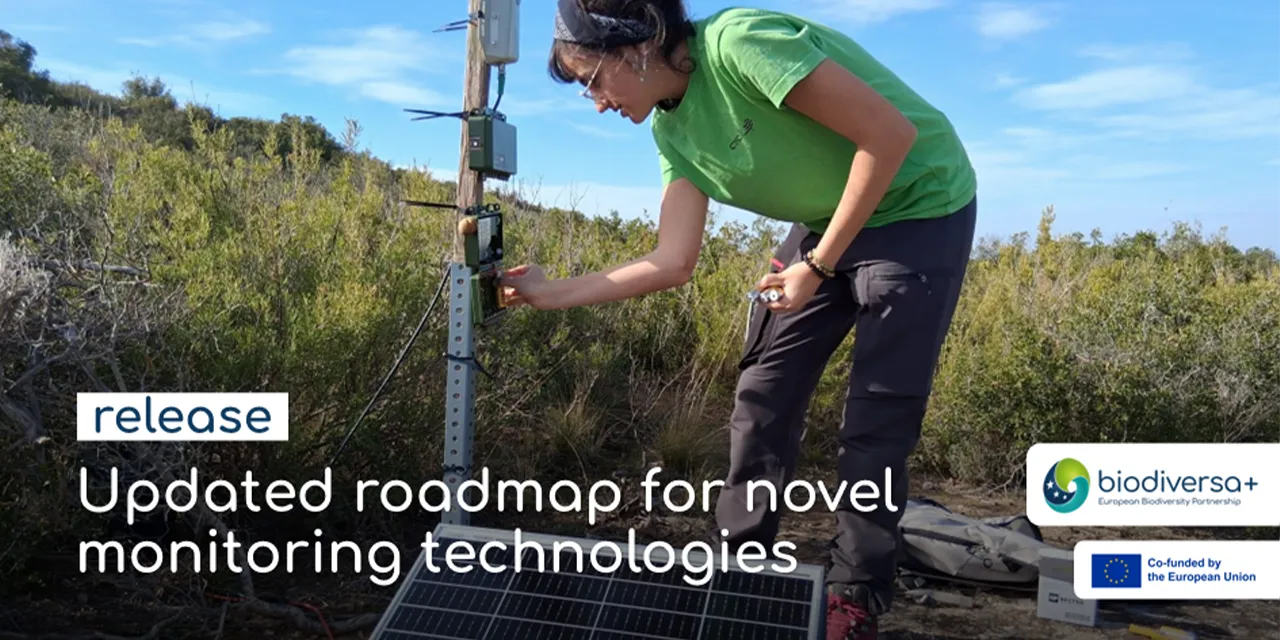
Drawing on an updated partner survey and expert discussions, the report covers bioacoustics, camera traps, environmental DNA and genomics, sensor networks, drones, and remote sensing. It builds on the first assessment published in 2024, with wider partner representation and the addition of remote sensing.
The findings show uneven deployment across technologies, species groups and environments. Camera traps and bioacoustics are among the most widely deployed technologies, particularly for mammals and birds. Most technologies are used predominantly in terrestrial environments, while eDNA and genomics have stronger uptake in freshwater monitoring. Despite these differences, all six technology groups are already fully deployed in the field by at least one partner, which provides a basis for sharing expertise and supporting wider implementation.
The roadmap identifies common barriers to wider implementation, including data management and storage, costs, limited technical capacity and insufficient standardisation. It also puts forward recommendations, calling for stronger coordination, collaboration with the private sector, shared data infrastructure, additional technical expertise, reliable reference databases, integration with long-term monitoring, and alignment with policy needs.
The roadmap will guide Biodiversa+ activities to support knowledge exchange, capacity building and more harmonised biodiversity monitoring across Europe.