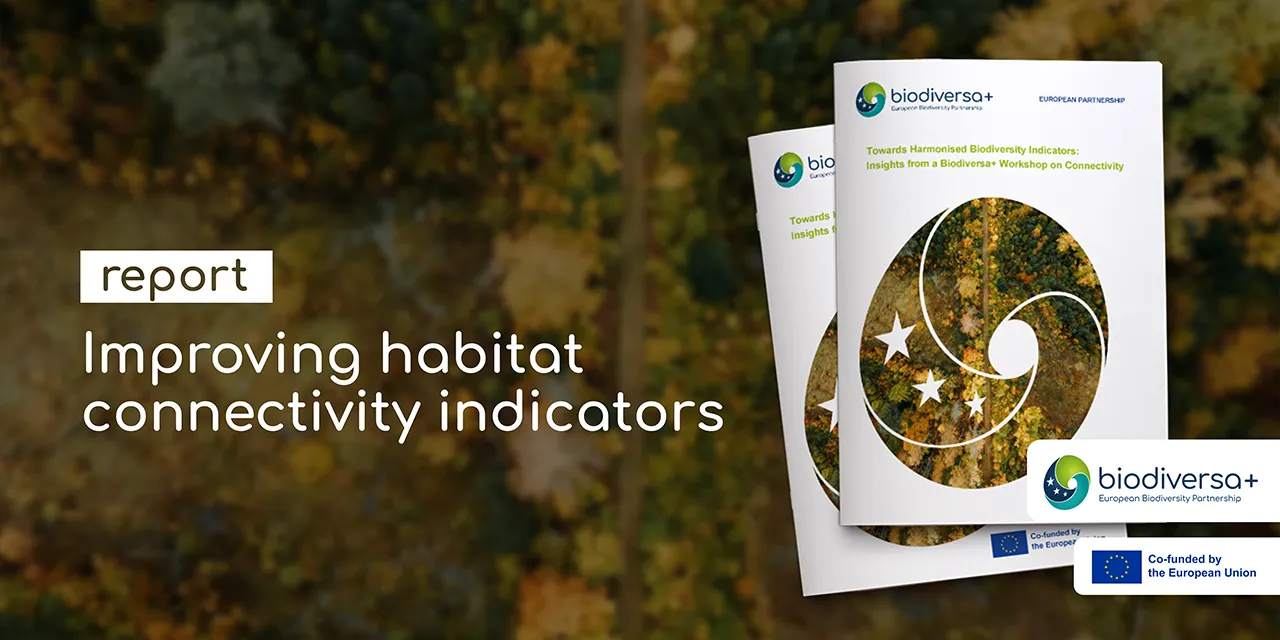
Biodiversa+ has released a new report highlighting key insights from its March 2025 workshop on biodiversity connectivity indicators. The event brought together experts from across Europe to explore how connectivity can be monitored more effectively to support restoration and biodiversity policy implementation.
Robust and comparable indicators are essential for tracking progress towards the Kunming-Montreal Global Biodiversity Framework and for informing EU biodiversity and restoration policies. However, significant gaps remain in data availability, methodological consistency and cross-scale integration.
A central message from the workshop is that no single connectivity indicator can capture the full complexity of ecosystems. Europe’s landscapes, species and policy contexts vary widely, and each indicator type illuminates only part of the picture. For instance, while structural indicators such as Forest Area Density provide consistent, scalable metrics for EU‑level reporting, functional, network‑based indicators offer deeper ecological insight by accounting for barriers, species traits and movement patterns at local and regional scales.
Participants stressed that a combination of approaches is essential: structural indicators keep monitoring practical today, while network‑based measures ensure scientific robustness and ecological relevance for tomorrow.
The workshop also highlighted the growing need for a coordinated European community of practice. Many countries are grappling with similar issues (data gaps, uneven capacity and fragmented methodologies) yet the solutions, expertise and tools that could address these challenges are often dispersed. Biodiversa+ aims to help bring these efforts together by supporting shared capacity‑building initiatives, improving access to open and interoperable tools, and fostering closer collaboration between researchers, agencies and policymakers so that indicator development becomes more consistent and aligned with policy needs
The report builds on this momentum. It provides a clear picture of where collective action would be most beneficial and outlines practical directions towards a more aligned and collaborative approach to monitoring biodiversity and assessing ecological connectivity in Europe.