
2026-2027 Joint Call
Novel ecosystems: biodiversity, socio-ecological consequences and future trajectories
#BiodivFuture
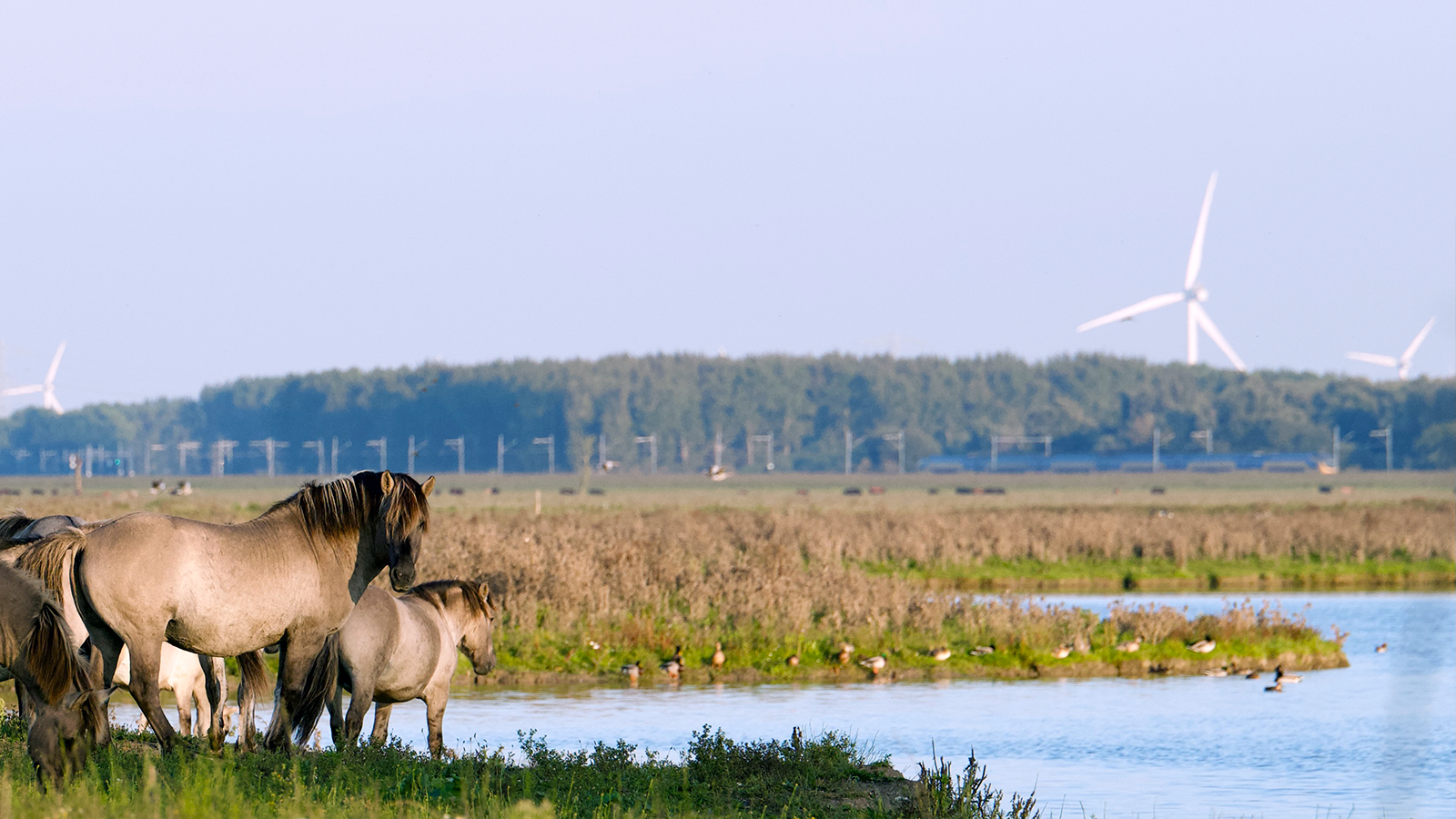
Biodiversa+ is pleased to announce that its 6th annual Joint Call for transnational research projects BiodivFuture is now open..
Co-funded by the European Commission, this call, alongside a range of actions under the Biodiversa+ Flagship Programmes, will contribute to achieving one of Biodiversa+’s strategic objectives: producing actionable knowledge to drive transformative change and halt and reverse biodiversity decline.
The online platform (EPSS) to submit your pre-proposal will be available soon.
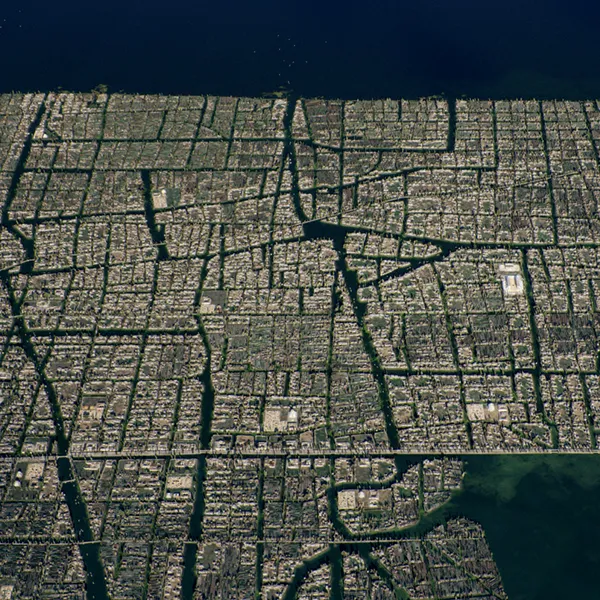
BiodivFuture focuses on supporting future-looking research and innovation that will address biodiversity and novel ecosystems, as well as their socio-ecological dynamics and consequences relating to the sustainability goals of the Kunming-Montreal Global Biodiversity Framework, and associated future pathways and trajectories of change. The call covers investigating the causes (drivers), effects (biological responses), and outcomes (including opportunities, risks and trade-offs) of current and future trajectories of change in all relevant realms (terrestrial, freshwater, marine and coastal areas), in all regions of the world. It aims at funding novel, high-quality transnational research with potential for societal and political impact that will significantly improve our understanding of novel ecosystems with holistic, systemic, and integrated approaches.
In the face of inevitable and potentially irreversible change, knowledge generated under this call should ultimately lead to actions to achieve impacts that sustain resilient, interconnected, diverse and ecologically functioning ecosystems. This could include critical reflection on what constitutes ecosystem states that best preserve or restore natural resources by taking multiple costs and benefits (trade-offs) into account and the diversity of contexts, scales, perspectives and world views. Well-functioning ecosystems should benefit people and protect nature at scales from local to global and emphasise biodiversity, trophic complexity, economic vitality, and societal well-being.
Themes
Research priorities covered by BiodivFuture are structured into three non-mutually exclusive themes. Projects are welcome to address one or several of these themes.
- THEME A – NOVEL ECOSYSTEM FUNCTIONING: Understanding the functioning of novel ecosystems and their links to socio-cultural and socio-economic dynamics, identifying mechanisms and developing approaches that can facilitate biodiversity gains.
- THEME B – PATHWAYS TO NOVEL ECOSYSTEMS: Studying robust, plausible, and concrete pathways to novel ecosystems and associated socio-ecological dynamics to prosper under temporal asynchronies and uncertainties.
- THEME C – BIODIVERSITY BENEFITS AND EQUITY IN THE CONTEXT OF NOVEL ECOSYSTEM: Studying fair and equitable sharing of biodiversity benefits in the context of novel ecosystems, supported by inclusive, collaborative, and investment-oriented pathways for nature-positive socio-ecological transformation.
Novel ecosystems – A conceptual framework to set the scene
Novel ecosystems have been defined by Hobbs et al. in 2013 as “a system of abiotic, biotic and social components (and their interactions) that, by virtue of human influence, differ from those that prevailed historically, having a tendency to self-organise, and manifest novel qualities without intensive human management”. Since the publication of this paper, the limits of this definition have been challenged by different disciplines and other definitions have emerged. Overall, the conceptual framework of novel ecosystems usually comprises of (1) new ecological communities (including species living outside their historical native ranges), (2) which present a suite of interactions and processes consistent with a self-organised, functioning ecosystem, and (3) are unlikely to revert to conditions preceding their emergence, with or without human intervention, due to significant biotic and abiotic changes. Building on this framework and acknowledging the plurality of views and definitions, proposals submitted to this call must demonstrate how they are addressing novel ecosystems.
Applicants must carefully read the announcement of opportunity (Call Document 1) that further details the scope of the call.
Submit your pre-proposal
A two-step application procedure will apply, with a mandatory submission of pre-proposals at the first step and submission of full proposals at the second step, via the Electronic Proposal Submission System (EPSS).
- Launch of the call: Wednesday 9 September 2026
- Deadline for pre-proposals submission (mandatory): Early November 2026
- Results of the evaluation of the first step: mid-February 2027
- Deadline for full-proposals submission: Early April 2027
- Recommendations for funding: Late September to early October 2027
- Start of the projects: Between 1 December 2027 and 1 April 2028

Maximise your chances
Research proposals (in English only) must be submitted electronically. They will be evaluated by independent experts against the following criteria:
- At step 1 (pre-proposal stage): (1) Fit to the scope of the call, (2) novelty of the research and (3) impact;
- At step 2 (full proposal stage): (1) [Scientific] excellence, (2) quality and efficiency of the implementation [of the project plan], and (3) impact (including expected societal impact which includes policy impact, and approach to stakeholder engagement).
Research proposals shall demonstrate significant transnational added value of the project, and are strongly encouraged to pursue inter- and transdisciplinary approaches. They should span a wide range of relevant academic disciplines and include non-academic stakeholders to co-produce actionable impactful knowledge while adhering to the ethics and principles of responsible research.
Applicants must carefully read the detailed assessment criteria (Call Document 6).
Look for a partner or a project to join
To be eligible, research consortia must include teams from a minimum of 3 countries financially participating in the Call, including at least two different EU Member States or Horizon Europe Associated Countries.
Not all EU Member States or Horizon Europe Associated Countries financially participate in this call. Only the countries listed below are eligible for funding.
Please note that each funding organisation has its own rules for research partners eligibility, and it is crucial that applicants consult the national/regional rules for each partner of their consortium and comply with the Horizon Europe Annotated Grant Agreement. National/regional rules will be available at the launch of the call in September.
Check the participating organisations and their rules
Over 30 funding organisations from 25 countries are joining this call, together with the European Commission.
Please consult the full up-to-date list of funding organisations participating in this Call, their reserved budgets and their national / regional eligibility rules and participation modalities.
Information webinar on 10 September
Detailed instructions regarding submission, eligibility and evaluation criteria and other relevant information will be published with the official call announcement on 9 September 2026.
Stay Informed: visit our website regularly for updates or subscribe to our newsletter to receive the latest information directly!
Make sure to carefully read all the supporting call documents:
- Announcement of Opportunity (including the call text detailing the scope of the call)
- Pre-proposal application form (for information only; the actual form is to be completed on the EPSS)
- Full proposal application form (for information only; the actual form is to be completed on the EPSS in Step 2)
- Checklist for applicants
- Assessment criteria
- Data policy
- Conflict of interest, confidentiality and non-disclosure policy.
- Frequently Asked Questions
Please note that each research partner in a project who is requesting funding under this call must comply with the eligibility criteria and rules of its national / regional funding organisation. For specific questions related to the budget, eligibility criteria and rules of your funding organisation, please contact your Funding Organisation Contact Point (FCP). All national / regional eligibility & funding rules and associated information including the Funding Organisation Contact Point are available here.
Stay Informed: visit our website regularly for updates or subscribe to our newsletter to receive the latest information directly!
- For general questions regarding the call:
Biodiversa+ Call Secretariat
ANR, Agence Nationale de la Recherche
mailto:biodiversa.cs@anr.fr
- For technical questions regarding the EPSS:
Taavi Tiirik
EPSS technical helpdesk
epss.biodiversa@g.etag.ee
Contact
Please note that each research partner in a project who is requesting funding under this call must comply with the eligibility criteria and rules of its national / regional funding organisation. For specific questions related to the budget, eligibility criteria and rules of your funding organisation, please contact your Funding Organisation Contact Point (FCP). All national / regional eligibility & funding rules and associated information including the Funding Organisation Contact Point are available here.
- For general questions regarding the call:
Biodiversa+ Call Secretariat
ANR, Agence Nationale de la Recherche
biodiversa.cs@agencerecherche.fr
- For technical questions regarding the EPSS:
Taavi Tiirik
EPSS technical helpdesk
epss.biodiversa@g.etag.ee
Be aware of all relevant European initiatives and choose wisely the one best suited for your project. For topics with a strong focus on sustainable water management, the Water4All 2026 Joint Transnational Call is recommended. For topics with a strong focus on urban transition towards a climate neutral and resilient future, the DUT 2026 Joint Transnational Call is recommended. For topics with a strong focus on ocean economy and sustainability, the SBEP 2026 Joint Transnational Call is recommended.