As the European Commission consults on the future of European Partnerships, Biodiversa+ sets out its case for a next-generation partnership on biodiversity and resilience through nature.
Europe is facing a convergence of interconnected crises and societal challenges. These include the need to strengthen resilience, competitiveness and security; addressing climate change adaptation and mitigation; safeguarding water quality and availability; and ensuring the sustainable management of natural resources. Underpinning all these challenges lies the state of nature and the diversity of life it supports. Biodiversity loss is, therefore, not merely an environmental issue, but a systemic threat to Europe’s long-term economic prosperity, societal stability and security.
These interconnected challenges directly affect the quality of life of European citizens and require a common vision and sustained transnational coordination, supported by shared infrastructures, strategic alignment of research and innovation investments, and engagement of stakeholders from science, policy, economy and civil society across countries. European partnerships provide unique added value precisely where such sustained coordination is needed, complementing other instruments within the broader European competitiveness and innovation landscape by bringing societal priorities directly to the forefront of research and innovation.
The challenge for the next Framework Programme period goes beyond the identification of important scientific and societal topics with clear pathways to societal and economic impact. It must also determine where Europe can best build on existing structures, networks and investments, and where sustained European coordination, pooled resources and long-term commitments are genuinely needed to achieve its strategic objectives.
At the same time, the design of each instrument must remain proportionate to its core functions. Ultimately, the success of any partnership depends on the active engagement and commitment of its partners. To provide genuine added value for Member States and their research and stakeholder communities, it must therefore remain manageable and efficient. There are practical limits to the size and complexity of partnership instruments. Excessive scale and complexity can increase governance burdens, reduce efficiency and dilute strategic focus. Future partnerships must therefore strike a careful balance between integration, scientific excellence, effective delivery, meaningful stakeholder participation, political uptake, and manageable administration.
Over the past decade, Europe has developed substantial capabilities in environmental observation, biodiversity monitoring, shared standards, research coordination, capacity building, innovation, and science-policy collaboration. These capabilities now represent strategic European assets that should be further strengthened in light of Europe’s evolving priorities.
Europe should not approach the next generation of partnerships as a blank slate. Over the past decade, public investment has established transnational networks, monitoring and data infrastructures, science-policy interfaces and communities of practice with demonstrated European added value. Where these capacities exist, the priority should be to strengthen them further, reducing duplication and accelerating delivery.
Portfolio decisions should consider not only the benefits of change, but also the costs and risks of losing existing capabilities. Stronger coordination and greater synergies do not necessarily require institutional consolidation. Rather, they call for a network-of-networks approach that builds on existing capacities and structures.
The value of a partnership lies not only in funding research projects, but in maintaining European capabilities that cannot be sustained through stand-alone calls: coordinated transnational programming, harmonised biodiversity monitoring, common standards and indicators, shared data and knowledge infrastructures, durable science-policy interfaces, and the long-term alignment of national investments.
Biodiversity, ecosystem services and ecosystem resilience are fundamental to Europe’s prosperity, competitiveness, security and well-being, providing essential functions such as pollination, water purification, soil formation, climate regulation and flood protection. Biodiversity loss creates cascading risks for economic resilience, societal stability and strategic security, while growing demand for nature-related data among businesses, investors and financial institutions, including agriculture, forestry and fisheries, reinforces the need for a framework centred on building resilience through nature.
Looking ahead, stronger stakeholder engagement will be essential to build more robust projects, strengthen public-private collaboration and demonstrate impact. Future partnerships should facilitate collaboration between public authorities, researchers, businesses, investors and civil society to help develop scalable solutions and mobilise long-term commitments. While private-sector engagement is vital, biodiversity and the ecosystem services it provides are essential public goods. Therefore, governments and public research funders retain a unique responsibility to provide strategic direction, to safeguard scientific independence, to maintain long-term monitoring and knowledge infrastructures, and to ensure that key decisions are guided by public-interest objectives and independent scientific evidence.
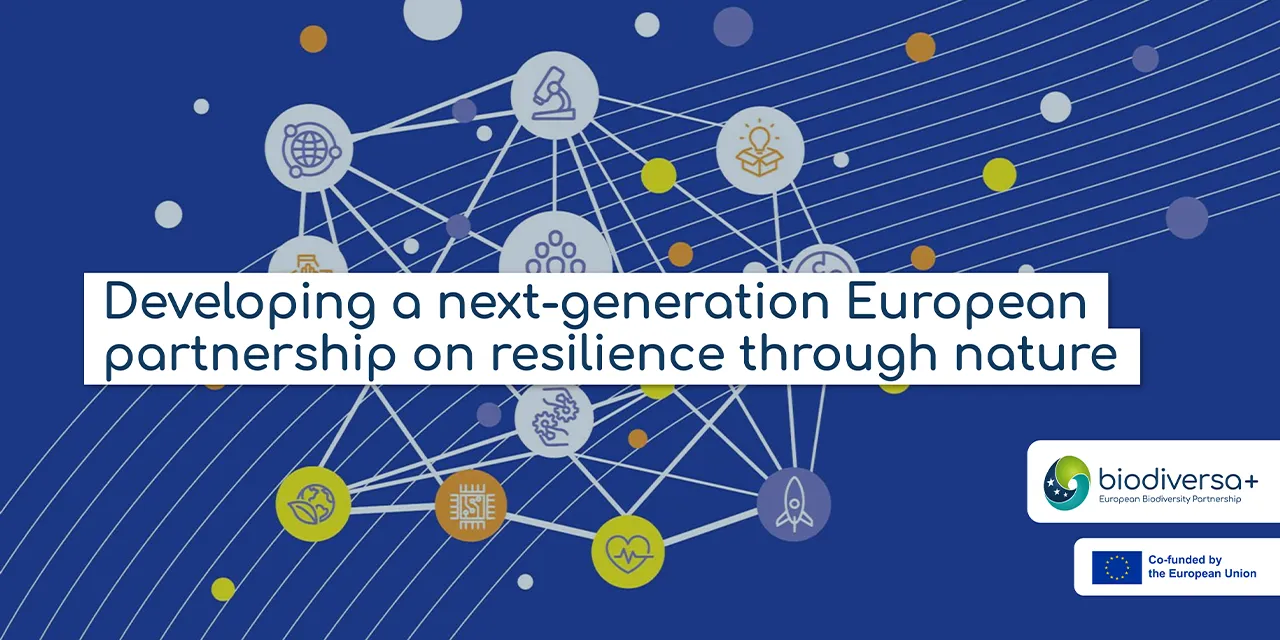
From this perspective, the best way forward would be to develop a next-generation European partnership on biodiversity and resilience through nature. Building on existing capabilities and networks, it would strengthen Europe’s capacity to address emerging scientific, societal and policy needs while supporting key European policies, including the European Green Deal, the Biodiversity Strategy for 2030, and the Nature Restoration Regulation, while also contributing to international commitments under the Convention on Biological Diversity and to science-policy interfaces such as IPBES. In an increasingly interconnected global economy, the partnership would also provide the knowledge, data and tools needed to understand how nature is integrated into economies worldwide and to support evidence-based decisions by policymakers, businesses and investors. Such a strengthened partnership focused on resilience through nature, would foster greater coherence across the wider partnership landscape.
Help shape the future of European Partnerships
The European Commission’s public consultation includes questions on thematic priorities for the future partnership portfolio. We encourage our partners and wider community to contribute their experience and views, including on the role of biodiversity research and innovation. Submit your contribution by 16 October 2026.