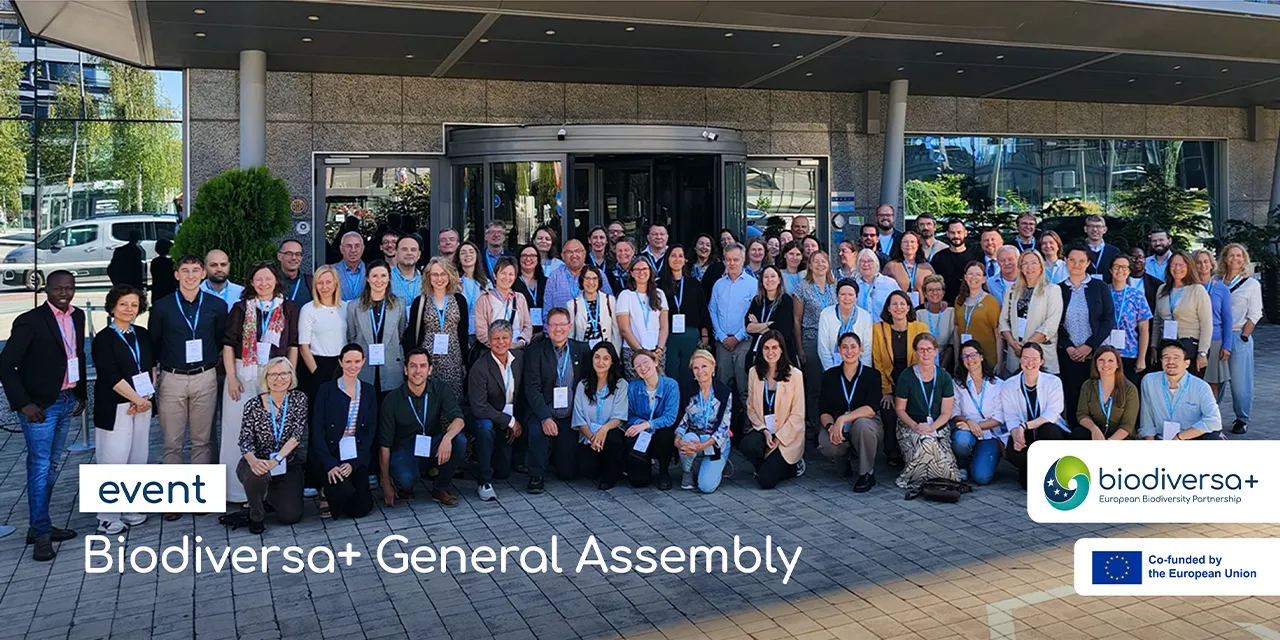
Biodiversa+ partners gathered in Ljubljana, Slovenia, on 15-17 September 2026 for our General Assembly and a dedicated workshop on the partnership’s future. The meetings connected priorities for the coming year with longer-term questions about joint research funding, biodiversity monitoring and cooperation between science, policy and practice.
Setting the direction for the coming year
Partners reviewed the updated Strategic Research and Innovation Agenda, which reflects recent scientific assessments and policy developments alongside experience gained through Biodiversa+ activities, and the work plan for 2026-2027. Discussions focused on how to make the partnership’s work more useful to those addressing biodiversity loss, building on feedback from the Enlarged Stakeholder Board and the Advisory Board.
Among the concrete steps, partners approved resources for the development and implementation of BioDash. The platform will bring together information on biodiversity monitoring schemes across Europe, helping users understand their coverage and methods and identify opportunities for cooperation. Partners also reviewed achievements in national monitoring, to be detailed in an upcoming report, and agreed on the process for developing further monitoring activities.
The Assembly approved extending the BiodivRestore Knowledge Hub for another year to maintain scientific support as countries develop and finalise their national restoration plans.
Partners also approved the accession of Romania’s Ministry of Environment, Waters and Forests, strengthening the partnership’s network and cooperation on biodiversity monitoring.
Sustaining European cooperation
Discussions on the partnership’s future beyond 2028 drew on a consultation exploring what partners value most and wish to sustain. Joint research funding, the European network, biodiversity monitoring and the mobilisation of knowledge for policy featured prominently. Partners explored which functions should continue, which activities should be adapted, where closer cooperation with other initiatives would be useful, and what governance and funding arrangements could support them. These discussions will inform further work on Biodiversa+’s transition strategy.
Thank you to our Slovenian hosts and all participants who contributed in Ljubljana and online.