
Webinar: How the financial sector can address the biodiversity agenda
Biodiversa+ is hosting a webinar to look at how to better connect finance, R&I and biodiversity goals.
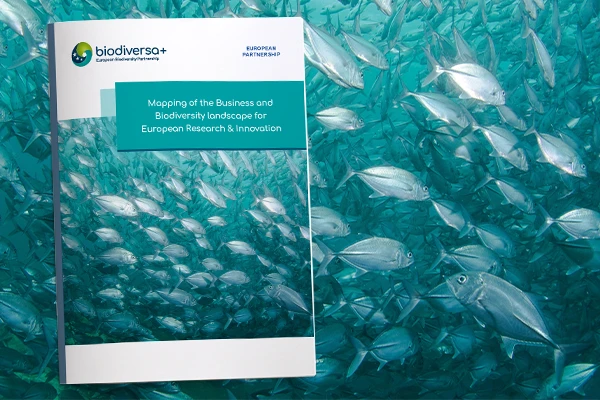
Mapping of the Business and Biodiversity Landscape for European Research & Innovation
Get a comprehensive overview of the key policies, actors, and tools shaping the business and biodiversity space.
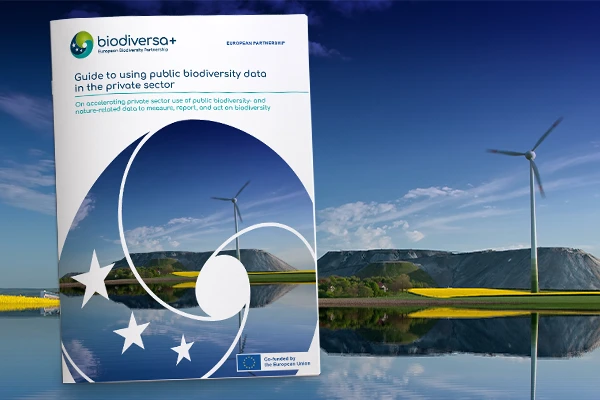
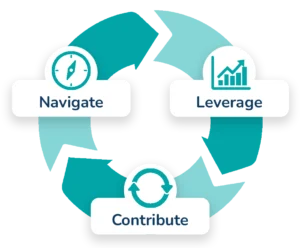
Learn how to find and use publicly available biodiversity data to assess risks, inform strategy, and prepare for reporting.
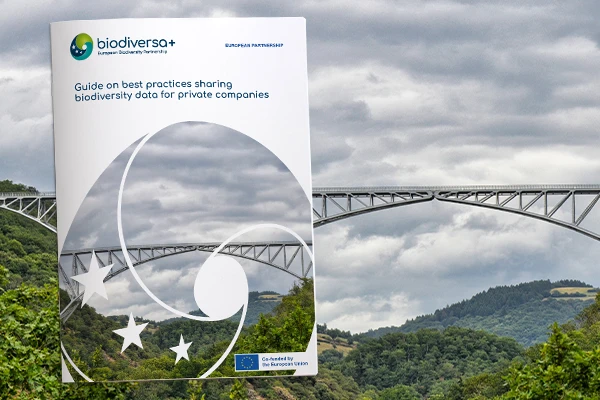
Share your company’s biodiversity data safely and effectively, enhancing transparency and contributing to science.
These guides were produced by Biodiversa+ in collaboration with research and industry leaders:






The role of business in halting biodiversity loss is receiving unprecedented global attention. The IPBES Business and Biodiversity Assessment provides the global scientific evidence on how businesses and financial institutions depend on and impact biodiversity, and why action is urgent.

Biodiversa+ will host a series of webinars and an in‑person workshop to explore the findings of the toolkit and support its practical uptake:
Details for other webinars and the workshop will be available soon. Subscribe to our newsletter to stay informed.
Biodiversa+ is hosting a webinar to look at how to better connect finance, R&I and biodiversity goals.
On 6 March, join this webinar to explore how research institutions and R&D‑intensive industries can better connect their work with nature-positive goals.
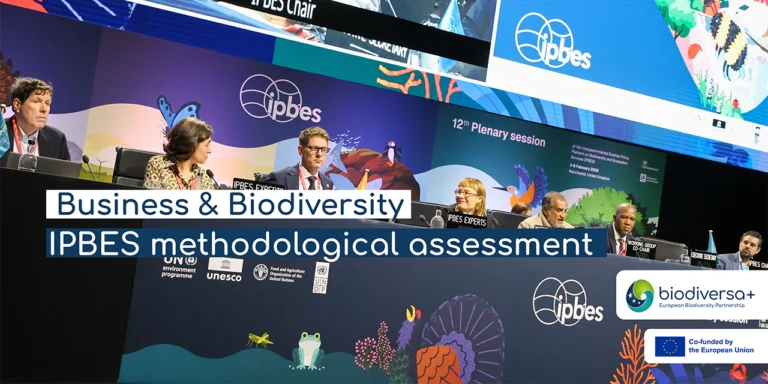
IPBES has published the first global evaluation of how businesses depend on and impact biodiversity, and how governance systems shape these relationships.
A new Biodiversa+ guide outlines practical, safeguarded approaches for companies to make biodiversity data more accessible.
A new Biodiversa+ guide shows how biodiversity data drive priority‑setting in business, and how better usability can increase their impact.
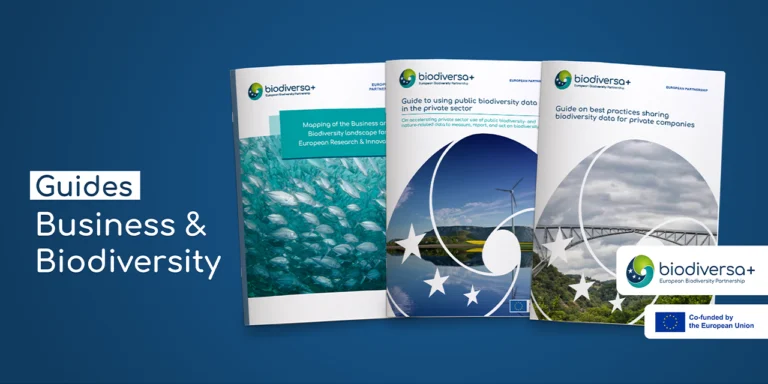
Biodiversa+ is publishing three new reports showing how businesses and financial institutions can turn biodiversity data into practical action…
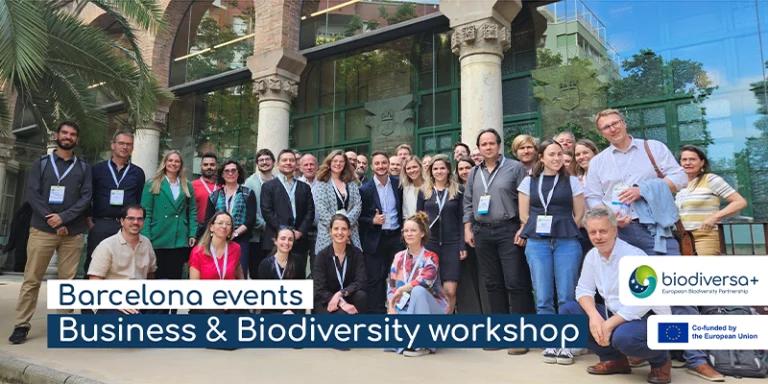
Biodiversa+ convened a two-day workshop to address a pressing challenge: how to make biodiversity data meaningful and usable for businesses…
Biodiversa+ is looking for private companies to share how they use biodiversity data to make smarter, more sustainable business decisions…
Biodiversa+ is opening two calls for tenders designed to help businesses integrate biodiversity into their operations…
Biodiversa+ is developing a Business and Biodiversity Guide, open for public consultation until 14 February 2024…

Biodiversa+ hosted a webinar explaining the scope of the upcoming IPBES Business & Biodiversity assessment, and how experts can participate.