
01/03/2020 – 28/02/2023
€ 1,328,784
Prof. Dr. Sara Leonhardt
leonhardt@wzw.tum.de
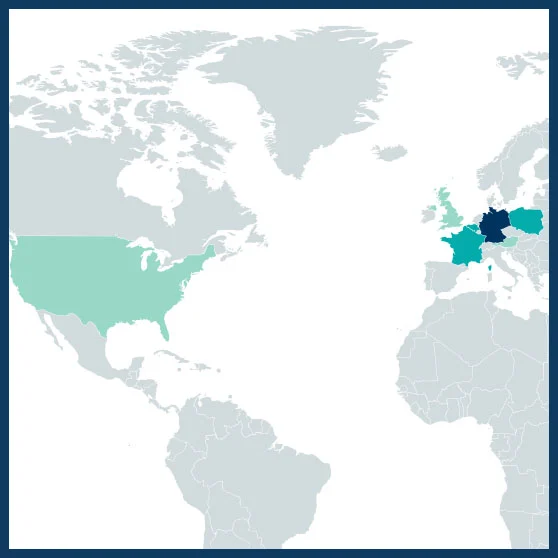
Coordinator: Plant–Insects Interactions, Technical University of Munich – Freising – Germany
Free lance – Elixhausen – Austria
Plants and Crops – University of Ghent – Ghent – Belgium
Bees and Environment (BPA) – INRAE – Avignon – France
Evolution, Genomes, Behaviours and Ecology (EGCE) – University of Paris Sud/ CNRS/IRD – Gif sur Yvette – France
Nature Conservation and Landscape Ecology – Albert–Ludwigs–University – Freiburg – Germany
Zoological Museum of Kiel University – Kiel – Germany
Animal Ecology and Tropical Biology – University of Würzburg – Würzburg – Germany
Computational and Theoretical Biology – University of Würzburg – Würzburg – Germany
Intitute of Environmental Sciences– Jagiellonian University – Kraków – Poland
Natural Resources Institute – Kew Botanical Garden – Kew – United Kingdom
Entomology – University of Riversides – United–States
Bees are essential pollinators of most flowering plants and of many crop plant species. They also contribute to additional ecosystem services, such as biodiversity conservation and landscape aesthetics. Alarmingly, many wild bee populations are in decline and the multiple ecosystem functions and services they are associated with are currently put at risk, which is of large concern to scientists and many stakeholders and policy-makers alike. Improving bee health is one of the key levers of intervention to help preserve wild bee populations and associated ecosystem services.
Scientists assume that the loss of floral diversity is one major driver of the observed bee decline, while lab studies have shown that honeybees fed with diverse floral diets are healthier than honeybees fed with monotone floral diets. In fact, bees seem to thrive in biodiverse environments which typically provide a continuous supply of diverse food resources. However, equivalent field observations are still lacking, and the precise relationship between floral diversity, nutritional intake and bee health is still largely unknown. This is particularly true for wild bees, which have received much less research and attention than managed honeybees.
NutriB2 will develop actionable knowledge for the management of wild bee health by:
- Studying how the composition and diversity of food resources collected across environments varying in floral diversity affects the nutritional composition and toxicity (e.g. due to toxic compounds typically found in flowers) of food for wild bees;
- Studying how food nutritional composition and toxicity relate to health of different wild bee species;
- Identifying whether key nutrients important for the health of bee populations can be linked with specific key plant species and habitats, which shall then be targeted by mitigation and conservation actions that support wild bee populations and associated ecosystem services.
The ultimate aim of NutriB2 is to propose ways to increase the health of different wild bee species through conserving and restoring nutritionally diverse and appropriate floral resources, particularly in low diversity environments. NutriB2 will identify plant species visited by different wild bee species in grasslands of Germany, Austria and Belgium that differ in floral diversity using next-generation-sequencing. NutriB2 will also analyse the complete chemical composition –including nutrients and toxic compounds– of pollen from those plant species. In complement, NutriB2 will measure differences in the health status of bees within and between species in these grasslands, based on morphometric, physiological and stoichiometric analyses, and measure bee pathogen loads, e.g. viruses and protozoa. This will allow to identify interactions between nutrition, health and infections in relation to floral diversity and define species-specific nutritional niches and determine critical key nutrients and plant species and habitats beyond grasslands that cover the nutritional needs of a large fraction of bee species.
In addition, NutriB2 will closely collaborate with farmers, seed companies, beekeepers and local and international NGOs, mutualising engagement efforts in collaboration with other projects (e.g. VOODOO, MacroBEEs). The aim is to reveal informational gaps on the importance of floral resources and nutrition for bees as well as how stakeholders have the means to support floral enhancement. They will be involved in understanding NutriB2 results in their specific contexts and help identify and implement viable solutions, e.g. composing nutritionally valuable seed mixes suitable in relation to habitat types (e.g. forest patches/hedgerows in agricultural fields) and on-site management regimes. To this end, NutriB2 will develop web resources, stakeholder workshops, policy-briefs, newspapers articles and booklets in close collaboration with other projects, creating synergies that benefit stakeholders.