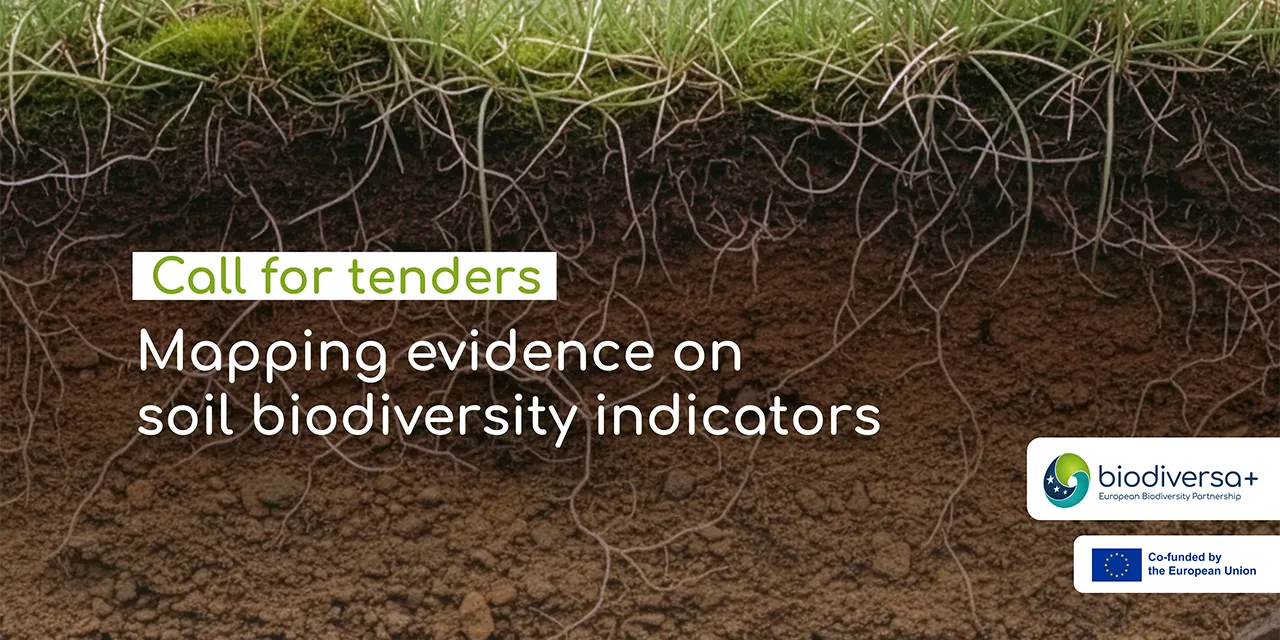
Biodiversa+ is pleased to announce a new call for tenders to conduct a comprehensive knowledge synthesis entitled: ‘Mapping the Evidence on Soil Biodiversity Indicators in Relation to Soil Degradation Processes’.
Context
Soil biodiversity underpins the functioning of ecosystems and life on Earth. From cycling essential nutrients such as nitrogen and phosphorus to purifying water and regulating greenhouse gases, soil organisms provide vital benefits to society and the economy.
Yet the intensification of human activities continues to drive rapid changes in terrestrial ecosystems. To safeguard soil health, stronger links are needed between land management practices and soil functioning, supported by robust biological monitoring.
This desk study will deliver a state-of-the-art evidence base to help address key soil threats in the EU and inform policy action. It will contribute to the knowledge needed to support the legal framework aimed at achieving healthy soils by 2050.
Objectives and scope
The synthesis will focus on soil biodiversity, including at a minimum fungi and bacteria, and examine the ecological impacts of human pressures such as soil erosion, pollution, carbon loss and compaction.
The primary research question is: What evidence exists on the use of indicators to monitor and assess soil degradation across terrestrial ecosystems?
Secondary questions include: Which indicators and organism groups are most commonly used to identify human pressures? In which ecosystems or land-use types are these indicators applied? What thresholds have been proposed for soil biodiversity indicators to assess ‘soil health’, and how are they defined?
The project should identify both knowledge gaps and evidence clusters, resulting in a structured database of existing studies. The methodology is expected to draw on approaches used in systematic maps; scoping reviews or rapid evidence assessments may also be appropriate. The final synthesis must summarise and translate the evidence into actionable insights for policymakers, practitioners and researchers.
Key details
- Duration: 18 months
- Maximum budget: €88,000 (including taxes)
- Submission deadline: 3 April 2026, midnight (CET)
- Applications: Submitted in English, sent by email to Joseph LANGRIDGE and Marlies LAETHEM
- Documents: Details and specifications, Application form