
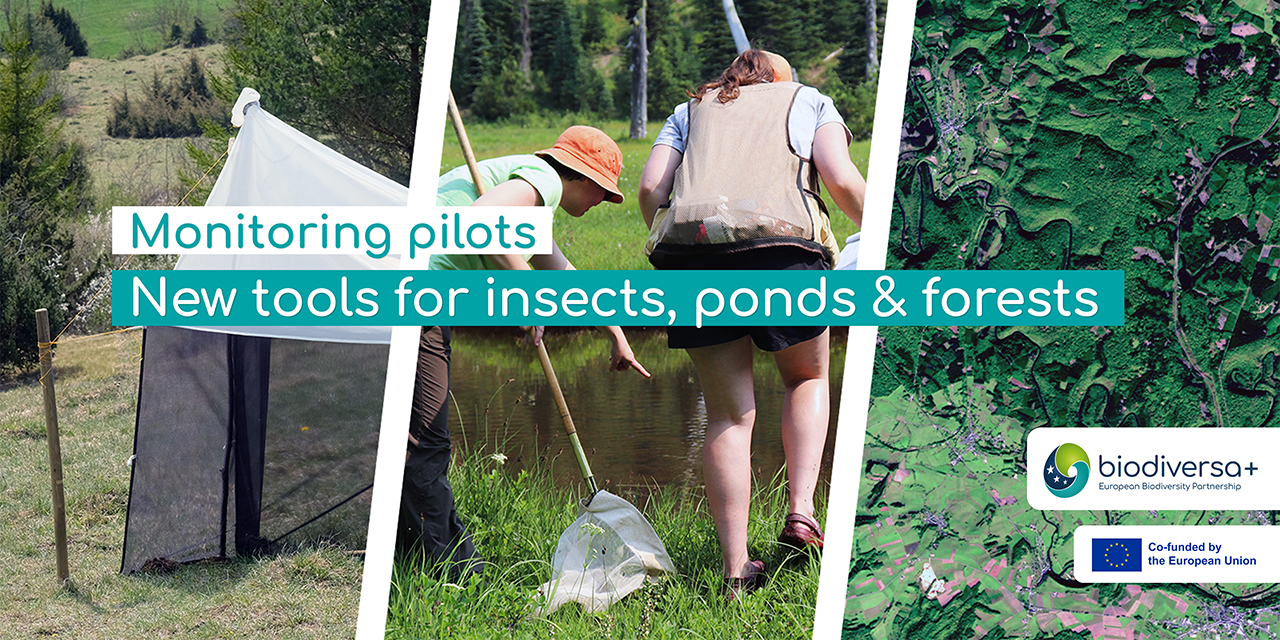
To meet the ambitious targets of the EU Biodiversity Strategy for 2030 and the Nature Restoration Regulation, Europe needs harmonised, high-resolution data on its ecosystems. To support this goal, Biodiversa+ will launch three new pilot projects in 2026, using innovative technologies to monitor insects, ponds, and forests across the continent.
MetaBug: Harmonising insect monitoring using DNA-based methods
Global insect populations are in decline, yet tracking these changes remains challenging due to their immense diversity and the labour-intensive nature of traditional monitoring. MetaBug will combine Malaise traps with DNA metabarcoding to detect thousands of species, from elusive pollinators to common insects, in a sensitive and repeatable way. Ethical and environmental concerns are addressed: the traps capture only a very small fraction of local populations, with no significant impact on insect communities. This approach also has a lower carbon footprint than many traditional observation-based surveys. Building on national schemes and initiatives such as LIFEPLAN and BIOSCAN, MetaBug aims to establish harmonised field and laboratory protocols and to share expertise with regions currently underrepresented in insect monitoring, supporting policies like the Nature Restoration Regulation and the EU Pollinator Monitoring Scheme (EUPoMS).
BiodivPond: Strengthening biodiversity monitoring in small water bodies
Ponds support up to 70% of freshwater biodiversity in European landscapes and play a key role in reducing flood and drought risks. Yet they are often overlooked in national monitoring schemes because of their number and dispersal. BiodivPond will combine field surveys, eDNA sampling, and passive acoustic monitoring to capture species richness, genetic diversity, and ecosystem functions. A citizen science programme will engage volunteers in sampling hundreds of ponds. The project will directly support the Water Framework Directive and the Water Resilience Strategy, contributing to natural water retention and the conservation of threatened freshwater habitats.
SenseForest: High-resolution data for forest biodiversity assessment
Traditional forest monitoring relies on costly, point-based field inventories that often miss landscape-scale dynamics, making cross-border comparisons difficult. Building on the Biodiversa+ Habitat pilot, SenseForest will use remote sensing technologies, from very high-resolution drones to medium-resolution satellites such as Sentinel, to provide “wall-to-wall” information across forest landscapes. The pilot will identify relevant indicators, validate methods under varying conditions, and propose harmonised protocols for cross-country use, supporting the Habitats Directive and the EU Forest Strategy 2030.
A Europe-wide collaborative approach
Together, these pilots exemplify Biodiversa+’s commitment to innovation and harmonisation in biodiversity monitoring. By combining new technologies with established approaches, they will deliver standardised data, methodological guidance, and actionable insights to support evidence-based policies and the sustainable management of Europe’s shared biodiversity.
Stay tuned for more details as these pilots get underway in 2026.