
Duration
2026-2028
Partners involved
The pilot is coordinated by the Danish Agency for Green Land Use and Aquatic Environment (SGAV), through Aarhus University, and by the Finnish Ministry of the Environment (MoE_FI), through the Finnish Environment Institute (Syke).
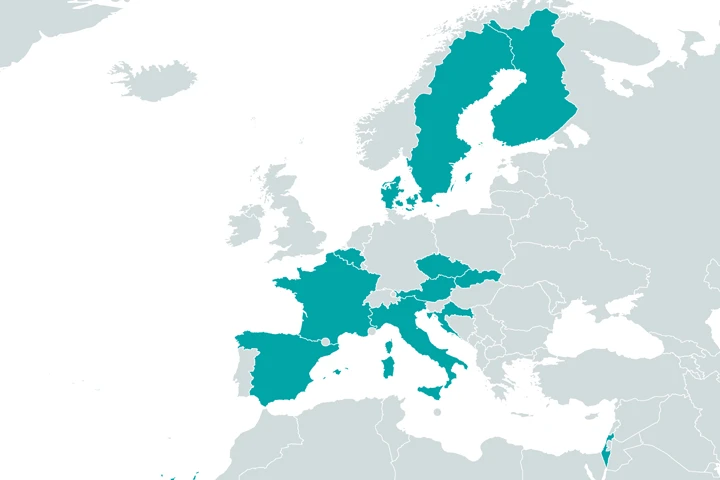
It involves partners from twelve countries: Austria, Belgium (Flanders), Spain (Catalonia), Croatia, Czech Republic, Denmark, Finland, France, Israel, Italy (Autonomous Province of Bolzano), Slovakia and Sweden.
External collaboration
The pilot links with initiatives including EBOCC, FORWARDS, WILDCARD, BioDivAbove, the Copernicus Land Monitoring Service and relevant national initiatives on habitat and forest monitoring. It also draws on related work within Biodiversa+ and on insights from projects such as EUROPABON and MAMBO.
More information
Context
Forest habitat monitoring is still often based on labour-intensive field surveys that can miss broader spatial dynamics and do not provide wall-to-wall information. Remote sensing has strong potential to complement field monitoring, but its operational use for biodiversity-oriented forest habitat assessment is not yet well understood across countries and habitat types.
SenseForest addresses this by testing how remote sensing methods can support more robust and comparable monitoring of forest habitats listed in Annex I of the EU Habitats Directive, as well as other valuable forest habitats across Europe.
Main objectives
This pilot focuses on:
- identifying remote sensing methods that can support harmonised monitoring of key forest habitat condition indicators;
- testing selected methods across different forest habitats, biogeographical regions and partner countries using existing and supplementary in situ data;
- synthesising knowledge on which remote-sensing-based metrics are transferable across borders and habitats, and on the conditions needed for their operational use.
Main activities
SenseForest is structured around three modules: reviewing current methods, testing selected methods, and synthesising the results.
Partners will first review remote sensing approaches already used in different countries and identify the most promising methods for harmonised forest habitat monitoring. These methods will then be tested across countries and habitats using shared guidance and validation data. In the final phase, results will be brought together into a common assessment of which methods are most suitable for broader operational use.
Main outcomes
The main output of the pilot will be a final report presenting the remote sensing methods tested and recommendations for their harmonisation and wider application in forest habitat monitoring. The pilot is also expected to strengthen the integration of remote sensing into monitoring of Annex I habitats under the EU Habitats Directive and contribute to more comparable biodiversity reporting and management across Europe.