
Duration
2026-2028
Partners involved
The pilot is coordinated by the Swedish Environmental Protection Agency (SEPA), through the Swedish Museum of Natural History, and by the Dutch Research Council (NWO), through the Naturalis Biodiversity Center.
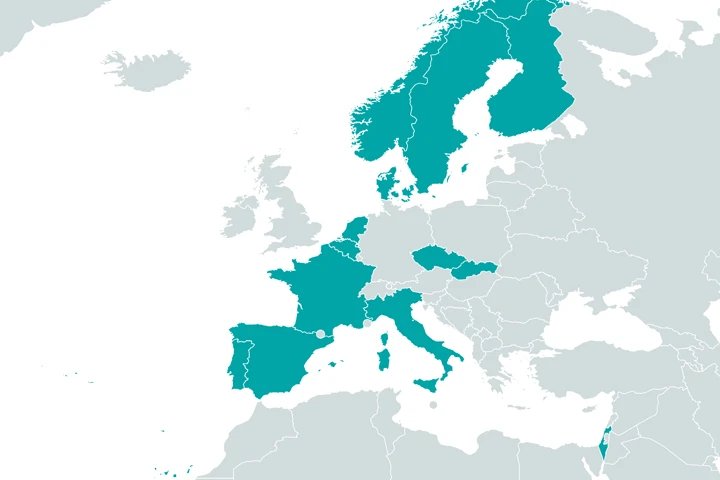
It involves partners from thirteen countries: Belgium (Flanders), Czech Republic, Denmark, Finland, France, Israel, Italy (Autonomous Province of Bolzano), the Netherlands, Norway, Portugal (Azores), Slovakia, Spain (Catalonia) and Sweden.
External collaboration
The pilot connects with initiatives including BIOSCAN, Biodiversity Genomics Europe, LIFEPLAN, the European Pollinator Monitoring Scheme, Insects of the North, and Biodiversity Meets Data. It will also seek synergies with other Biodiversa+ pilots, including BiodivPond, Soil and IAS.
More information
Context
Insect biodiversity is declining, but monitoring insects remains difficult because of their extraordinary diversity and the high level of taxonomic expertise usually required. MetaBug addresses this challenge by combining Malaise traps with DNA metabarcoding to capture a much broader share of insect biodiversity than conventional monitoring approaches.
The pilot aims to support the development of a harmonised European framework for monitoring insect communities, including pollinators, in a more scalable and cost-effective way.
Main objectives
This pilot focuses on:
- developing harmonised field sampling instructions for Malaise-trap monitoring;
- testing and refining harmonised laboratory and bioinformatic protocols;
- producing guidance on sample storage, data quality and FAIR data publication;
- developing recommendations for monitoring design and policy-relevant biodiversity metrics;
- defining a standardised protocol for insect monitoring using Malaise traps and DNA metabarcoding across Europe.
Main activities
MetaBug is structured around six activities spanning the full monitoring pipeline. These include harmonising field protocols, running field trials with Malaise traps across partners, testing and aligning laboratory protocols, standardising bioinformatic processing, developing monitoring design and policy-relevant metrics, and synthesising the results into a proposed Europe-wide monitoring framework. Workshops and training materials will support implementation and help partners apply the methods consistently.
Main outcomes
The pilot will deliver a standardised Malaise trap design, training materials on field procedures, documented laboratory and bioinformatic protocols, a published MetaBug dataset, and a final report with recommendations for harmonised insect monitoring across Europe. Together, these outputs will help expand insect monitoring beyond a few well-studied groups and support more comprehensive biodiversity reporting and policy implementation.