
Understanding and recognising wild products harvesting by Indigenous and Local communities to promote environmental justice and halt biodiversity erosion
Call
Duration
01/02/2026 – 31/01/2029
Total grant
Approx. 704 thsd. €
More information
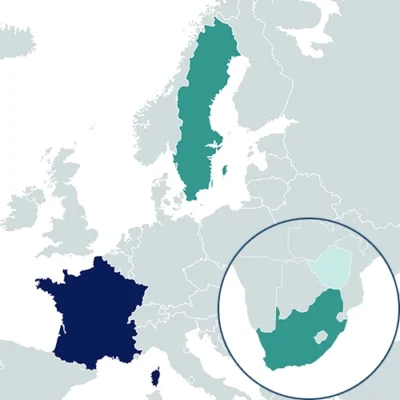
Partners of the project
- International research Lab REHABS, CNRS-NMU, Lyon, France
- School of Natural Resource Science & Management, Nelson Mandela University, Port Elizabeth, South Africa:
- Swedish University of Agricultural Sciences, Uppsala, Sweden
- Centre For Global Change, University of Limpopo, Ga-Rankuwa, South Africa
- Lupane State University, Lupane, Zimbabwe
- South African National Parks, South Africa
Context
WildHarvest, through transdisciplinary action research and strong science-practitioner partnerships, will empower indigenous knowledge holders in two highly diverse biomes, the Cape Floristic Region and Dry savanna woodlands. It will produce transformative research on sustainable use of a wide range of wild-harvested taxa while contributing to policy and practice.
Main objectives
WildHarvest seeks to foster ‘environmental justice from science to policy’ through four components: 1) recognition justice, by valuing and respecting local, indigenous, and traditional ecological knowledge systems previously marginalised; 2) procedural justice, by giving marginalised communities opportunities to participate in natural resource decisions; 3) redistributive justice, by ensuring sustained direct benefits; 4) ecological justice, through traditional stewardship, emphasising sustainability, adaptation, and respect for ecological cycles. Building on these principles, WildHarvest will:
- understand critical socio-ecological couplings and develop frameworks relevant to wild-harvesting practices;
- document practices of wild harvesters from Indigenous Peoples and local communities, understand associated values and knowledge, and co-identify possible drivers of change;
- co-identify feedback loops between harvesting practices and resource ecology, and co-design monitoring methods to track resource state, dynamics, and pressures;
- trigger transformative change in natural resource governance locally and regionally, giving visibility and credibility to wild harvesters as key stewards.
Main activities
- Co-elaborate a research methodology relevant to local stakeholders and wild harvesters.
- Use mind-mapping to develop a conceptual framework from harvester narratives, elucidating social-ecological couplings supporting socially and ecologically just practices.
- Operationalise participatory ranking, sorting, and mapping tools in focus groups with key local knowledge holders.
- Analyse historical, legal, and policy documents to identify past and external drivers, and use focus groups to identify current local drivers.
- Co-elaborate visions for desirable futures in wild resource harvesting.
- Mobilise a Two-Eyed Seeing approach to bridge Indigenous and scientific knowledge and co-develop sustainable harvesting and community-based monitoring systems.
- Carry out an anticipatory governance exercise using the Futures triangle to identify challenges, opportunities, and leverage points for transformative change across scales.
- Create storytelling platforms at local, national, and transnational levels with local partners, ensuring knowledge dissemination respects cultural, linguistic, and connectivity diversity.