
Transform urban flowerbeds for the future: sustainable use and pollinator conservation
Call
Duration
01/03/2026 – 28/02/2029
Total grant
Approx. 1.2 mil. €
More information
Partners of the project
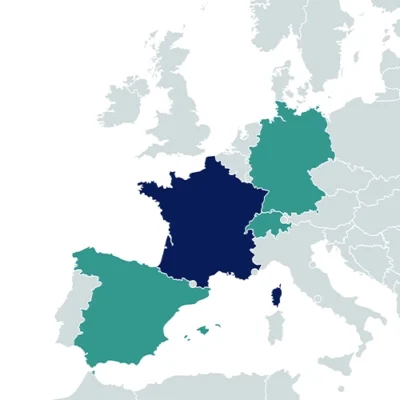
- Laboratory Agronomy and Environnement, University of Lorraine, Nancy, France
- Evolution-Ecology-Palaeontology Lab, University of Lille-CNRS, Lille, France
- Institute of Ecology and Environmental Sciences of Paris, Paris, France
- Research Centre in Biodiversity and Environment, University of Toulouse-CNRS, Toulouse France
- Population Environment Development Laboratory, Aix Marseille University, Marseille, France
- Urban Productive Ecosystems, Technical University of Munich, Munich, Germany
- Basque Centre for Climate Change, Leioa, Spain
- School of Engineering, Architecture and Landscape of Geneva, HES-SO – University of Applied Sciences and Arts Western, Geneva, Switzerland
- Natural History Museum – Leibniz Institute for Evolution and Biodiversity Science, Berlin, Germany
- Centre for Ecology and Conservation Sciences, Natural History Museum, Paris, France
- The Mediterranean Institute of Biodiversity and Marine and Continental Ecology, Aix Marseille University, Marseille, France
Context
Given the global decline in pollinators over the past two decades, recent studies indicate that urban green spaces could serve as refuges for pollinators. These green spaces are subject to increasingly frequent and intense droughts, which reduce water availability and limit the provision of floral resources for pollinators. In European cities, the ornamental varieties offered in catalogues are often similar across cities, even though climatic conditions differ, and tend to prioritise aesthetics over biodiversity benefits. There is therefore an urgent need to rethink urban flowerbeds, involving stakeholders ranging from horticulturists to managers. By exploring creative flowerbeds developed jointly by scientists and local stakeholders that balance drought resistance, pollinator attraction, and social acceptance, this project aims to redefine flowerbed management to support sustainable biodiversity conservation.
Main objectives
Our project aims to develop sustainable future flowerbed species assemblages and compare them to traditional assemblages in nine European cities. Specifically, we will explore:
- What quantitative floral traits do future flowerbeds exhibit compared to traditional ones?
- How attractive are future flowerbeds to pollinators?
- What impact does drought have on these flowerbeds?
- What changes in practices can be collectively agreed upon by all stakeholders?
- How can we evaluate future flowerbeds using a multi-criteria assessment approach?
Main activities
- We adopt an interdisciplinary approach that combines natural and social sciences to produce actionable knowledge aimed at informing public policies and fostering transformative change.
- Flowerbed compositions are selected according to bioclimatic regions, local stakeholder input, and plant attractiveness to pollinators.
- Floral traits and their responses to drought are measured using standardised protocols to ensure comparability across cities.
- We develop a novel, non-lethal tool to recognise and classify different groups of pollinators, while actively engaging a wide range of stakeholders (e.g., urban green space managers and users, volunteer citizens, and school groups) in pollinator identification.
- We assess the perceptions of urban green space managers, planners, and users regarding future flowerbeds, including their design, implementation, and maintenance, using social science methods.
- We conduct data analysis and multi-criteria evaluation to assess the ecological, social, and functional performance of future flowerbeds.