
A transformative production system for making rice paddies biodiverse and climate neutral
Call
Duration
01/04/2026 – 31/03/2029
Total grant
Approx. 1.3 mil. €
More information
Partners of the project
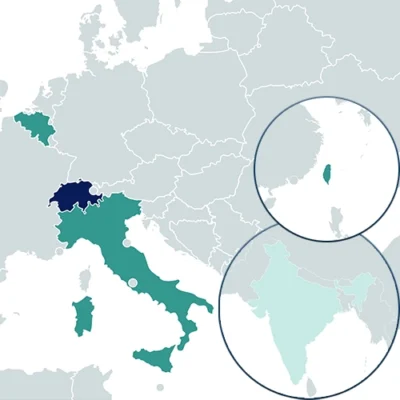
- School of Agricultural, Forest and Food Sciences, Bern University of Applied Sciences, Bern, Switzerland
- Faculty of Sciences and Bioengineering Sciences, Vrije Universiteit Brussel, Brussels, Belgium
- Department of Economics, Management and Statistics, University of Milano-Bicocca, Milan, Italy
- National Chung Hsing University, Taichung, Taiwan
- Crop science division/ Agronomy Lab, Taiwan Agricultural Research Institute (TARI), Taichung, Taiwan
- Rete Semi Rurali ETS, Scandicci, Italy
- Department of Environmental Science and Policy, Università degli Studi di Milano, Milan, Italy
- Institute of Geography and Sustainability, Lausanne University, Lausanne, Switzerland
- Department of Ecology & Environmental Sciences, Pondicherry University, Kalapet, Puducherry, India
Context
This project pursues the development and testing of a novel production system that transforms predominantly monocultured rice (Oryza sativa) paddies into multifunctional sustainable ecosystems. With a multi- and transdisciplinary approach, the project ensures an ideal combination of technical and socio-economic expertise and engagement of a broad range of actors for maximised impact. The project has an equally balanced focus on addressing and mitigating the anthropogenic drivers of biodiversity loss as well as the socio-economic and policy drivers (hindering and enabling factors) for successful adoption of the proposed novel production system at scale. Rice (Oryza sativa) is a major global staple cultivated on over 165 million hectares worldwide. Approximately 76 % of production comes from irrigated lowland systems, often managed as intensive monocultures with multiple cropping cycles per year, resulting in biodiversity loss, soil degradation, and environmental contamination.
Hence there is a strong need to develop new cultivation methods for rice, embedded in innovative strategies for greenhouse gas emission mitigation and enhancement of on-farm biodiversity.
Main objectives
The overall goal of this project is ‘to develop a Transformative Production System (TPS), utilising the functional diversity of plant species available in different rice-growing environments to intercrop rice and enhance the multifunctionality of the landscape’. We hypothesise that ‘intercropping (co-cultivation) of rice with other plant species possessing high rhizosphere oxidation capability will significantly reduce CH4 emissions from paddy fields while enhancing biodiversity’. The novelty of our proposed research lies in the unique integration of localised utilisation of the natural biodiversity informed by historic and native know-how in local rice farming cultures together with the cutting-edge scientific tools to develop a TPS. This holistic and inclusive framework will help tackle the global challenges of climate change and biodiversity loss by aligning them with tangible local benefits. Intercropping as a strategy to mitigate greenhouse gas emissions from paddy fields has not yet been studied, except in our preliminary studies.
Main activities
- Identification of plant material for intercropping with rice, suited to local conditions.
- Empirical assessment of selected plant potential for CH4 mitigation, productivity and profitability upon intercropping with rice in Mediterranean, tropical and sub-tropical environments.
- Evaluation of the effect of the proposed TPS on both CH4 emission rates and biodiversity in the replicated experimental fields in Italy, India and Taiwan.
- Analysis of the socio-political-economical acceptability, adoptability, profitability and scaling of the developed and tested TPS.