
Participatory Engagement for Adaptation and Conservation Efforts
Call
Duration
01/03/2026 – 28/02/2029
Total grant
Approx. 1.8 mil. €
More information
Partners of the project
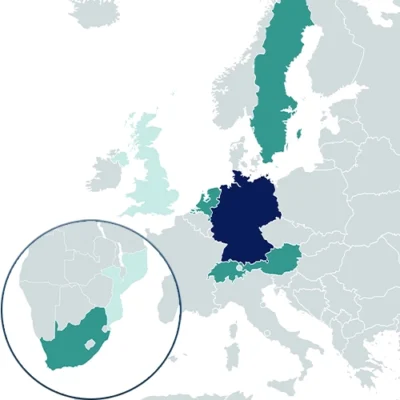
- School of Business and Economics, Marburg University, Marburg, Germany
- Beijer Institute of Ecological Economics, Royal Swedish Academy of Sciences, Stockholm, Sweden
- Department of Biology, Marburg University, Marburg, Germany
- Computational Evolution, ETH Zurich, Basel, Switzerland
- Faculty of Economics and Statistics, University of Innsbruck, Innsbruck, Austria
- Ecosystems Department, Institute of Natural Resources, Pietermaritzburg, South Africa
- Department of Biotechnology and Biological Sciences, University of Fort Hare, Alice, South Africa
- Department of Biology, Utrecht University, Utrecht, The Netherlands
- Centre for Geography and Environmental Science, University of Exeter, Penryn, United Kingdom
- Executive Office, Peace Parks Foundation, Stellenbosch, South Africa
- Biodiversity Department, Sylva, Weßling, Germany
- Faculty of Sciences, Department of Biological Sciences, Eduardo Mondlane University, Maputo, Mozambique
Context
Biodiversity loss and increasing human-wildlife interactions are among the most pressing challenges in many parts of sub-Saharan Africa. In regions where protected areas border agricultural and pastoral communities, conservation success depends not only on ecological knowledge, but also on how decisions are made, who is involved, and whether policies are perceived as fair and legitimate. Top-down conservation approaches often fail to address local realities, leading to conflicts, low compliance, and limited long-term impact. PEACE addresses these challenges in the Greater Limpopo Transfrontier Conservation Area by developing and testing participatory, data-informed governance approaches that connect biodiversity protection with local livelihoods and adaptation needs.
Main objectives
PEACE aims to support transformative biodiversity governance by:
- strengthening inclusive, participatory decision-making on conservation and human-wildlife interaction;
- linking automatic biodiversity monitoring with local and policy-relevant decision processes;
- fostering long-term cooperation, trust, and shared responsibility for biodiversity conservation.
Main activities
PEACE combines ecological monitoring, social science, and stakeholder engagement in an integrated, adaptive framework.
First, the project deploys automatic biodiversity monitoring (e.g., acoustic sensors, camera traps, biologging) complemented by remote-sensing and ranger/field observations, to generate near-real-time information on species movements, and human-wildlife interaction hotspots. These data are translated into accessible indicators that can directly inform local and regional conservation decisions.
Second, PEACE establishes Citizens’ Juries as inclusive deliberative forums where community members jointly discuss conservation challenges, trade-offs, and response options. These processes are supported by a Transdisciplinary Panel of scientists, policymakers, and practitioners, ensuring that local perspectives are combined with scientific evidence and institutional feasibility.
Third, the project uses experimental learning games and future-oriented workshops to make complex conservation dilemmas tangible, support collective learning, and enable communities to explore long-term consequences of different management and compensation options.
Together, these activities allow PEACE to co-develop context-specific strategies for biodiversity protection, conflict mitigation, and compensation schemes that are perceived as fair, evidence-based, and actionable.
By embedding monitoring data into participatory governance processes, PEACE creates feedback loops that support adaptive management over time and generates actionable lessons for policy learning across scales. It supports learning at local, national, and transboundary levels and contributes to implementing the Kunming-Montreal Global Biodiversity Framework, particularly regarding inclusive governance, benefit-sharing, and human-wildlife coexistence. By developing scalable participatory tools and governance models, PEACE provides transferable insights for other regions facing similar biodiversity-livelihood trade-offs.