
Pathways of constructive conflict transformation to foster transformative change in wetland restoration
Call
Duration
01/03/2026 – 28/02/2029
Total grant
Approx. 934 thsd. €
More information
Partners of the project
- Research Hub Social-Ecological Systems / Research Unit Water and Land Use, Institute for Social-Ecological Research, Frankfurt am Main, Germany
- Team Nature & Society, The Research Institute for Nature and Forest, Brussels, Belgium
- Faculty of Political and Social Sciences, Ghent University, Ghent, Belgium
- Research Centre in Systems Ecology and Sustainability, University of Bucharest, Bucharest, Romania
- Department of Biology and Geology, University of Almeria, La Canada des San Urbano, Almeria, Spain
Context
European wetlands are of high ecological value for societies. At the same time, they are increasingly under threat. Their sustainable preservation requires not only sound scientific foundations, but also collaboratively developed visions and strategies. The European Nature Restoration Law provides a new window of opportunity to halt and reverse wetland and biodiversity loss. Its transformative impact and success depend on its effective implementation by the EU Member States. However, implementing restoration measures to bend the curve of biodiversity loss poses major social and political challenges arising from conflicts and trade-offs over land use, which arise from heterogeneous interests, values, and knowledge among relevant actors, as well as inconsistent policies and governance structures.
Main objectives
PathChange aims to produce actionable knowledge for constructive conflict transformation in wetland restoration to overcome barriers caused by incoherent policies, as well as conflicts and trade-offs over land use.
Our objectives are to:
- identify success factors for constructive conflict transformation;
- increase governance coherence for biodiversity-positive wetland restoration;
- co-create visions and pathways for constructive conflict transformation;
- integrate transdisciplinary and transnational knowledge.
Main activities
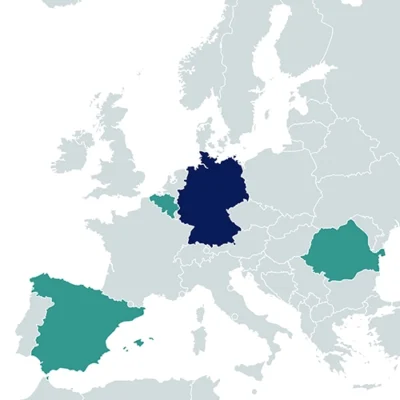
The project pursues a social-ecological systems (SES) approach, enabling a comprehensive analysis that integrates the multifaceted roles of wetlands, highlighting their ecological and societal benefits. To generate an in-depth understanding of challenges for transformative change in wetland restoration projects, empirical case studies of wetlands in Germany, Belgium, Romania and Spain will be conducted to develop visions and pathways that strengthen synergies and facilitate nature positive transformative change. Our empirical research follows a multi-actor approach and is designed as an integrative, participatory and learning-oriented effort among scientific partners and societal stakeholders from multiple sectors (policy, administration, conservation, NGOs, agriculture, fishery, tourism and local populations).
Key activities include:
- developing an integrative framework for conflict transformation that maps the multitude of actors, governance, ecological entities, and their interrelations;
- analysing (in)coherence of governance structures and policies as well as developing integrated approaches for governance coherence;
- co-creating shared visions and transformative pathways for wetland restoration by means of stakeholder-workshops in the study areas;
- fostering transnational synthesis and knowledge exchange.