
Peace and Conservation of Ecology at Disputed Seas
Call
Duration
01/04/2026 – 31/03/2029
Total grant
Approx. 938 thsd. €
More information
Partners of the project
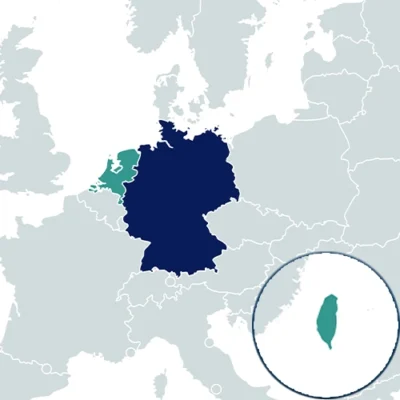
- Department of Wood, Forest, and Environment, Eberswalde University for Sustainable Development, Eberswalde, Germany
- Institute of Marine Affairs and Resources Management, National Taiwan Ocean University, Keelung, Taiwan
- Faculty of Governance and Global Affairs, Leiden University, Leiden, The Netherlands
Context
The South China Sea or West Philippine Sea (SCS/WPS) forms part of the Coral Triangle with high marine biodiversity. It is also a highly contested maritime area with overlapping claims by Brunei Darussalam, China, Indonesia, Malaysia, the Philippines, and Vietnam. This maritime route between the Indo-Pacific and Europe is of major importance for external trade of European countries, such as Germany, with 40 percent of its external trade passing through this route. As claimant states intensify efforts to assert territorial control through infrastructure development and military patrols, marine biodiversity and resource-dependent local communities are seemingly negatively affected.
Main objectives
PaCE will bring together a transnational and interdisciplinary group of researchers with Southeast Asia geographical expertise, to assess the ecological and socio-economic impacts of geopolitical conflict in the SCS/WPS on biodiversity, regional trade systems, and the livelihoods of coastal and neighbouring communities. The overarching goal of PaCE is to demonstrate the high transformative potential of peacebuilding to safeguard biodiversity and improve local livelihoods especially in highly disputed areas such as the SCS/WPS. The project will:
- identify direct and indirect interdependencies between marine biodiversity and different sectors in claimant countries of the SCS/WPS;
- assess the degree of interconnection between biodiversity loss and geopolitical conflict in the SCS/WPS (notwithstanding lack of baseline data and confounding factors such as climate change); and
- examine the role of science diplomacy in leveraging peace for transformative change towards biodiversity conservation, human well-being, and justice within the SCS/WPS region.
Main activities
PaCE will holistically address the biodiversity and geopolitical issue of the SCS/WPS from an interdisciplinary multi-scalar and multi-stakeholder research perspective through the following work packages:
- interdependence between biodiversity and socio-economic and human well-being,
- interconnections of biodiversity loss and geopolitical conflict in the SCS/WPS,
- science diplomacy and peacebuilding for the biodiversity conservation in the SCS/WPS.
We foresee PaCE as democratising peacebuilding and science diplomacy by extending participation to researchers, policymakers and so-called ‘common folk’ also known as 常民 (in Mandarin) or karaniwang tao (in Filipino), using different media (e.g., comic books, technical manuals, peer-reviewed journal articles) to reach out to these diverse stakeholders.