
Optimisation of Tree Species selection for Improved Biodiversity and Ecosystem Services
Call
Duration
01/01/2026 – 31/12/2028
Total grant
Approx. 1.0 mil. €
More information
Partners of the project
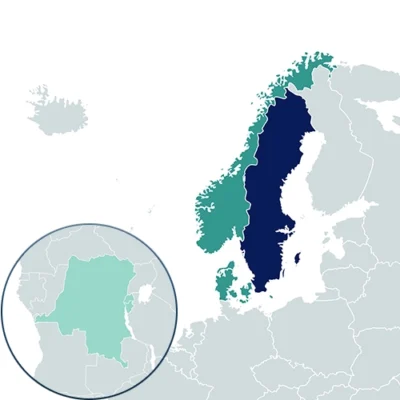
- Department of Biological and Environmental Sciences, University of Gothenburg (UGOT), University of Gothenburg, Sweden
- Department of International Environment and Development Studies, Norwegian University of Life Sciences, Aas, Norway
- Department of Geosciences and Natural Resource Management, University of Copenhagen, Copenhagen, Denmark
- Center of Excellence in Biodiversity and Natural Resource Management, University of Rwanda, Huye, Rwanda
- School of Forestry, Biodiversity and Conservation, University of Rwanda, Musanze, Rwanda
- International Centre for Research in Agroforestry, Kigali, Rwanda
- Rwanda Forestry Authority, Huye, Rwanda
- Department of Biology, Official University of Bukavu, Bukavu, Democratic Republic of Congo
- Department of Biology, University of Burundi, Bujumbura, Burundi
Context
Forest restoration and agroforestry are key nature-based solutions to biodiversity loss, climate change, and declining rural livelihoods. In the Albertine Rift of Central and East Africa – a global biodiversity hotspot – forest plantations have largely relied on a few exotic tree species, leading to landscape homogenisation, reduced ecosystem resilience, and limited benefits for biodiversity and local communities. Climate change further increases the risk of restoration failure when tree species are poorly matched to local environmental conditions. Native multipurpose tree species offer major opportunities to enhance biodiversity, ecosystem services, and human well-being, but their wider use is constrained by limited knowledge of their climate sensitivity, performance, and socio-economic suitability. OpTIBES addresses these gaps by developing climate-adapted, socially grounded strategies for tree species selection in forest restoration and agroforestry, with a primary focus on Rwanda and complementary work in Burundi and the Democratic Republic of Congo.
Main objectives
The overall objective of OpTIBES is to provide evidence-based, climate-resilient, and purpose-driven recommendations for native tree species selection that maximise biodiversity, ecosystem services, and livelihoods in the Albertine Rift. Specifically, the project aims to:
- assess livelihood needs, ecosystem services, and environmental suitability of native tree species;
- evaluate tree species performance under diverse climatic, soil, and management conditions using field trials and monitoring;
- develop practical, spatially explicit tools and frameworks to guide restoration and agroforestry planning under current and future climates.
Main activities
OpTIBES integrates socio-economic research, ecology, and advanced monitoring. Participatory surveys, focus groups, market studies, and stakeholder workshops are used to identify livelihood priorities, cultural values, ecosystem service demands, and barriers to adopting native tree species. Ecosystem services are assessed through literature synthesis, expert judgement, and stakeholder-driven prioritisation. The field trials will evaluate the growth, survival, climate sensitivity, and management performance of selected native species across environmental gradients. Ground-based measurements are integrated with satellite and drone imagery, using machine-learning approaches to monitor tree vitality, biomass, species composition, and functional diversity at various scales.
Findings will be synthesised into a multi-criteria species recommendation framework combining socio-economic relevance, ecosystem services, and ecological performance for practitioners, extension services, NGOs, and policymakers.
Dissemination follows a science-with-society approach through participatory workshops, policy briefs, training materials, community outreach, and open-access publications. By engaging forestry and agricultural authorities, OpTIBES supports the uptake of scientific knowledge into policy-relevant guidance for biodiversity-positive, climate :contentReference[oaicite:0]{index=0}