
Diversity in process: Towards multispecies assemblages for biodiversity governance
Call
Duration
01/04/2026 – 31/03/2029
Total grant
Approx. 1.3 mil. €
More information
Partners of the project
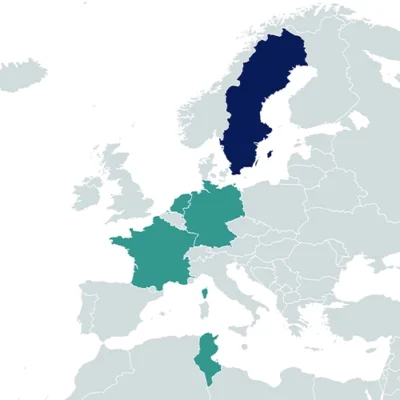
- Stockholm Resilience Centre, Stockholm University, Stockholm, Sweden
- Joint Research Unit – Knowledge, Environment and Societies, The French Agricultural Research Centre for International Development (CIRAD), Montpellier, France
- Department Dynamics and conservation of biodiversity, Centre of Functional and Evolutionary Ecology, Montpellier, France
- Department of Anthropology, Amsterdam Institute for Social Science Research, University of Amsterdam, Amsterdam, The Netherlands
- Institute of Art History and College for Social Sciences and Humanities, The Ruhr University Bochum, Bochum, Germany
- The Higher Institute of Applied Biology of Medenine (ISBAM), Medenine, Tunisia
Context
Transformative changes in societies’ relationships with nature are urgently needed to halt and reverse biodiversity decline, yet such change remains elusive. Biodiversity loss, pollution and climate change are interlinked challenges that are cross-scale, dynamic, and intertwined with societies that themselves are characterised by multiple understandings, values, interests, and needs. Existing governance approaches are failing to address the complexity of these interlinked problems and to engage with the deeply rooted social and social-ecological relations that produce and reproduce them. The aim of the MultiDiv project is to propose a novel way of conceptualising these interlinked problems that is grounded in process-relational philosophy, and a relational and ‘naturecultural’ understanding of society that includes non-human actors. Building on the concept of multispecies assemblages it will develop modes of understanding entanglements between different processes across scales (such as biophysical, social, social-ecological, environmental policy making, value changes, etc.) and temporalities. The gained understanding will provide a new basis for transforming biodiversity governance to better fit these interlinked problems and their multiple interdependencies within societies and nature.
MultiDiv addresses these challenges by exploring how biodiversity governance can better account for the roles and interactions of multiple species, including humans, in shaping ecosystems. By focusing on real-world cases where species have ambiguous or shifting roles, the project seeks to develop new conceptual and practical tools for more adaptive and inclusive governance.
Main objectives
- Apply a multispecies assemblage perspective and process-relational understandings of diversity to cases of biodiversity decline in the Camargue (France) and the Gulf of Gabès (Tunisia).
- Develop novel methodologies for tracing assemblages and their capacities to affect biodiversity.
- Co-develop with stakeholders new forms of relational governance that increase its potential to address biodiversity decline.
Main activities
The project will configure multispecies assemblages involving the blue crab in the Gulf of Gabès and salinisation processes in the Camargue through participatory mapping workshops, interviews, ecological fieldwork, multispecies ethnographies and simulation modelling. These methods will be used to examine the biodiversity-related knowledge among relevant actors and their multispecies and affective relations within specific biotopes. This will open opportunities to co-develop multispecies governance approaches with representatives of governance bodies and to identify ways to transform towards them. Finally, we will synthesise our learning across cases to enhance causal multispecies understandings of biodiversity.
The project contributes to transformative change of biodiversity governance through reframing complex biodiversity challenges in ways that attend to the entangled nature of multiple crises and the relational and emotional nature of people’s capacities to act. MultiDiv’s relevance lies in the novel ways it targets diverse values, paradigms and knowledge systems of different actors and brings them into relations with each other to foster transformation.