
Biodiversity and Offshore Wind: Understanding Transformative Impacts on Marine Ecosystems
Call
Duration
01/03/2026 – 28/02/2029
Total grant
Approx. 1.1 mil. €
More information
Partners of the project
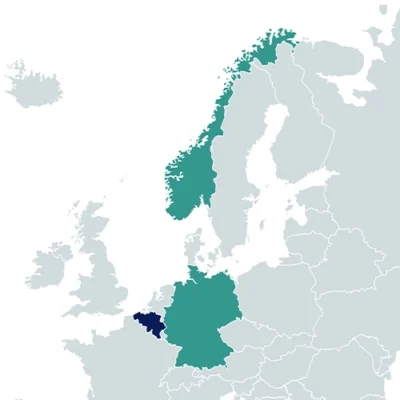
- Freshwater and Oceanic sciences Unit of reSearch (FOCUS), Veterinary Public Health (FRARAH), University of Liège, Liège, Belgium
- Faculty of Humanities, department of interdisciplinary studies of culture, Norwegian University of Science and Technology, Trondheim, Norway
- University of Veterinary Medicine Hannover, Foundation, Institute for Terrestrial and Aquatic Wildlife Research, Büsum, Germany
- Department of Biology, Ghent University, Gent, Belgium
- Flanders Marine Institute, Research Department – Marine Observation Centre, Oostende, Belgium
Context
Offshore wind energy is a key component of Europe’s climate transition. While offshore wind farms help reduce greenhouse gas emissions, they also alter marine environments by modifying habitats, influencing food webs, generating electromagnetic fields, and potentially affecting the distribution of chemical pollutants. These impacts occur in seas already under pressure from climate change and human activities, such as the North Sea. However, offshore wind planning still mainly focuses on technical and economic aspects, with limited consideration of biodiversity. MARE-WIND addresses this gap by providing accessible scientific knowledge to support offshore wind development that respects marine ecosystems.
Main objectives
MARE-WIND aims to support offshore wind development that is compatible with marine biodiversity protection. The project seeks to:
- understand how offshore wind farms affect marine biodiversity, food webs, and pollutant transfer;
- assess how electromagnetic fields from subsea power cables influence fish and marine mammals;
- provide science-based knowledge and tools to help policymakers and stakeholders integrate biodiversity into offshore wind planning.
Main activities
- Scientific activities: MARE-WIND investigates offshore wind farm areas in the North Sea through field observations, laboratory analyses, and ecological modelling. Marine organisms, from mussels and fish to seals and porpoises, are studied to understand changes in food webs, contaminant transfer, and species behaviour in relation to wind farm infrastructures and subsea power cables.
- Dissemination, knowledge transfer and stakeholder engagement: Stakeholder engagement is a core component of the project. Policymakers, offshore wind developers, environmental agencies, NGOs, and fisheries representatives are involved through interviews, workshops, and dialogue events. Project results are shared via policy briefs, visual communication tools, and accessible outreach activities to ensure usability beyond the scientific community
- Expected societal and policy impact: MARE-WIND delivers science-based evidence to support biodiversity-friendly offshore wind planning. The project contributes to European and national policies on biodiversity conservation, marine spatial planning, and renewable energy, helping decision-makers balance climate objectives with the protection of marine ecosystems.