

Enabling biodiversity-positive transformation of energy planning towards climate neutrality
Call
Duration
01/03/2026 – 28/02/2029
Total grant
Approx. 1.3 mil €
More information
Partners of the project
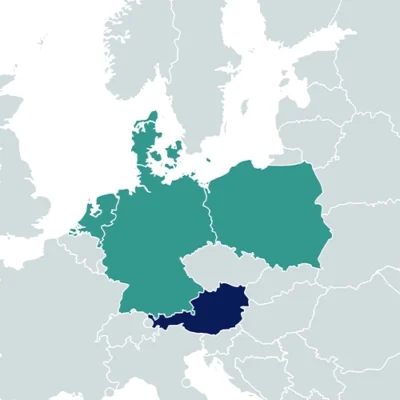
- Department Landscape, Water and Infrastructure & Department of Ecosystem Management, Climate and Biodiversity, University of Natural Resources and Life Sciences, Vienna, Austria
- Environmental Assessment Research Group, Technical University Berlin, Berlin, Germany
- Department of Systems Research, Wroclaw University of Environmental and Life Sciences, Wroclaw, Poland
- Department of Sustainability and Planning, Aalborg University, Aalborg, Denmark
- Copernicus Institute of Sustainable Development, Utrecht University, Utrecht, The Netherlands
Context
Regions face growing pressure to deliver renewable energy (RE) alongside a variety of other land uses in limited amounts of area while combating climate change and the decline of biodiversity. Planners often lack recent, reliable, and comparable data on ecosystems and species. This limits their ability to robustly link land-use change to the multiple dimensions of biodiversity. To reach a climate-neutral and biodiversity-friendly society, we need decisions that curb and meet energy demand while prioritising nature-positive outcomes that acknowledge nature’s contributions to people (e.g., clean water, flood protection, recreation).
Main objectives
- To learn how far novel (digital and AI-supported) data on biodiversity and associated ecosystem dynamics enable net-gain planning.
- To enhance transparency of how predicted effects of RE on species and their habitats are integrated with preference trade-offs to inform planning decisions.
- To investigate what prioritisation is needed to follow a net-gain strategy reflecting the various competing interests and need for multi-functional land use.
Main activities
BIOGAIN involves consultants, authorities, NGOs and SMEs in the fields of AI and biodiversity data science to examine hypotheses regarding the role of quality and availability of novel data and its interpretation to contribute to:
- reshaping power dynamics: Increased access to accurate data creates knowledge and transparency and reduces the impact of outdated or limited information; and
- encouraging nature-positive planning: Transparent biodiversity-impact predictions allow planners to integrate preference trade-offs thoughtfully, leading to informed, balanced decisions that support both nature and climate goals.
The project focuses on actors at multiple planning levels, particularly in subnational and regional contexts where spatial energy planning remains underinformed by digital technology. Specifically, BIOGAIN will address planning for wind and solar energy infrastructure, examining how these RE sources intersect and impact biodiversity. BIOGAIN integrates, supported by AI, up-to-date digital biodiversity data and ecosystem models to inform the current state (baseline data) and the effectiveness of measures (e.g., in place for former energy infrastructure projects).
A ‘serious game’ lets participants explore real planning scenarios safely, learn from outcomes, and compare options side-by-side.
Structured workshops, as part of a collaborative decision analysis and accompanied by a Discrete Choice Experiment, investigate how stakeholders weigh objectives based on forecasted outcomes of decision options.