

A Roadmap for Fostering Human Wildlife Coexistence in Greening Cities
Call
Duration
01/04/2026 – 31/03/2029
Total grant
Approx. 1.0 mil €
More information
Partners of the project
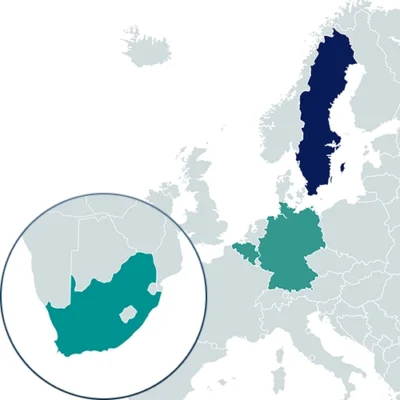
- Stockholm Resilience Center, Stockholm, Sweden
- Centre for Sustainability Transitions, Stellenbosch University, Stellenbosch, South Africa
- Faculty of Environment and Natural Resources, University of Freiburg, Freiburg, Germany
- Team Nature & Society, The Research Institute for Nature and Forest (INBO), Brussels, Belgium
- Subcontracted partner 4a: Studio Lein, Kessel-Lo, Belgium
- Faculty of Architecture & Arts, Hasselt University, Hasselt, Belgium
- Biodiversity and Conservation Biology, University of the Western Cape, Cape Town, South Africa
Context
Greening cities and the expansion of urban areas into biodiversity-rich landscapes induce unplanned effects: urban wildlife. Entirely new human-wildlife encounters and cross-species learning are taking place at rapid evolutionary scales, making the multispecies cities of the future an important arena for potentially establishing new forms of coexistence. Coexisting with urban wildlife is not without challenges. Wildlife in cities has typically been given triage treatment of immediate problems rather than targeting underlying drivers. Urban wildlife increasingly gives rise to social polarisation, with some residents wanting to ‘save everything’ and others to ‘kill everything’.
There is a need to consider human-wildlife coexistence in cities beyond previous categories of either a mere wildlife problem to be resolved through short-term deterrence of animal behaviour, or a human problem that can go away by fostering pro-environmental attitudes. Instead, multispecies cities will require the development of an interspecies etiquette that recognises that problems and solutions are distributed across humans and wildlife and in their interplay.
Main objectives
BiodiverCities aims to address the complex challenges of urban biodiversity management by developing a comprehensive framework called an ‘interspecies etiquette’, which aims to both problematise and actively guide coexistence between human and non-human residents in cities. The interspecies etiquette will ultimately provide principles for biodiversity management at multiple levels, serve as practical decision-making support in human-wildlife conflicts, and engage communities in shaping their local urban environments. The interspecies etiquette comprises wildlife literacy, relationality and stewardship as its building blocks.
Main activities
BiodiverCities works with four principal case studies: Stockholm, Genk, Freiburg and Cape Town. While each case is unique, they represent globally generalisable wildlife conflict tropes and correspond to typical phases of wildlife exposure in their cities: from first encounters and initial enthusiasm to resistance, through backlash and polarisation, onto different pathways of management. In each city, a mixed-methods approach will first be used to map manifestations of interspecies etiquette. Surveys, semi-structured interviews, content analyses of local neighbourhoods, Facebook groups and news media, as well as spatiotemporal encounter analysis, encounter stories, reviewing of wildlife disturbance report data, and integrated community occupancy models will be used.
In subsequent work packages, human-wildlife challenges for studied cities will be synthesised together with stakeholders through the following ways:
- uncovering hidden preferences, policies and practices toward urban wildlife and examining how wildlife respond, adapt, and shape encounters and attitudes;
- developing strategies to enhance wildlife literacy, fostering stewardship, and navigating controversial interventions such as relocation, rescues, letting be and culling;
- producing communication tools to manage social polarisation around wildlife;
- enhancing training and educational resources for wildlife monitors, city officials, and pest controllers;
- building preparedness and infrastructure for public participation at various scales.