
Reversing Biodiversity Decline in Densification Strategies using Innovative Sensing, Systemic Solutions and Data Driven City modelling for Transformative Change
Call
Duration
01/01/2026 – 21/12/2028
Total grant
Approx. 1.1 €
More information
Partners of the project
- Department of Architecture and Civil Engineering, Chalmers University of Technology, Gothenburg, Sweden
- Department of Architecture and Urban Studies, Polytechnic University of Milan, Milan, Italy
- Department of Architecture and the Built Environment, Delft University of Technology, Delft, the Netherlands
- Subcontracted partner 3a: AMS Institute for Advanced Metropolitan Solutions, Amsterdam, the Netherlands
- Faculty of the Built Environment, Tampere University, Tampere, Finland
- Division for Environment and Green Spaces, Municipality of Milan, Milan, Italy
- Department of Sports and the Amsterdamse Bos, City of Amsterdam, Amsterdam, the Netherlands
Context
Urban densification is widely promoted as a sustainable strategy to reduce land take, emissions and infrastructure costs. However, compact city models often understate their ecological consequences, accelerating habitat loss and biodiversity decline within urban areas. At the same time, cities can host substantial biological richness and, if designed and managed properly, can support both human wellbeing and nature. BIODENCITY addresses this challenge by asking how urban densification and greening can be combined to halt and reverse biodiversity loss while improving quality of life in cities. Focusing on microorganisms, insects, birds and bats as indicators of ecosystem health, the project explores how dense urban environments can become places where people and nature coexist and thrive.
Main objectives
BIODENCITY aims to develop a roadmap for biodiversity-sensitive urban densification, demonstrating that density and biodiversity need not be opposing goals. The project seeks to generate robust scientific evidence on how urban form and green infrastructure influence biodiversity across diverse European contexts, and to translate this knowledge into practical tools for urban planning and policy. Through open-access datasets, interactive maps, AI-based biodiversity monitoring systems and design guidelines, BIODENCITY supports cities in embedding biodiversity considerations into planning, design and decision-making processes. In doing so, the project contributes to healthier, more climate-resilient urban environments and supports the implementation of European biodiversity and nature restoration policies.
Main activities
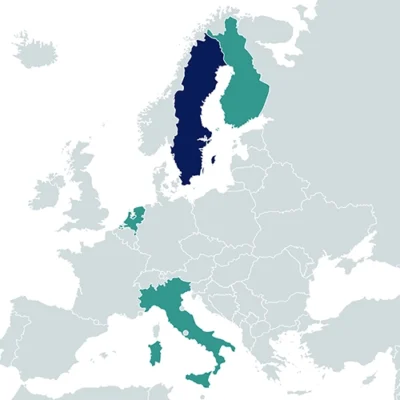
BIODENCITY combines ecological research, digital innovation and participatory approaches across four European cities (Tampere, Gothenburg, Amsterdam and Milan). The project maps urban density and green infrastructure patterns and links them to biodiversity outcomes using advanced geospatial analysis and AI-enabled sensing technologies, including acoustic, visual and microbial monitoring. Living Biodiversity Labs are established as real-world testing environments where researchers, planners, policymakers and citizens co-design and assess biodiversity-friendly densification scenarios. Stakeholder engagement, citizen science activities and policy dialogues ensure that scientific results are translated into actionable guidance. Project outcomes are disseminated through open-access publications, interactive tools, training activities and a transnational community of practice, enabling knowledge transfer and supporting uptake by cities across Europe and beyond.