
A transformation through improved practice: targeting urgent sustainable development needs by enabling restorative aquaculture
Call
Duration
01/04/2026 – 31/03/2029
Total grant
Approx. 1.6 mil. €
More information
Partners of the project
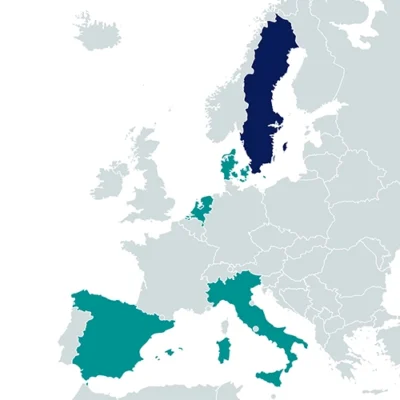
- Department Food Research and Innovation (Unit Sustainable Food Systems), RISE Research Institutes of Sweden, Gothenburg, Sweden
- Department of Education, Stichting Van Hall Larenstein, Leeuwarden, The Netherlands
- Department of Food and Resource Economics, University of Copenhagen, Frederiksberg, Denmark
- Ecosystem Group (Unit Environmental Intelligence), IVL Swedish Environmental Research Institute, Fiskebäckskil, Sweden
- School of Biosciences and Veterinary Medicine, University of Camerino, Matelica, Italy
- Oceanographic Center of Vigo (COV), Spanish Institute of Oceanography, Spanish National Research Council (IEO-CSIC), Vigo, Spain
- Department of Business and Sustainability, University of Southern Denmark, Esbjerg, Denmark
- Mediterranean Aquaculture Association, Rome, Italy
- County administrative board of Västra Götaland, Strömstad, Sweden
Context
Our food system is a major driver of biodiversity loss. The concept of ‘restorative aquaculture’ entails a form of food production that also provides ecological benefits, potentially resulting in net positive environmental outcomes. A candidate sector in Europe is bivalve aquaculture. The implementation of restorative bivalve aquaculture practices involving flat oysters (Ostrea edulis) and mussels (Mytilus spp) offers many opportunities to address coastal restoration needs (e.g., restore lost biogenic reefs, mitigate eutrophication).
Today, the sector is instead struggling, despite ambitions for growth. Barriers include a low social licence to operate, regulatory constraints and poor profitability, with varying conditions across Europe. Given current challenges and opportunities, and several commitments and ambitions related to the blue economy and biodiversity, a transformative change in bivalve aquaculture governance is warranted as a means of fulfilling goals for both biodiversity and food systems.
Main objectives
ATTITUDE aims to generate the key knowledge needed on current barriers and opportunities for implementing restorative bivalve aquaculture practices across Europe. The long-term goal is a transformative change in coastal governance in which viable restorative bivalve aquaculture becomes common practice, providing net benefits to biodiversity and coastal restoration (i.e., an integration of food production, biodiversity restoration, and conservation).
Main activities
The ATTITUDE project design comprises transdisciplinary collaborations centred on a diverse set of case studies across different sea basins. This approach generates significant transnational value through cross-learning, capacity building and identification of good practices derived from different socio-ecological conditions and scientific disciplines.
The project will investigate:
- strategies to improve socio-economic viability,
- the existing and needed natural science evidence base for effective marine management,
- stakeholder and governance landscapes including social acceptability and values.
Co-created and actionable strategies will support the transition from theory to practice in effective integration of bivalve aquaculture with conservation goals, with relevant policies spanning from global down to local. Project outputs will include recommendations for a just transformation of bivalve aquaculture in Europe, enabling maximised positive interactions between production, coastal biodiversity and ecosystem restoration.
Effective stakeholder engagement and communication are essential to ensure the credibility, relevance, legitimacy and accessibility of results. This will be ensured by tailoring activities and outputs to end-user needs. Planned activities and dissemination formats beyond scientific publications include policy briefs, workshops, interviews and seminars. The expected impact of ATTITUDE consists of exploitable results for marine authorities, the bivalve industry and society for the adoption of restorative bivalve aquaculture practices in national policies, enabling protection and restoration of wild bivalve populations and coastal ecosystems and sustainable growth of production.