

Advancing transformative governanCe through Transboundary conservation and collaborative learning
Call
Duration
01/04/2026 – 31/03/2029
Total grant
Approx. 1.0 mil. €
More information
Partners of the project
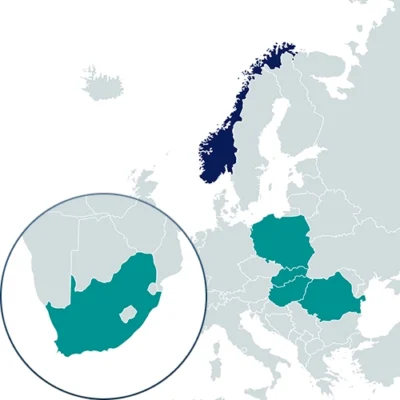
- Norwegian Institute for Nature Research, Lillehammer, Norway
- Department of Ecological Analyses, Institute of Landscape Ecology Slovak Academy of Sciences, Bratislava, Slovakia
- European Regional Centre for Ecohydrology PAS, Łódź, Poland
- University of Venda, Thohoyandou, South Africa
- Foundation National Center for Sustainable Development, Bucharest, Romania
- GreenFormation Kft., Budapest, Hungary
Context
Global biodiversity loss is occurring at an unprecedented rate, driven by root causes such as inadequate governance, weak cross-sectoral planning, inequity, unsustainable production and consumption patterns, and narrow societal values. These drivers underpin complex and persistent problems in biodiversity conservation, including human-wildlife conflict, habitat fragmentation, and the marginalisation of Indigenous Peoples and local communities. Such challenges typically involve multiple stakeholders with competing interests and unequal resources and capacities, making good governance increasingly difficult, especially in a context of geopolitical tensions and funding constraints. This complexity is amplified in transboundary conservation, where cooperation across international boundaries is essential to achieving conservation goals. Well-governed Transboundary Conservation Areas are critical for ecological connectivity, protection of migratory species, and enhancing climate change responses, while also supporting socio-economic, cultural, political, research, and management objectives. ACT examines how transboundary governance (based on shared decision-making, collaboration, adaptation, integration, and pluralism) can enable system-wide societal transformation to halt and reverse biodiversity loss, strengthen social-ecological resilience, and support the achievement of global and European biodiversity targets.
Main objectives
The overarching aim of ACT is to identify and assess the main elements of transformative governance in a transboundary context, providing a practical contribution of transboundary governance to societal transformation processes that lead to halting and reversing biodiversity loss, and support the implementation of the Kunming-Montreal Global Biodiversity Framework.
Main activities
To examine how transformative governance can drive societal change, ACT will use participatory engagement across four Transboundary Conservation Areas in Europe and southern Africa, representing a Global South-North gradient and differing ecological, socio-cultural, political, and governance contexts. ACT will identify region-specific challenges, risks, opportunities, and common enabling factors of transformative governance. We will apply innovative tools and established social and behavioural science methods (including participatory diagnostics, community dialogues, and a dedicated social science ‘toolkit’) to build shared understanding, address conflicts, and co-develop pathways for transformative change. The project will generate new scientific insights into how transboundary governance strengthens social-ecological resilience. These findings will be translated into practical outputs, including case study-based strategies for enabling transformative change, comparative analysis, and a policy-oriented guidebook supporting replication, policy uptake, and alignment with European and global biodiversity goals.
ACT’s communication strategy will ensure wide dissemination of results through targeted outreach. By enabling knowledge exchange, co-learning and capacity building across regions, ACT will contribute to empowerment, improved management practice, and the development of long-term solutions that align ecological and socio-economic goals.