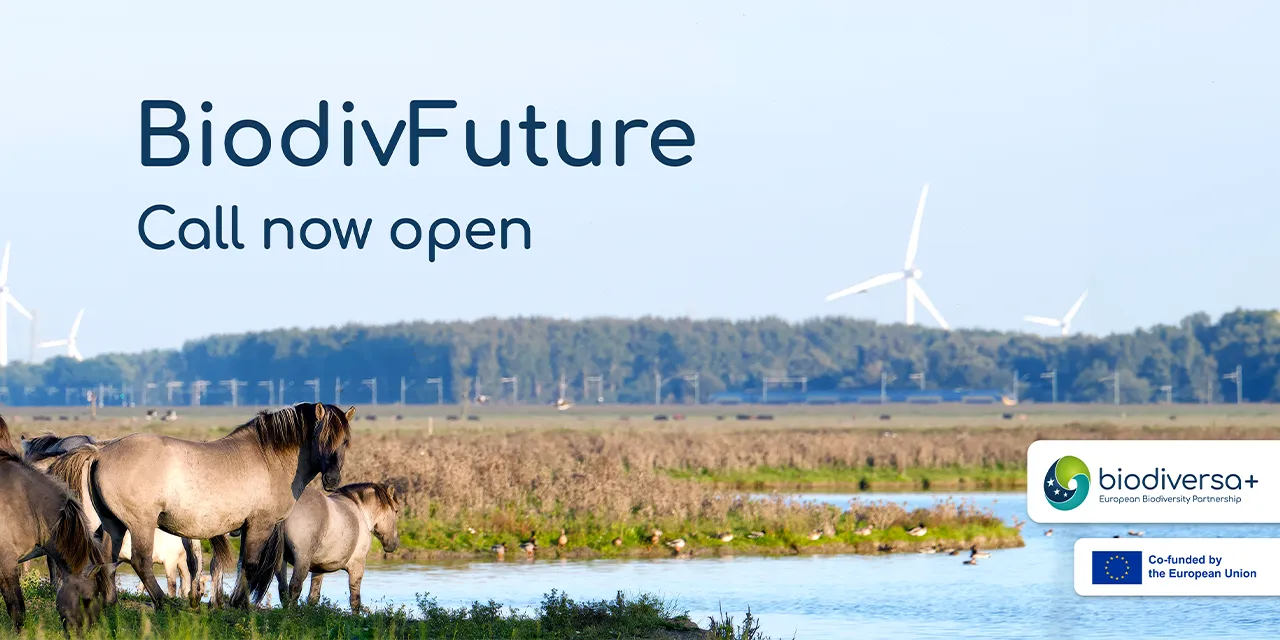
Biodiversa+ has launched BiodivFuture, its 2026-2027 Joint Call for transnational research and innovation projects on biodiversity and novel ecosystems. 25 countries, together with the European Commission, are participating in this call, supporting research into how novel ecosystems emerge, how they function and change over time, and what this means for biodiversity and society.
What do we mean by novel ecosystems?
Human influence is reshaping biodiversity and ecosystems around the world. In some cases, these changes are substantial and persistent enough to give rise to what are often described as novel ecosystems. The concept is broad and evolving, but the framework used for BiodivFuture generally includes three characteristics:
- new ecological communities, including species occurring outside their historical native ranges;
- interactions and processes consistent with a self-organised, functioning ecosystem;
- changes substantial enough that a return to previous conditions is unlikely, with or without human intervention.
The call recognises that different definitions and perspectives exist. Applicants must therefore explain how their proposal understands and addresses novel ecosystems.
Three research themes
BiodivFuture will explore the risks, opportunities and trade-offs associated with these changes, their implications for biodiversity and society, and the different futures they may lead to. Projects may address one or several of three interconnected themes:
- Novel ecosystem functioning: How novel ecosystems function and link to socio-cultural and socio-economic dynamics, including mechanisms and approaches that can facilitate biodiversity gains.
- Pathways to novel ecosystems: How socio-ecological change unfolds under temporal asynchronies and uncertainties, and how biodiversity and society respond to different trajectories of change.
- Biodiversity benefits and equity in the context of novel ecosystems: How biodiversity benefits can be shared equitably, and how inclusive, collaborative and investment-oriented pathways can support nature-positive socio-ecological transformation.
The themes mirror the sustainability goals of the Kunming-Montréal Global Biodiversity Framework. Projects are strongly encouraged to take interdisciplinary and transdisciplinary approaches and, where relevant, involve expertise beyond academia.
Applying to BiodivFuture
BiodivFuture uses a two-step application process.
- Pre-proposal deadline: 10 November 2026, 12:00 CET (11:00 UTC)
- Full-proposal deadline: 16 April 2027, 12:00 CEST (10:00 UTC)
Applicants should read the full call documents carefully and check the eligibility and funding conditions that apply to each partner in their consortium.