BioMonWeek 2026 covered a wide range of questions shaping the future of biodiversity monitoring, from ecosystem-specific methods to data infrastructures, governance, policy needs, private-sector involvement and capacity-building. The syntheses below are organised by the event’s themes. They do not aim to provide an exhaustive account of all exchanges. Instead, they highlight the main issues, tensions and takeaways that emerged across the programme, with a focus on what they mean for more coordinated, reliable and decision-useful biodiversity monitoring in Europe. For readers interested in the full list of sessions and speakers, the day-by-day programme is available below.
TERRESTRIAL MONITORING
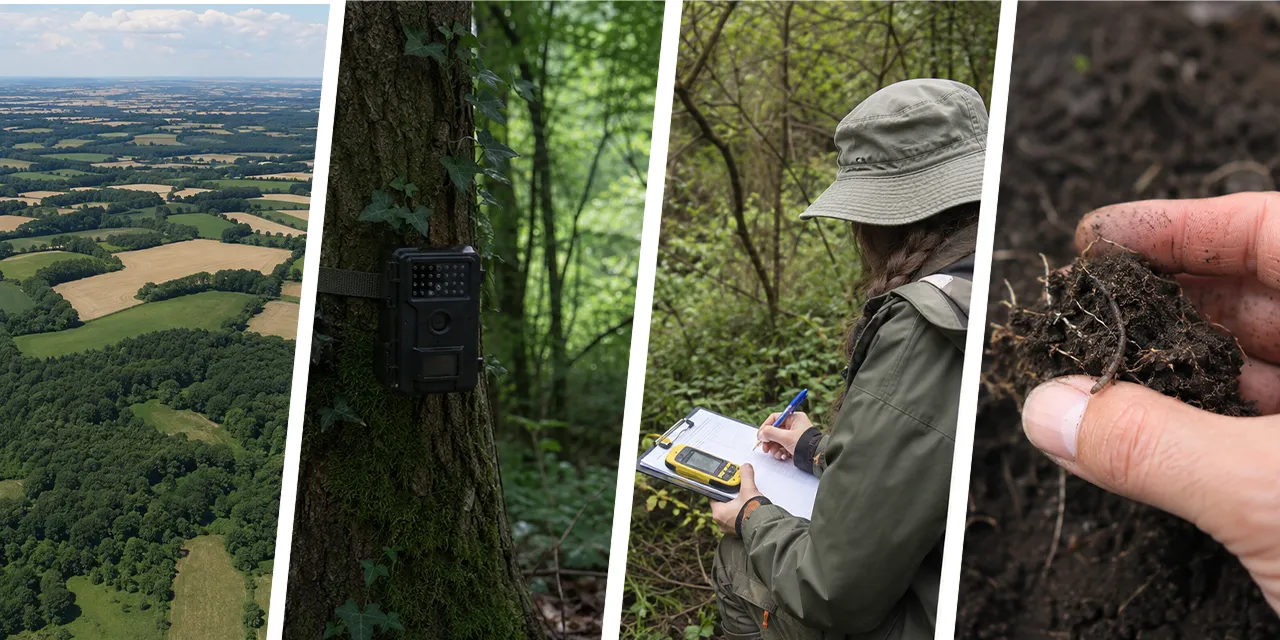
Terrestrial monitoring is entering a new phase. BioMonWeek 2026 showed how long-term schemes, new technologies and spatial approaches can strengthen our understanding of land ecosystems, while also highlighting a key challenge: Europe needs monitoring systems that look beyond the best-known sites and species.
Protected areas remain central to biodiversity conservation in Europe. Natura 2000 sites, Annex I habitats, rare species and legally protected ecosystems all require reliable monitoring to assess their status and guide management. Several BioMonWeek sessions explored how monitoring in these contexts is being strengthened through more systematic data, high-throughput tools and better links to policy needs.
Yet terrestrial biodiversity does not change only inside protected areas. Many of the pressures shaping Europe’s nature are found across wider landscapes: agricultural intensification, land-use change, infrastructure, habitat fragmentation, invasive species, soil degradation, disease dynamics and climate impacts. Restoration policy also raises the stakes. To understand whether nature is recovering, monitoring must capture more than the condition of selected sites. It must show how landscapes function, where pressures accumulate and where action can make a difference.
Stronger evidence for protected areas
The session on terrestrial protected areas and Natura 2000 highlighted a familiar challenge: conservation status reporting is still often based on expert judgement and is not always supported by data that can be easily found, combined or reused. Discussions focused on how Earth Observation, camera traps, passive acoustic devices, eDNA and AI-supported identification can help track terrestrial biodiversity trends across Europe.
Examples showed the value of combining long-term field monitoring with new tools. Denmark’s monitoring of Annex I terrestrial habitats, conducted in permanent plots since 2004, provides a strong basis for assessing habitat structure, function and trends under the Habitats Directive. Other presentations showed how drone-based monitoring and AI-assisted image analysis can improve population estimates for threatened plant species growing on inaccessible cliffs, supporting repeatable and non-invasive monitoring.
These examples point to a wider lesson: innovation is most useful when it strengthens long-term evidence. New methods can expand coverage and reduce field constraints, but they need to be validated, linked to established monitoring questions and embedded in systems that can track change over time.
The landscape matters
BioMonWeek also placed strong emphasis on connectivity and spatial planning. For terrestrial biodiversity, good habitat is not enough if species cannot move through the landscape.
Presentations on connectivity modelling showed how monitoring can support planning more directly. Multi-species approaches can reduce modelling complexity while still producing useful outputs for conservation. Work on wild reindeer in Norway showed why habitat loss and fragmentation need to be assessed together: roads, hydropower, tourism and other pressures can reduce functional habitat far beyond the area directly transformed. Remote sensing and deep learning were also presented as tools for identifying high-conservation-value forests and improving landscape-scale planning.
This marks an important shift. Terrestrial monitoring is becoming more spatial, predictive and decision-oriented. It can help test scenarios, identify priority corridors, assess cumulative impacts and guide restoration or mitigation measures.
Ordinary landscapes count too
A second shift concerns what is monitored. Terrestrial monitoring has often focused on rare species, flagship habitats or protected sites. These remain essential, but common species and ordinary landscapes also carry important signals.
Sessions on common species showed how birds, plants, dragonflies and other groups can inform broader biodiversity trends when national schemes are connected through transnational cooperation. The long experience of European bird monitoring illustrates how citizen science, governance agreements, coordination units and analytical tools can turn national data into policy-relevant European indicators.
Agricultural landscapes were another important thread. Farmland monitoring needs to capture biodiversity patterns, management intensity, landscape features and ecological functions, rather than focusing only on isolated species groups. Examples from European and national initiatives showed how field surveys, Earth Observation, administrative agricultural data, eDNA and citizen science can be combined to better assess biodiversity in production landscapes.
This matters for policy. If monitoring remains concentrated in the most visible or best-studied parts of nature, it risks missing where many pressures and recovery opportunities are located.
From detection to explanation
A recurring issue in the terrestrial sessions was the need to move from detecting change to understanding why it happens. Land ecosystems are shaped by multiple interacting drivers, including climate, management practices, soil conditions, invasive species, habitat structure and connectivity.
Soil biodiversity made this point especially clear. National-scale soil monitoring can combine standardised sampling, soil fauna, eDNA metabarcoding and environmental data, but different methods answer different questions. High-throughput tools can reveal broad diversity patterns, while trait-based or morphologically resolved approaches may better explain ecological processes and management effects.
Wildlife disease monitoring raised a similar issue. Understanding disease risks requires information on pathogens, host populations, landscape change and animal movement. Invasive species monitoring also depends on early detection, standardised data flows and feedback to management.
For terrestrial monitoring, the key question is therefore wider than “what is present?”. Monitoring must also help explain what is changing, why it is changing and which responses are likely to work.
What this means for Europe
The terrestrial sessions showed a strong field, with long-term schemes, skilled experts, new technologies and growing policy demand. They also revealed persistent weak points: uneven coverage, fragmented data, limited comparability, gaps in taxonomic and habitat knowledge, and funding that often favours short-term priorities.
A stronger European approach to terrestrial monitoring should combine representative sampling across whole landscapes, continuity for long-term datasets, validated use of new technologies, better integration of soil and genetic dimensions, stronger links between remote sensing and field data, and transnational cooperation around shared indicators and data flows.
By supporting coordination among countries, research organisations, national authorities and monitoring communities, Biodiversa+ helps connect existing terrestrial monitoring efforts, identify common needs and support approaches that are comparable without ignoring local context.

MARINE MONITORING
Marine biodiversity monitoring is changing fast. BioMonWeek 2026 showed how seabed mapping, eDNA, computer vision, ecosystem modelling and long-term surveys can improve our understanding of ocean ecosystems. The key challenge is making sure this evidence informs management decisions.
The marine environment is difficult to monitor. It is vast, mobile and three-dimensional, with pressures operating across many scales: fishing, tourism, offshore development, pollution, warming, acidification and invasive species. Monitoring marine biodiversity therefore requires more than isolated surveys. It needs methods that can capture change over time, connect local pressures to wider ecosystem dynamics, and support decisions on protection, restoration and sustainable use.
At BioMonWeek 2026, marine sessions explored this challenge across several areas, including benthic habitats, marine protected areas (MPAs), marine mammals, eDNA, advanced mapping technologies, data mobilisation, and the relationship between Essential Ocean Variables (EOVs) and Essential Biodiversity Variables (EBVs). These discussions pointed to a clear direction, with marine monitoring evolving towards more integrated, predictive, and cross-border systems.
Seeing the seabed more clearly
Several sessions focused on benthic habitats, where monitoring needs to capture both extent and condition. New technologies are opening important possibilities: underwater vehicles, video surveys, remote sensing, acoustic methods and advanced sensors can improve coverage and reduce some of the constraints of fieldwork. Yet conventional sampling still matters, especially when monitoring needs to capture multiple dimensions of biodiversity.
Examples showed how marine habitat mapping can move from baseline knowledge to policy relevance. Finland’s Velmu programme, which has gathered extensive underwater biodiversity observations since 2004, is now supporting work on marine benthic habitats in relation to the Nature Restoration Regulation. In Madeira, work on benthic habitat mosaics showed why species richness alone can be misleading: habitats with fewer species may still contribute strongly to functional or evolutionary diversity.
This points to a broader lesson. Marine monitoring must look beyond hotspots. It needs to represent habitat mosaics, ecological functions and the specific contribution of different seabed environments to wider ecosystem resilience.
Monitoring that changes management
Marine protected areas were another central focus. MPAs are expanding in response to conservation targets, but their effectiveness depends on whether monitoring can inform adaptive management.
Several examples showed the value of combining ecological surveys, fisheries data, movement ecology and habitat mapping. Monitoring can reveal where protection is working, which species benefit, where pressures remain, and how local activities should be managed. In some cases, habitat mapping has already supported management rules by identifying sensitive habitats where anchoring, diving or other uses require clearer regulation.
This is where marine monitoring becomes especially concrete. A habitat map matters when it changes zoning, enforcement, restoration priorities or pressure management. Long-term monitoring in highly visited MPAs can help adjust diving rules, assess carrying capacity and separate local impacts from climate-driven change.
The same applies to fisheries and mobile species. Movement models and by-catch risk scenarios can support temporal or spatial management measures. Indicators such as maximum fish body size can help assess fishing pressure and ecosystem naturalness. These approaches translate complex ecological data into information that managers can use.
Combining methods, not choosing one
Marine monitoring is also being reshaped by eDNA, computer vision and automated systems. eDNA can complement visual surveys by detecting rare, cryptic or hard-to-observe species. Computer vision can help turn large volumes of underwater video into ecological information. Acoustic methods, imaging, conventional sampling and satellite data each reveal different parts of marine ecosystems.
The important point is complementarity. No single method can capture marine biodiversity in full. Visual census, video, eDNA, acoustics and modelling each come with strengths, biases and blind spots. The challenge is to combine them in ways that are validated, standardised and useful for management.
This is particularly important for indicators. Marine sessions on eDNA, plankton, EBVs and EOVs showed that new methods can generate richer information, but interpretation still depends on reference databases, agreed definitions, quality control and links to policy frameworks. Without these, sophisticated data streams risk remaining difficult to use.
Data and models for ocean decisions
Marine monitoring also depends on data systems that can connect observations across scales. Sessions on data mobilisation focused on how marine data can be collected, standardised, shared and reused to support conservation, policy and sustainable management.
Several initiatives point towards a more operational marine monitoring landscape. MBON Europe is working to strengthen harmonised marine biodiversity observation and open data sharing. LifeWatch ERIC, the Digital Twin Ocean and related modelling frameworks are helping integrate different data streams into tools for ecosystem assessment and management. Projects such as SCANS show what sustained European cooperation can achieve when survey design, coordination and analysis are aligned across borders.
These developments matter because marine policy needs more than observations. It needs baselines, trends, scenarios, indicators and tools that can handle uncertainty and support decisions under changing conditions.
What this means for Europe
BioMonWeek showed that marine biodiversity monitoring is moving beyond scattered surveys and static maps. It is becoming more integrated, combining field observations, molecular tools, imaging, modelling, data infrastructures and cross-border cooperation.
The remaining challenge is uptake. Maps, models, baselines and indicators need to reach the places where decisions are made: MPA management, fisheries regulation, restoration planning, offshore development, invasive species management and marine reporting.
By supporting coordination, methodological alignment and pilot approaches across countries and ecosystems, Biodiversa+ helps connect marine monitoring efforts to wider European monitoring frameworks. The aim is to make evidence more comparable, interoperable and useful to ensure that it guides how Europe protects, restores and manages its seas.
FRESHWATER MONITORING
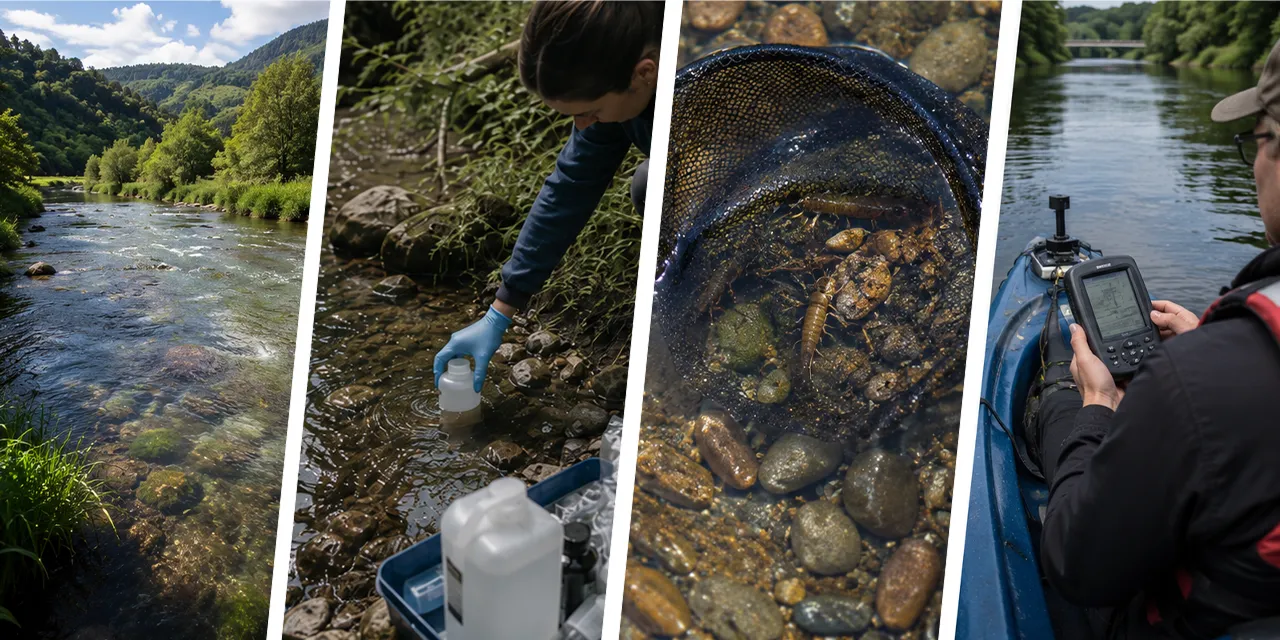
Freshwater monitoring is changing quickly. BioMonWeek 2026 showed how DNA-based methods, automated tools, remote sensing and data platforms can improve how rivers, lakes, wetlands, ponds and groundwater are assessed. The challenge is to make these approaches useful for policy and management, without losing the local context that freshwater systems require.
Freshwater ecosystems are among the most pressured environments in Europe. They are shaped by pollution, land use, water abstraction, river modification, invasive species, climate change and habitat fragmentation. They are also central to several policy and management questions, from water quality assessment to restoration, protected species, ecosystem connectivity and drought resilience.
At BioMonWeek 2026, the freshwater theme covered habitats, invasive species, eDNA applications, the future of the Water Framework Directive, EU-funded projects, and the link between monitoring, conservation action and policy. The freshwater habitats session explicitly focused on inland aquatic ecosystems under changing environmental conditions, while the Water Framework Directive panel addressed whether standardised molecular tools could support water body assessment and comparability across policies.
Across the discussions, freshwater monitoring appeared as a field in transition: richer in methods, broader in scope, and under pressure to deliver evidence that can guide action.
Molecular methods are moving towards operational use
DNA-based approaches were one of the strongest threads. eDNA and metabarcoding are no longer treated only as experimental methods. They are being tested as complements to established approaches, including river bioassessment, diatom monitoring, fish and amphibian surveys, invasive species detection and broader ecosystem status assessment.
Diatom monitoring illustrates this transition well. Traditional microscopy remains central to ecological status assessment, but molecular and image-based methods can increase speed, reproducibility and taxonomic coverage. The key issue is compatibility. If new methods produce results that cannot be related to existing indices or historical time series, they may generate more data without improving assessment. Several discussions therefore focused on “gateways” between methods: correction factors, calibration, reference databases and workflows that allow molecular data to speak to established monitoring systems.
The same applies to eDNA more broadly. Its value lies in broad detection and low-impact sampling, but interpretation remains sensitive to method choices, reference databases, DNA transport, persistence and sampling design. For policy uptake, eDNA needs validation, quality assurance and harmonised workflows.
This is one of the central freshwater lessons: modernisation will only work if new tools can be connected to the assessment frameworks that managers and authorities already use.
Freshwater monitoring must widen its field of view
BioMonWeek also showed that freshwater biodiversity cannot be understood only through large rivers and standard monitoring stations. Ponds, small water bodies, groundwater, karst systems, subterranean habitats, thermal refuges and temporary or drying rivers all appeared as important parts of the monitoring agenda.
Many of these systems hold high biodiversity value, provide refuges under climate stress, or reveal pressures that conventional monitoring can miss. Groundwater, for example, is beginning to move beyond chemical assessment towards biological monitoring. Ponds and small water bodies can be critical for amphibians, invertebrates and plants, yet often sit outside the strongest policy and monitoring frameworks.
A broader freshwater monitoring system therefore needs to capture ecological context. Universal thresholds may not always be enough. Some systems require conditional expectations, typology-specific benchmarks and local interpretation. This is especially important when comparing freshwater ecosystems across regions, climates and levels of human pressure.
Automation can help, but interpretation remains the bottleneck
Automated image recognition, underwater cameras, drones, portable field tools and AI-supported analysis are opening new possibilities for freshwater monitoring. They can reduce field constraints, increase sampling frequency and make some assessments faster or less dependent on scarce expertise.
Examples discussed during BioMonWeek included automated aquatic imaging, drone-based habitat observation, AI-supported species identification and tools for rapid field detection. These approaches can help monitor species and habitats that are difficult to survey, and can support earlier detection of change.
Yet the freshwater discussions also showed the limits of a technology-led narrative. Automated tools still need robust sampling design, taxonomic reference material, field validation and ecological interpretation. They can produce large amounts of information, but that information must be translated into indicators, uncertainty estimates and management-relevant outputs.
Freshwater monitoring faces a particular risk here: high-resolution data may outpace the ability of institutions to absorb and use it. Better sensors do not automatically produce better water management.
Data platforms need to close the usability gap
Several discussions pointed to data usability as a major bottleneck. Freshwater data are often scattered across agencies, projects, local monitoring campaigns and historical datasets. They may be difficult to compare because of differences in methods, formats, taxonomic resolution or ecological context.
Platforms such as BIMS and FBIS were presented as ways to address this usability gap by bringing biodiversity data into systems designed for filtering, visualisation, spatial assessment and decision support. The broader point is that freshwater monitoring data need to travel further than storage. They need to support conservation planning, restoration prioritisation, water management and policy reporting.
This requires more than open databases. It requires workflows that make data traceable, comparable and interpretable. It also requires links between biological data, environmental pressures, hydrological information and management actions.
From assessment to action
The freshwater sessions repeatedly returned to the connection between monitoring and conservation action. Monitoring should help identify causes of biodiversity change, detect spatial patterns and temporal trends, and integrate evidence into decision-making. The workshop on freshwater biodiversity monitoring to conservation actions and policy was designed around this link between assessment and action.
This is particularly important for the Water Framework Directive. As Europe moves through its next implementation cycle, the question is how new methods can strengthen ecological status assessment while remaining comparable, accepted and operational. Molecular tools can contribute, but only if they are embedded in clear standards and linked to management needs.
For Biodiversa+, this is where freshwater monitoring connects to the wider European monitoring agenda. The challenge is not simply to develop better methods, but to help align them across countries, policies and data systems. Freshwater monitoring needs harmonised approaches where comparability matters, while retaining the local ecological knowledge needed to interpret results properly.
DATA MANAGEMENT
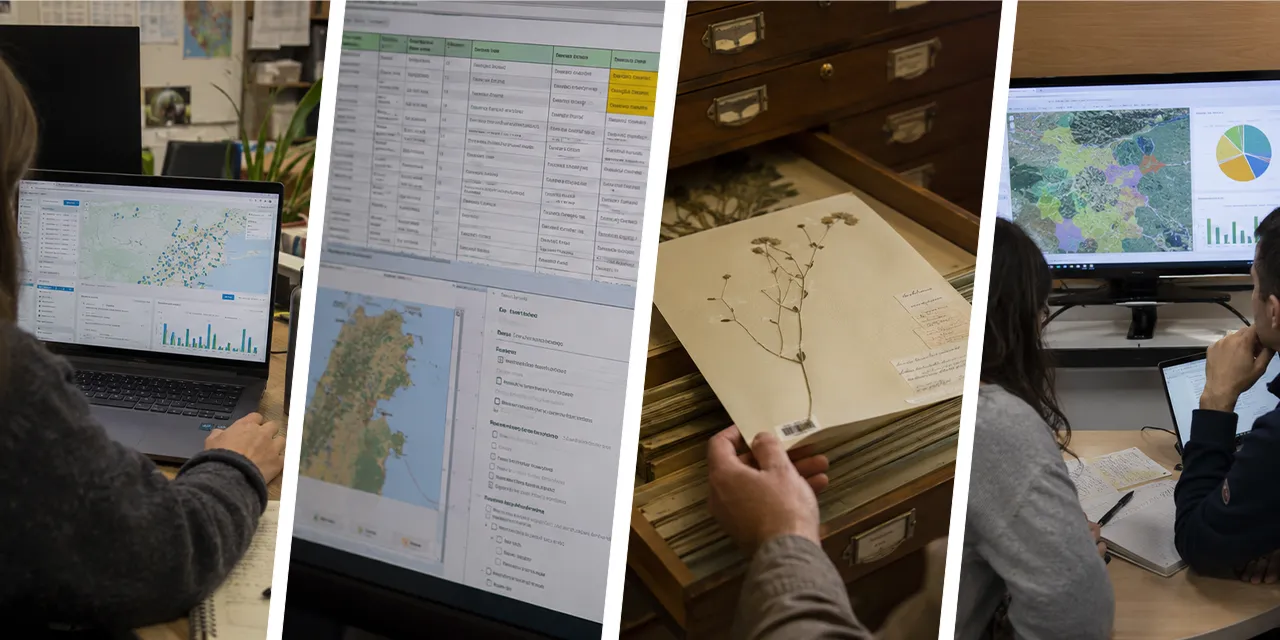
Biodiversity monitoring produces vast amounts of information, but data only become useful when they can be found, trusted, combined and interpreted. At BioMonWeek 2026, data management emerged as a core condition for building a more coordinated European monitoring system.
Across Europe, biodiversity data are collected by research projects, national monitoring schemes, citizen science programmes, museums, environmental agencies, marine surveys, private companies and local initiatives. These data can support conservation, restoration, reporting and management. Yet they often remain scattered across platforms, formats, institutions and workflows.
BioMonWeek showed that the issue is not only a lack of data. Many discussions pointed instead to fragmented archives, legacy systems, inconsistent metadata, hidden datasets, disconnected infrastructures and underused monitoring results. Data may exist, but still fail to support decisions if they cannot be traced, compared or turned into indicators and tools.
This makes data management part of monitoring itself, rather than a technical step that happens afterwards.
FAIR is a starting point
The data sessions placed strong emphasis on FAIR principles: making data findable, accessible, interoperable and reusable. But discussions also focused on what is needed for FAIR data to become usable evidence in practice.
Monitoring data need clear provenance, quality control, standardised workflows, stable vocabularies, links to reference material where relevant, and transparent uncertainty. They also need routes into outputs that people can use: maps, indicators, dashboards, models, trend analyses and decision-support tools.
This was visible across sessions on infrastructures, coordination and interoperability, where speakers explored how monitoring systems and major infrastructures can help integrate new and diverse biodiversity data, reduce fragmentation and support a more connected data landscape.
Standards make data travel
A major thread concerned the standards that allow monitoring data to move between communities and platforms. Darwin Core Archives, Darwin Core Data Packages, Camtrap DP and related frameworks were discussed as practical tools for making complex survey and monitoring data easier to share and reuse.
This matters because monitoring data are rarely simple. They may include sampling events, species observations, effort information, environmental context, images, sounds, DNA sequences, derived indicators and uncertainty estimates. Without shared structures, valuable datasets remain hard to combine or compare.
The move towards richer data packages reflects this need. Monitoring data must preserve relationships between observations, methods, sampling designs and metadata. Otherwise, reuse becomes fragile: the record may be available, but the meaning behind it is partly lost.
Camera trap data provide a useful example. Camtrap DP has created a shared structure for exchanging and archiving camera trap data, helping different tools and platforms work together. This kind of standardisation makes it easier to move from local data collection to broader analysis, while retaining information on methods and context.
Workflows matter as much as datasets
Several sessions focused on workflows rather than datasets alone. This is an important shift. Monitoring does not end when data are uploaded to a repository. Data need to be cleaned, validated, transformed, analysed, updated and documented.
Reusable workflows and data pipelines can make this process more transparent and reproducible. They also reduce duplication of effort. If every project builds its own pipeline from scratch, the monitoring community loses time and comparability. Shared workflows make it easier to repeat analyses, check assumptions, update indicators and build trust in results.
This is especially important for eDNA, automated sensors, image-based monitoring and acoustic data. These methods can generate large volumes of information, but their outputs depend strongly on processing choices. Standardised, documented workflows are therefore essential for comparisons across labs, projects and time periods.
Hidden data are part of the picture
BioMonWeek also highlighted the value of data that already exist but are not yet part of wider monitoring systems. These include environmental assessment reports, museum collections, legacy datasets, private-sector monitoring, historical baselines and unpublished project data.
Mobilising these sources could fill important gaps. Museum specimens can provide verifiable historical records and support links between physical vouchers, DNA sequences and current observations. Environmental impact assessments and corporate monitoring may contain valuable records from industrial, remote or otherwise under-sampled areas. Legacy datasets can help build baselines and detect long-term change.
The challenge is governance. Reusing data requires attention to attribution, sensitive species, commercial interests, Indigenous and local knowledge, and trust between data holders and users. Data mobilisation is therefore both technical and social.
From databases to decision support
The strongest data management discussions were those that connected infrastructure to use. Biodiversity data should not simply accumulate in repositories. It should help answer practical questions: where monitoring gaps are, which schemes cover which taxa or regions, whether data can support EU reporting, and how evidence can guide restoration, planning or management.
Tools and initiatives such as BioDash, BIMS, Biodiversity Data Cubes and the Biodiversity Knowledge Hub point towards this more operational role. They aim to help users find monitoring schemes, compare approaches, analyse data, generate indicators or connect repositories with expert communities.
This is the step that matters most for policy and management. Data management should help turn observations into products that can be used by public authorities, site managers, researchers, businesses and restoration practitioners.
What this means for Europe
BioMonWeek showed that Europe has many of the building blocks for better biodiversity data management: infrastructures, standards, workflows, repositories, expert communities and growing policy demand for evidence.
The task now is to connect these elements into a more coherent system. That means investing in interoperability, shared vocabularies, traceable workflows, long-term data stewardship and trusted governance. It also means recognising the people behind the data: taxonomists, curators, data managers, field ecologists, citizen scientists, software developers and infrastructure teams.
For Biodiversa+, this theme is central. A coordinated European monitoring system cannot exist without data that can move across scales, countries and communities. By supporting alignment, shared standards, pilot approaches and links between monitoring schemes, Biodiversa+ can help make biodiversity data more usable for policy and practice.
MASS MONITORING
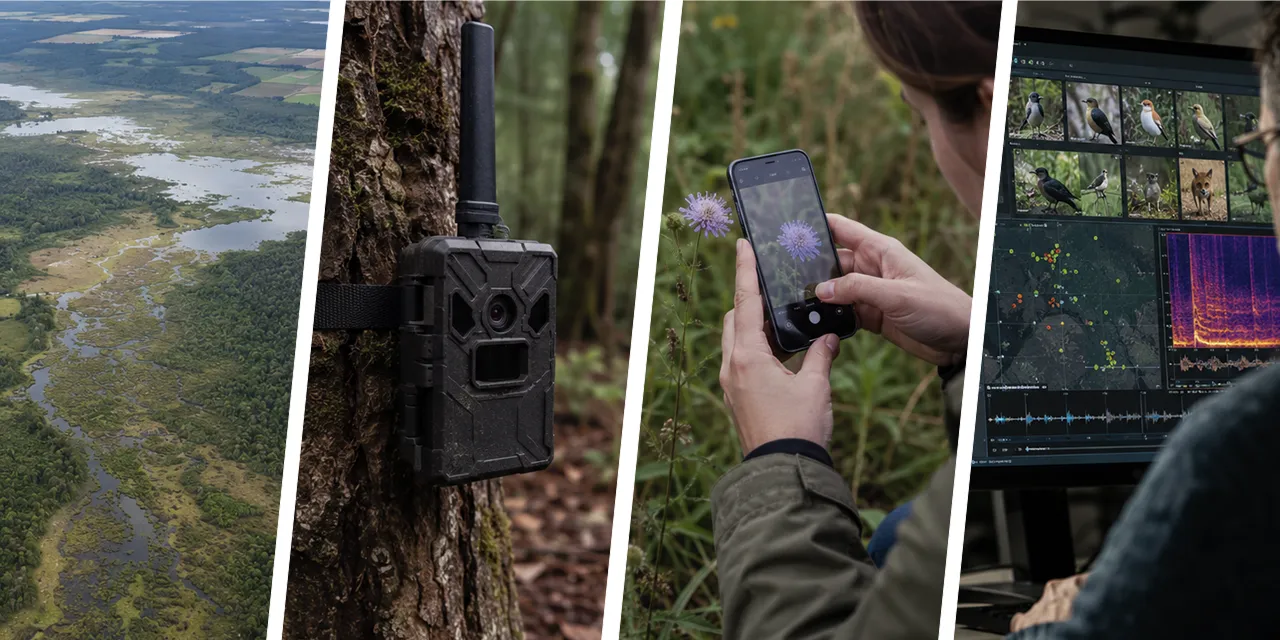
Mass monitoring is changing what can be observed in biodiversity research and management. BioMonWeek 2026 showed how automated sensors, remote sensing, AI, eDNA and citizen science can expand the scale and frequency of monitoring. The challenge is to ensure that this growing flow of observations becomes reliable, interpretable evidence for action.
Biodiversity monitoring has long depended on skilled fieldwork, repeated surveys and expert identification. These remain essential. Yet many ecological changes now unfold across scales that are difficult to capture with traditional methods alone: insect declines, shifting migration patterns, forest structure change, habitat fragmentation, invasive species spread, ecosystem responses to climate change, and biodiversity trends across large or remote areas.
Mass monitoring responds to this challenge by combining technologies and participation models that can collect biodiversity-related information more frequently, across wider areas and with greater taxonomic reach. At BioMonWeek, this theme covered remote sensing, passive acoustic recorders, camera-based sensors, DNA-based monitoring and EU-funded projects working on monitoring at scale. The theme also included sessions on long-term and cost-effective citizen science, showing that mass monitoring is as much about people and organisation as it is about devices.
More eyes, ears and sensors
The promise of mass monitoring lies in expanding what can be detected. Camera traps and automated insect traps can generate repeated observations across seasons. Acoustic recorders can monitor birds, bats, insects and other sound-producing species over long periods. Radar networks can track aerial biodiversity, including birds, bats and insects, across large spatial scales. Remote sensing can detect changes in habitat extent, vegetation structure and ecosystem condition. eDNA and metabarcoding can reveal species that are difficult to see or identify in the field.
These approaches open possibilities for monitoring hard-to-reach habitats, nocturnal species, flying insects, soil and freshwater communities, marine systems, forests and agricultural landscapes. They also help move monitoring from occasional snapshots towards more continuous observation.
Citizen science adds another layer of scale. Platforms such as Pl@ntNet and long-term volunteer schemes show how public participation can generate large volumes of biodiversity data while also strengthening awareness and engagement. The BioMonWeek highlighted that citizen science remains essential for long-term monitoring of birds, butterflies, bats, plants and dragonflies, and that platforms such as Pl@ntNet can combine public participation with research-grade data flows.
The analysis bottleneck
Mass monitoring does not remove the hard parts of biodiversity monitoring. It often moves them. As sensors, images, sounds, sequences and satellite products multiply, the bottleneck shifts towards processing, validation and interpretation. Large volumes of raw data can become a burden if institutions lack the tools, expertise or workflows to process them. Automated systems may collect information faster than teams can verify, analyse or publish it.
This emerged as a recurring concern in discussions, which highlighted a growing “analysis gap”, with sensors producing more data than teams can process. They also emphasised the need for standardised processing, clear provenance, reusable workflows, and rapid publication to open infrastructures such as GBIF and OBIS.
For mass monitoring, scale is therefore useful only when paired with quality control. Automated identification needs training data and expert validation. eDNA workflows need reference databases and contamination checks. Remote sensing products need field validation. Acoustic and image-based monitoring require transparent models, uncertainty estimates and ecological interpretation. Without these safeguards, mass monitoring risks producing more uncertainty with better hardware.
Citizen science as infrastructure
The mass monitoring discussions also showed that citizen science should not be treated as a side activity. In many contexts, it provides continuity, coverage and social relevance that formal schemes alone cannot deliver.
Long-term volunteer networks have already contributed to some of Europe’s most important biodiversity indicators. Public participation can also help monitor common species, detect invasive species, support BioBlitzes, generate plant observations, and build engagement with local biodiversity change.
Yet citizen science also requires infrastructure. It depends on clear protocols, feedback to participants, training, validation, data management and long-term coordination. Retaining volunteers and maintaining data quality are practical challenges, not communication details.
Mass monitoring is often presented as a technological transition, but BioMonWeek suggested a broader view: successful mass monitoring combines automation, expert knowledge and human participation.
From detection to decision
The value of mass monitoring depends on what happens after detection. A camera image, acoustic record, satellite product or DNA sequence is only the beginning. Monitoring outputs need to answer ecological and management questions.
Where are species declining? Are migration patterns shifting? Which habitats are changing fastest? Are restoration measures improving ecosystem structure? Are invasive species spreading? Which areas need field verification? Which pressures should managers address first?
Mass monitoring can help answer these questions if systems are designed with decision needs in mind. This requires links between field data, automated outputs, data infrastructures and policy or management contexts. It also requires caution: high-frequency data can reveal patterns, but interpretation still depends on ecological understanding.
This is especially important for remote sensing and AI. These tools can identify changes at scale, but they often need local ecological knowledge to explain what those changes mean. A map of canopy structure, acoustic activity or species detections becomes useful when it helps managers prioritise action.
What this means for Europe
BioMonWeek showed that mass monitoring is becoming a major part of Europe’s biodiversity monitoring landscape. It offers ways to expand coverage, reduce field constraints and detect change earlier. It can help connect local observations with European-scale assessments.
The risk is treating scale as impact. More sensors, more records and more automated outputs will not strengthen biodiversity policy unless they are validated, standardised and interpreted. Mass monitoring should be judged by whether it improves understanding, supports conservation and helps evaluate action.
For Biodiversa+, this theme connects directly to the wider goal of a coordinated European monitoring system. The Partnership can help create spaces where technological innovation, citizen science, data standards, field expertise and policy needs are brought together. It can also support the kind of alignment needed for mass monitoring outputs to become comparable and useful across countries.
POLICY & FUNDING
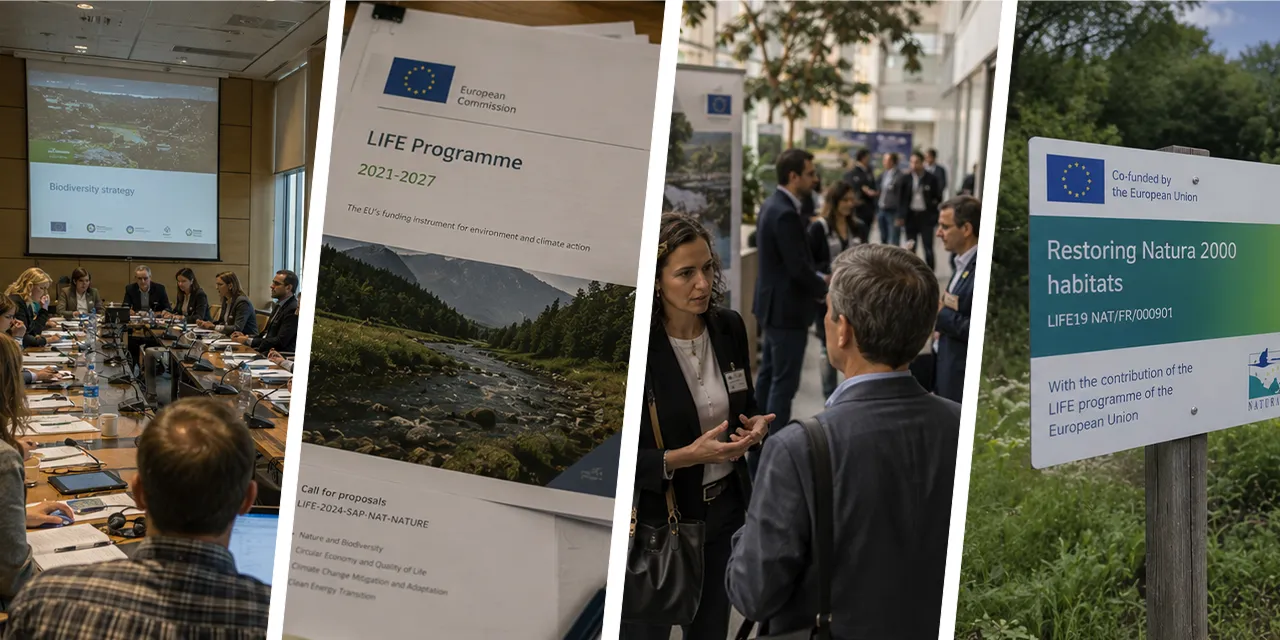
Public policy is raising the stakes for biodiversity monitoring. BioMonWeek 2026 showed that monitoring is now expected to do more than describe the state of nature. It must help assess whether policies are working, where restoration is needed, and how action can be made more effective.
Biodiversity monitoring has always informed policy, but the policy context is changing. The Nature Restoration Regulation, the EU Nature Directives, the Water Framework Directive, the Marine Strategy Framework Directive and global biodiversity commitments are creating stronger demand for comparable and actionable evidence.
This places monitoring in a more demanding position. If Europe commits to restoring degraded ecosystems, reversing pollinator decline, improving river connectivity or protecting habitats, monitoring must help show whether those commitments are being met.
At BioMonWeek 2026, the public policy and funding sessions addressed this shift directly. Discussions covered the role of monitoring in the Nature Restoration Regulation, policy implementation, links between monitoring needs across policies, monitoring for Nature-based Solutions, national and EU funding, and the landscape of EU monitoring projects.
The Nature Restoration Regulation raises the bar
The Nature Restoration Regulation was one of the strongest policy drivers discussed during the week. It changes the type of evidence countries need. Monitoring must support decisions on where habitats are, what condition they are in, where restoration should take place, and whether measures are delivering results.
This requires more spatially explicit and outcome-oriented monitoring. Broad status assessments remain useful, but they are not enough to guide restoration planning or evaluate recovery. Countries need evidence on habitat extent and condition, pressures, degradation, connectivity, management practices and restoration outcomes.
The French case illustrated the scale of this challenge. Existing monitoring systems provide an important foundation, but major gaps remain, especially for some habitats and marine environments. National habitat mapping, pressure data, modelling and field validation will all be needed. The discussion also highlighted genetic diversity as a missing but important dimension of restoration monitoring, since populations may appear restored while remaining vulnerable due to low genetic diversity or poor connectivity.
Restoration policy therefore needs monitoring systems able to track recovery, not just record decline.
Linking policies without multiplying burdens
Biodiversity monitoring is now needed by many policies at once. The same countries and institutions must report under different frameworks, each with its own timelines, indicators and expectations.
This creates a risk of duplication. If monitoring systems are designed separately for each policy, resources are wasted and data become harder to compare. A more effective approach would identify where needs overlap, where indicators can serve several purposes, and where data flows can be shared.
That does not mean forcing all policy frameworks into the same structure. Freshwater, marine, terrestrial and soil systems each have specific requirements. But better alignment can reduce administrative burden and make evidence more useful.
National examples showed what this can look like in practice. France is working to coordinate a fragmented monitoring landscape. Portugal’s pollinator monitoring scheme responds directly to EU restoration requirements while combining professional monitoring, citizen science and DNA tools. South Tyrol and Switzerland showed how long-term monitoring can evaluate whether agri-environment measures, protected areas and landscape policies are delivering biodiversity benefits.
These cases underline the value of continuity. Monitoring becomes more useful when it can track change over time and assess whether interventions work.
Funding must match expectations
A recurring concern was the gap between policy ambition and monitoring resources. Long-term biodiversity change cannot be understood through short project cycles alone. Monitoring needs repeated sampling, stable coordination, trained people, data infrastructure and trust between actors.
Yet many monitoring initiatives depend on temporary funding. This makes it difficult to maintain time series, retain expertise, update data systems or build lasting collaboration. Budget constraints can also narrow monitoring to immediate regulatory needs, leaving less visible but important dimensions under-monitored.
If monitoring is expected to support legally binding restoration targets, policy evaluation and accountability, it needs to be funded as public-interest infrastructure. Project funding can drive innovation, but operational monitoring requires sustained support.
The funding discussion also extended beyond public budgets. Nature finance, biodiversity credits and corporate sustainability reporting are increasing demand for biodiversity evidence. This can bring new resources into monitoring, but it also raises questions about credibility, transparency and verification. Private-sector monitoring can contribute to the evidence base, but only if it is linked to robust protocols, independent validation and trusted data routes.
From indicators to decisions
Policy-relevant monitoring often relies on indicators. BioMonWeek showed that indicators are essential, but they need to be designed with care. They must be comparable enough for reporting, robust enough for policy evaluation, and meaningful enough for those managing land, water and sea.
This is especially important as monitoring moves beyond species presence towards habitat condition, ecosystem function, genetic diversity, connectivity, pressures and restoration outcomes. Indicators should help decision-makers understand whether action is working, where pressures remain and where resources should be directed.
The same applies to Nature-based Solutions. Monitoring NbS requires evidence on ecological outcomes, resilience, co-benefits and trade-offs. Without credible monitoring, it is difficult to know whether interventions deliver genuine biodiversity gains or only broad sustainability claims.
What this means for Europe
BioMonWeek showed that Europe’s demand for biodiversity monitoring is growing fast. The risk is that monitoring systems are given more responsibilities without being given the mandate, continuity and resources to deliver.
A stronger approach would connect existing schemes, harmonise where comparability matters, protect long-term datasets, invest in data flows, and fund coordination over time. It would also treat monitoring as more than a reporting obligation. Done well, monitoring reduces uncertainty, evaluates action and guides investment.
For Biodiversa+, this theme is central. The Partnership can help create spaces where countries, research organisations, funders and policy actors compare needs, identify overlaps, and develop approaches that support several frameworks without losing ecological relevance.
PRIVATE SECTOR
Private-sector demand for biodiversity monitoring is growing. BioMonWeek 2026 showed how regulation, finance, restoration projects and corporate sustainability commitments are creating new needs for biodiversity evidence. The challenge is credibility: ensuring this evidence is robust, transparent and useful beyond individual reporting exercises.
Companies and financial institutions are under growing pressure to understand their dependencies and impacts on nature. Corporate sustainability reporting, nature-related risk frameworks, restoration finance and biodiversity credit discussions are all increasing demand for measurable biodiversity information.
This creates an opportunity. Private-sector activities often generate data in places that are poorly covered by public monitoring, including industrial sites, restoration areas, infrastructure corridors, supply chains and privately managed land. Businesses can also help test and scale tools such as remote sensing, eDNA, acoustic monitoring and automated platforms.
But this opportunity comes with risks. Biodiversity monitoring in commercial contexts remains methodologically diverse, operationally difficult and highly context-dependent. Without robust protocols, transparent baselines and trusted data routes, monitoring can end up supporting claims more than conservation outcomes.
At BioMonWeek 2026, the private-sector theme addressed this tension directly, with sessions on business needs, voluntary monitoring, nature credits, biodiversity data tools, private capabilities and science-industry partnerships.
Regulation is changing the demand for evidence
A key driver is the growing expectation that companies report on biodiversity in a structured and verifiable way. Businesses need to know where their activities affect ecosystems, which biodiversity values are at stake, how these change over time, and whether mitigation, restoration or compensation measures are working.
For financial actors, biodiversity evidence can also support risk assessment, investment decisions and claims around nature-positive outcomes. This moves biodiversity monitoring closer to corporate strategy, risk management and finance.
Yet business timelines and ecological timelines do not always align. Reporting cycles are short, while biodiversity change and restoration outcomes often require long-term observation. Monitoring designed mainly for annual reporting may miss slow trends, delayed impacts or the durability of restoration gains.
This is especially important for biodiversity credits and restoration finance. Claims of biodiversity gain need credible baselines, additionality, long-term monitoring, transparent metrics and safeguards against over-claiming.
Case studies show promise and limits
BioMonWeek included examples of private-sector monitoring in restoration, reforestation, aquatic systems, environmental impact assessment and science-industry partnerships.
Restoration case studies showed how soil eDNA, field surveys, remote sensing, bioacoustics and ecosystem-specific indicators can be combined to assess biodiversity alongside carbon or other outcomes. This is important because biodiversity co-benefits cannot be assumed. A project designed for carbon still needs evidence on habitat structure, species communities, soil conditions and ecological function.
Other examples highlighted autonomous aquatic monitoring, robotic platforms, bee-based biomonitoring and cloud-based DNA workflows. These approaches suggest that private-sector partnerships can accelerate innovation, especially where companies bring engineering capacity, operational deployment or digital infrastructure.
The risk is adopting tools faster than standards. A method that works well in one context may not be transferable without calibration. An indicator that is useful in one ecosystem may be misleading in another. Commercial platforms can generate attractive outputs, but their credibility depends on validation, transparency and recognised data standards.
Private-sector data should not remain invisible
One of the strongest opportunities lies in data mobilisation. Environmental impact assessments, restoration projects, infrastructure monitoring and corporate biodiversity surveys can generate large amounts of information. Much of it remains underused, locked in reports, consultancies or internal systems.
These data could help fill gaps, especially in remote, industrial or otherwise under-monitored areas. They could also improve baselines and support cumulative impact assessment.
Opening or reusing them, however, requires trust. Sensitive species locations, commercial confidentiality, landowner concerns and data quality all need safeguards. Data sharing should also recognise the work of those who collect, curate and validate information.
The practical route is not to demand that all private-sector data become fully open. It is to build trusted pathways: clear metadata, quality standards, appropriate access rules, links to recognised repositories and shared expectations about reuse.
From corporate monitoring to public value
If corporate biodiversity monitoring remains isolated, it may serve reporting needs without strengthening the wider evidence base. If it is linked to shared standards and trusted infrastructures, it can contribute to public knowledge while still supporting business decisions.
This requires stronger science-industry collaboration. Businesses need guidance on what to monitor, at what scale, with which methods and how to interpret results. Scientists and monitoring organisations need to understand business decision cycles and operational constraints. Public authorities need to define safeguards so biodiversity claims remain credible.
Tools such as THRIVE point towards part of this landscape by helping companies and financial institutions assess impacts and dependencies on biodiversity. But tools alone are not enough. They need robust baselines, transparent methods and clear routes from assessment to action.
What this means for Europe
BioMonWeek showed that private-sector biodiversity monitoring is moving from a niche activity towards a more structured field. Regulation, finance and restoration commitments are creating demand for evidence. New technologies and partnerships can expand monitoring capacity. Private-sector data could help fill important gaps.
The condition is credibility. Monitoring linked to business and finance must be robust enough to support real decisions, not just reporting narratives. That means shared standards, independent validation, long-term baselines, transparent data flows and careful governance of claims.
Private-sector monitoring cannot sit outside the wider European monitoring landscape. By supporting alignment between scientific expertise, public authorities, data infrastructures and monitoring communities, Biodiversa+ can help ensure that private-sector contributions strengthen the collective evidence base.
MONITORING GOVERNANCE
Biodiversity monitoring does not become useful through methods alone. BioMonWeek 2026 showed that Europe also needs governance: the structures, roles and relationships that allow monitoring schemes, data flows and knowledge communities to work together across local, national, regional and European scales.
Across Europe, biodiversity is monitored by public authorities, research institutions, NGOs, citizen science networks, site managers, local communities, private actors and international infrastructures. This diversity is a strength. It reflects different ecosystems, histories, policy needs and forms of expertise.
It also creates fragmentation. Monitoring schemes may use different protocols, cover different taxa or habitats, store data in separate systems, or respond to separate policy demands. Useful evidence can remain locked within institutional, national or disciplinary boundaries. Governance is what determines whether these efforts remain scattered, or become part of a more coherent monitoring landscape.
At BioMonWeek 2026, the governance theme addressed this challenge directly, with sessions on Indigenous and local knowledge, local-to-global monitoring networks, shared monitoring governance for public policies, research and the private sector, and collaboration between transnational monitoring schemes.
Coordination needs more than goodwill
Calls for coordination are common in biodiversity monitoring. BioMonWeek made clear that coordination only works when it is supported by mandates, roles, resources and trust.
Several discussions pointed to the need for clearer responsibilities. Who defines common requirements? Who maintains data flows? Who validates methods? Who connects national monitoring to European reporting? Who ensures that local knowledge is recognised and not extracted? Without these roles, governance risks becoming polite alignment without operational effect.
This is especially important as policy demands grow. The Nature Restoration Regulation, the Nature Directives, freshwater and marine policies, soil initiatives and global biodiversity commitments all require monitoring evidence. If each framework creates separate reporting needs, monitoring systems may become more fragmented. Governance can help identify overlaps, reduce duplication and connect data flows across policies.
The goal is not to centralise all monitoring. It is to make responsibilities visible, align where it matters, and support evidence that can move across scales.
Harmonisation without erasing context
One of the hardest governance questions is how to harmonise monitoring while protecting local relevance and long-term continuity.
European-scale assessments require comparable data. Shared standards, common vocabularies and minimum requirements are essential if monitoring results are to be combined across countries. Yet rigid standardisation can undermine national schemes, local knowledge and historical datasets that have built value over decades.
BioMonWeek repeatedly pointed towards a more flexible approach: harmonisation where comparison is needed, flexibility where ecological or institutional context matters. This means agreeing on what must be comparable, while allowing different methods or sampling designs when they meet shared requirements.
The local-to-European plenary captured this tension. Continental, regional and national perspectives each bring different strengths. European coordination can reveal gaps and support comparability. Regional cooperation can follow ecological realities that cross borders, as in mountain ranges or marine basins. National systems often act as translation zones between policy commitments and monitoring practice. Local schemes provide context, stewardship and continuity.
Good governance should connect these levels rather than force them into a single mould.
National and transnational networks matter
Several examples discussed during the week showed how monitoring becomes stronger when schemes are connected across borders.
Long-term bird monitoring, marine mammal surveys such as SCANS, emerging networks for plants, dragonflies and other taxa, and regional frameworks such as the Carpathian Convention all show the value of shared coordination. These initiatives require agreements on methods, data flows, analysis, communication and use. Their success is organisational as much as scientific.
National coordination centres also play a key role. They can map existing schemes, identify gaps, support data mobilisation, connect ministries and agencies, and provide stable contact points for European cooperation. The Biodiversa+ work on national biodiversity monitoring coordination centres fits this logic: stronger European monitoring depends on stronger national coordination, not on bypassing it.
Tools such as BioDash can also support governance by making monitoring schemes more visible. Knowing who monitors what, where, how and for which outputs is a practical step towards reducing duplication and identifying opportunities for alignment.
Knowledge communities are part of governance
Governance is often discussed as an institutional matter, but BioMonWeek also placed strong emphasis on communities.
Sessions on Indigenous and local knowledge highlighted questions of trust, consent, data sovereignty, equitable partnerships and co-production. Local and Indigenous knowledge can provide long-term, place-based understanding that formal monitoring often misses. But including this knowledge requires more than inviting contributions. It requires shared priorities, respect for rights, clear agreements and attention to who benefits from the results.
Citizen science raises similar governance questions. Volunteer networks can provide scale and continuity, but they depend on feedback, recognition, clear protocols and long-term support. Their role should not be treated as cheap data collection. They are part of the monitoring system.
The plenary on human dynamics reinforced this wider point. Monitoring is often framed around data, but it is built by people. Communities of practice, boundary-spanning roles and long-term relationships are needed to translate evidence into action.
Private actors and sensitive data
Governance also matters as private-sector monitoring grows. Environmental impact assessments, restoration projects, corporate reporting and biodiversity credit schemes can generate useful data. Yet these data sit within commercial contexts, with questions around confidentiality, verification, access and credibility.
The governance challenge is to create trusted pathways for private-sector data to contribute to wider biodiversity knowledge where appropriate. This requires quality standards, metadata, validation, safeguards for sensitive species and clear rules for reuse. It also requires careful oversight of claims, especially where monitoring is used to support biodiversity credits or nature-positive reporting.
Open data is important, but governance must also address when data should be protected, restricted or shared under specific conditions.
What this means for Europe
BioMonWeek showed that monitoring governance is no longer a background issue. It is central to whether Europe can turn its many monitoring efforts into usable evidence for policy and action.
A stronger governance approach would connect national centres, thematic networks, European infrastructures, local initiatives, citizen science communities, Indigenous and local knowledge holders, and private-sector data routes. It would clarify responsibilities, support interoperability, protect long-term datasets, and create spaces where actors can agree what should be harmonised and what should remain context-specific.
For Biodiversa+, this is a core space for contribution. The Partnership can help bring actors together, support national and transnational coordination, test common approaches and strengthen links between monitoring schemes, data systems and policy needs.
CAPACITY-BUILDING
Biodiversity monitoring depends on people. BioMonWeek 2026 showed that new technologies, data infrastructures and policy demands are changing the skills needed to monitor nature, while making long-standing expertise, especially taxonomy and field knowledge, more important than ever.
Europe’s biodiversity monitoring landscape is changing quickly. Molecular tools, AI-supported identification, remote sensing, acoustic monitoring, automated sensors and data platforms are expanding what can be observed. Policy frameworks are asking for more comparable, timely and decision-useful evidence.
These changes expose a capacity gap. Advanced tools do not run themselves. Data standards do not implement themselves. Indicators do not interpret themselves. Monitoring depends on people who can design schemes, collect data, validate methods, manage workflows, interpret results and communicate evidence.
At BioMonWeek 2026, capacity-building appeared as a practical condition for stronger biodiversity monitoring. Discussions covered taxonomy, species identification, training, data sharing, genetic tools, underwater monitoring, science-industry collaboration and the future skills needed in monitoring jobs.
Technology raises the skill requirement
New monitoring tools are often presented as ways to reduce effort. Automated sensors can expand coverage. eDNA can detect species that are difficult to observe. AI can help process images, sounds or taxonomic records. Remote sensing can provide landscape-level information that field surveys alone cannot deliver.
But these tools also require specialised expertise. eDNA workflows need sampling design, laboratory quality control, bioinformatics, reference databases and ecological interpretation. AI models need training data, validation and uncertainty assessment. Acoustic monitoring requires recording protocols, sound identification and data processing. Remote sensing needs links between satellite products, field validation and biodiversity questions.
Technology increases capacity when people know how to use it well. Without training and validation, new tools risk producing outputs that are difficult to trust or interpret.
Taxonomy remains foundational
One of the strongest capacity messages concerned taxonomy. Species identification and stable naming underpin biodiversity monitoring. They support reference databases, eDNA interpretation, AI training, species indicators, Red Lists, protected area planning and long-term trend analysis.
The concern is that taxonomic expertise is unevenly distributed and declining for some groups, especially invertebrates, fungi, soil biodiversity and other less visible components of nature. These groups may be crucial for ecosystem function, but difficult to monitor without specialist knowledge.
BioMonWeek did not present taxonomy as an old skill being replaced by technology. It presented it as the basis on which many new technologies depend. Automated identification still needs verified training material. DNA-based monitoring still needs reliable reference sequences. Indicators still need stable species concepts.
Strengthening taxonomy therefore means protecting the quality of biodiversity evidence.
Training must connect field, lab and data skills
Modern monitoring requires combinations of skills that were once more separate: field ecology, taxonomy, molecular methods, remote sensing, data stewardship, AI validation, statistics, policy literacy and facilitation.
A field ecologist may need to understand data standards. A data manager may need to understand sampling design. A molecular specialist may need to work with conservation practitioners. A policy officer may need to understand what a monitoring indicator can and cannot say.
Examples such as TEOSS for bioacoustic monitoring showed the value of hands-on training, open reference resources, community-building and shared data practices. Capacity-building works best when it creates communities that continue learning beyond a single training event.
Data capacity is monitoring capacity
Several capacity discussions connected directly to data management. Sharing monitoring data through infrastructures such as GBIF requires more than goodwill. It requires people who can structure datasets, use standards, document methods, handle metadata, check quality and understand how data may be reused.
This is especially important for complex survey data, repeated monitoring structures, sampling events and environmental context. Without data stewardship, valuable observations remain underused. With it, monitoring data can support broader analysis, reporting and decision-making.
Data skills should therefore be recognised as core monitoring skills, alongside field and taxonomic expertise.
Collaboration skills matter too
Capacity-building is not only technical. BioMonWeek’s discussions on communities of practice, Indigenous and local knowledge, science-policy links and science-industry partnerships showed the importance of collaboration skills.
Monitoring often involves researchers, ministries, agencies, local communities, citizen scientists, companies, site managers and data infrastructures. Working across these groups requires facilitation, communication, trust-building and clarity about roles.
This is especially relevant for co-design. Tools and indicators are more likely to be used when practitioners, policymakers and data users are involved early. But co-design requires time and skills that researchers are not always trained for. The same applies to working with Indigenous and local knowledge holders, where ethical engagement, consent and reciprocity are essential.
Future monitoring capacity therefore includes boundary-spanning capacity: people able to connect scientific methods with policy needs, local realities and practical decisions.
What this means for Europe
BioMonWeek showed that Europe’s monitoring ambitions depend on a stronger skills base. Investment in tools, platforms and data flows will fall short if the people needed to operate them are missing, underfunded or working in short-term project cycles.
A stronger approach would treat capacity-building as part of monitoring infrastructure. This means supporting taxonomic expertise, field skills, molecular and digital methods, data stewardship, science-policy roles and long-term communities of practice. It also means recognising volunteers, local experts and citizen scientists as part of the monitoring system.
For Biodiversa+, this theme is central to building a coordinated European monitoring landscape. By supporting exchanges between countries, research organisations, national authorities and monitoring communities, Biodiversa+ can help identify shared capacity needs and promote approaches that strengthen both technical skills and collaboration.
Programme and speakers
Explore the BioMonWeek 2026 programme by day.
Beyond Data: The Ethics, Politics, and Purpose of Biodiversity Monitoring
Speaker: Vincent Devictor
Welcome
Introduction
Bridging Research and Policy: the state of art and future of biodiversity monitoring
Speakers: Nathalie Pettorelli, Marialuisa Tamborra
Coffee break
MM12 Lessons learnt from camera-based sensors and their data
Speakers: Toke T. Høye, Alyssa Duffy, Stefania Zanet
DT08 Data infrastructures, coordination and interoperability
Speakers: Wouter Addink, Ellen Jones, Christos Arvanitidis, Sam Wenaas Perrin, Stephen Formel, Maxime Coupremanne
FR04 Advances in freshwater biodiversity monitoring
Speakers: Daniela Cortes, Ana Trindade, Laurine Viollaz, Hetty Kleinjan, Maxime Beauvais
GV03 Integrating indigenous and local knowledge in biodiversity monitoring
Speakers: Quentin Groom, Justine Rives, Carol Garzon Lopez, Juan Valdez, Lena Den Boer
MR07 Monitoring and mapping of marine benthic habitats
Speakers: Louise Forsblom, Damianos Chatzievangelou, Louis Fiorina, Pedro Neves
PP01a Role of monitoring in the Nature Restoration Regulation
Speakers: Catherine Julliot, Julia Geue, Idaline Laigle, Colombe Warin, Mikkel Schwartz
PV02 Tech or No Tech? How NatureTech can leverage traditional surveys
Speakers: Esther Peeters, Werner Rom, Alix Aliaga
TR05 Biodiversity monitoring in terrestrial protected areas, including Natura 2000
Speakers: Niels Raes, Maria B Garcia, Maja Zagmajster, Costantino Bonomi
MM12 Special feature: New monitoring technologies: turning optimism into enactment
Speaker: Rebecca Court
Lunch break
Building a Community: Human Dynamics in Biodiversity Monitoring
Speakers: Arne Langlet-Uranüs, Margarita Hartlieb, Nirmala Séon-Massin, Jenny Wik Karlsson
Coffee break
Posters
CP07 Capacity building with genetic tools
Speakers: Patrick Nichols, Tami Wooldridge, Christina Ritzl Vejlgaard, Myriam Heuertz, Karol Marhold
CP04 What jobs and skills for monitoring biodiversity in 2026
Speaker: Suzon Bedu
DT07 Standardising and sharing survey and monitoring data through GBIF and OBIS
Speakers: Kate Ingenloff, Daniel Lear, Peter Desmet, Eva Corssmit, Salza Palpurina, Heliana Teixeira
GV01 Biodiversity monitoring approaches and challenges
Speakers: Henrik Hedenås, Mark Marissink, Ute Jandt, Joana Canelas
MM01 Getting kick started with (e)DNA based methods
Speakers: Florian Leese, Pedro Junger, Tiina Laamanen, Joanna Warwick-Dugdale
MM03a Novel RS approaches. Part I Foundations and frameworks
Speakers: Sandra Luque, Petteri Vihervaara, Lori Giagnacovo, Simon Bonnefoy, Stelios Katsanevakis, Dominik Kleger
MR02 Understanding EBVs and EOVs
Speakers: Guillaume Body, Lina Mtwana Nordlund, Lisa Benedetti
PP06 National monitoring examples: from data to policy
Speakers: Julien Touroult, Gitte Kragh, Andreia Miraldo, Andreas Hilpold, Noémie Pichon
Game: Bridging Minds
Gala dinner
Welcome
MM20 Successful Citizen Sciences approaches for long-term & cost-effective monitoring
Speaker: Constantinos PHANIS
CP09 Standardising and sharing survey and monitoring data through GBIF
Speakers: Kate INGENLOFF, Salza PALPURINA
DT05 Tools for data use, curation, and management
Speakers: Kristjan ADOJAAN, Reza ZAHIRI, Claudia CAMPANINI, Daniel LEAR, Nicolas GOUIX, Olaf BÁNKI, Kristy DEINER, Maite TELLETXEA, Donat AGOSTI, Patrick RUCH, Andrew RODRIGUES, Wouter ADDINK
eDNA01 General overview of the methodology and key method aspects
Speakers: Johan MICHAUX, Sofie DERYCKE, Ela IWASZKIEWICZ-EGGEBRECHT, Jonas BYLEMANS, David MOUILLOT, Florian LEESE
FR06 Freshwater habitats
Speakers: Mara KNÜSEL, Nieves LÓPEZ-RODRÍGUEZ, Anna BADOSA SALVADOR, Emmanuelle CHEVALLIER, Bella JAPOSHVILI, Mikko IMPIÖ, Lide DE IZETA ZALDUENDO, Jonathan JUPKE, Nikita MISHRA, Ayari ROJANO MARIN, Tiina LAAMANEN
MR10 Monitoring in MPAs
Speakers: Hannah TRUTER, M. Tunca OLGUNER, Lucas HAYES, Cláudia RIBEIRO, Skye BROWN
PP05 Cluster Event: The landscape of EU monitoring Project
Speakers: Gilles DOIGNON, Lucie VIDONNE, Colombe WARIN, Caroline POTTIER, Emanuela DE MENNA, Bénédicte BLAUDEAU, Maria BLASI
TR08 Monitoring common species at the European scale
Speakers: Irena BERTONCELJ, Joan VAN BAAREN, Martin JEANMOUGIN, Emmanuelle PORCHER, Sara FRAIXEDAS
MR06 Marine mammal monitoring programmes
Speakers: Anita GILLES, Ana CORREIA, Maria Silvia LABRIOLA, Marion PILLET
eDNA02 Upscaling biodiversity monitoring cases
Speakers: Bea Angelica ANDERSSON, Franck RICHARD, Wilfried THUILLER, Frédéric RIMET, Sara PARDAL, Joanna WARWICK-DUGDALE
TR02 Monitor connectivity & Spatial Planning
Speakers: Lise LAYOTTE, Bram VAN MOORTER, Tobias ANDERMANN, Colas GUILLON, Ahmed ELDESOKY, Rozália KAPÁS
Coffee break
FR04 Advances in freshwater biodiversity monitoring
Speakers: Alejandro CORRALES BARRERA, Timothy SUTTON, Peter GOETHALS, Xavier MESTDAGH, Fedor ČIAMPOR, Maiker ROJAS CASTRO, Daniela CORTES
MM11 Lessons learnt from passive acoustic recorders and their data
Speakers: Jamie ALISON, Yves BAS, Luc BOHYN, Rok ŠTURM, Gerard BOTA CABAU
PV01 Robust long-term monitoring for Nature credit viability
Speaker: Eric RIEUX
DT02 Data Workflows and Pipelines for WorkFlowHub
Speakers: Sandra MACFADYEN, Stephen FORMEL, Lena THÖLE, Andrew RODRIGUES, Ilaria ROSATI
eDNA03 Integrating eDNA methods into policies, focus on indicators
Speakers: Joanna WARWICK-DUGDALE, Rosetta BLACKMAN, Ondrej VARGOVČÍK, Robert BARBER, Pedro JUNGER
MR05 Advances in marine biodiversity monitoring
Speakers: Gaëlle LEGRAS, Stefano CIAVATTA, Christos ARVANITIDIS, Heidi BURDETT
TR01 Applied biodiversity monitoring in the terrestrial realm
Speakers: Zdenek RACANSKY, Oliviu Grigore POP, Mickael HEDDE, Ida Maria PÉCSELI, Thierry BOULINIER, Guillermo AGUILERA NÚÑEZ
Lunch break
Integrating Monitoring Tools: Insights from Australia’s TERN Programme
Speakers: Allan SOUZA, Jan-Erik PETERSEN, Sandra LUQUE
Coffee break
Posters
eDNA04 Mixed session: upcoming methodologies, outlook on eDNA society
Speakers: Birgit GEMEINHOLZER, Martijn CALLENS, Orianne TOURNAYRE, Isabelle DOMAIZON, Tiina LAAMANEN
CP06 Capacity needs and availability for species identification and naming
Speakers: Leonie BAIER, Sofie MEEUS, Edoardo MASSA, Tatiana MOREIRA PINHAL
DT11 How to handle derived data products and outputs for EBVs and EOVs
Speakers: Guillaume BODY, Wiebke PRESSÉ, Daniel LEAR, Stephen FORMEL, Lisa BENEDETTI
GV02 Collaboration & transnational networks of monitoring schemes
Speakers: Aino LIPSANEN, Michele BRESADOLA, Hugo Rene RIVERA MENDOZA, David EICHENBERG, Jan-Erik PETERSEN, Dag ENDRESEN
MM03b Novel RS approaches. Part II Data integration and systems
Speakers: Maarten TREKELS, Christophe BOTELLA, Annett FRICK, W. Daniel KISSLING, Petteri VIHERVAARA, Sandra LUQUE
PP04 Combining needs of monitoring from different policies
Speakers: Ingrid BONHEME, Lise MACIEJEWSKI, Laurent BERNADOU, Klaudia KURAS, Gabriela ZUQUIM
PV06 THRIVE toolkit
Speaker: Niels RAES
TR03 Scaling biodiversity monitoring: From ecosystem function to infrastructure impacts
Speakers: Gilles DAUBY, Vanessa HEQUET, Sophie OGAN, Aapo AHOLA, Mona NAESLUND
Game: Bridging Minds
Welcome
eDNA05 Conservation-related eDNA applications
Speakers: Nedine KACHORNNAMSONG, Stéphanie MANEL, Abigaël CHIEUX, Till-Hendrik MACHER, Emilie BOULANGER
MR03 Biodiversity mapping with advanced technologies
Speakers: Julie ROBIDART, Gloria CASABELLA-HERRERO, Javier ALONSO FERNANDEZ
CP08 Boosting science-industry partnerships for underwater biodiversity monitoring
Speakers: Alice GUITTARD, Louise FORSBLOM, Renato MENDES, Alexandra ZACHARIADOU, Konstantinos PROIOS
FR08 Needs and future perspectives for the Water Framework Directive
Speakers: Kristian MEISSNER, Laura HÖIJER, Andy NISBET, Sofie DERYCKE, Isabelle DOMAIZON
GV04 How to design biodiversity monitoring programmes
Speakers: Mona NAESLUND, Guillermo AGUILERA NÚÑEZ
MM07 Citizen Science for biodiversity monitoring
Speakers: Caitlin MANDEVILLE, Pablo UBILLA PAVEZ, Stijn VAN ONSEM, Igor SIEDLECKI, Lisa NICVERT, Berta COMPANYS, Charles THÉVENIN, Marie-Thérése WERNER, Orr COMAY, Gitte KRAGH, Agnieszka Józefowska
PP02 Policy implementation to bridge the gap from data to action
Speakers: Christina HVILSOM, Juan Camilo CUBILLOS M., Louise HENDRICKX, Jesper BLADT, Liselot BREYNE, Giovanni STRONA
TR04 Remote Sensing Application for Biodiversity
Speakers: Therese ERIKSSON, Rozália KAPÁS
DT01 Biodiversity Data Cubes
Speakers: Lina ESTUPINAN-SUARZ, Ward LANGERAERT, Niels BILLIET, Ana Luísa MACHADO, Quentin GROOM
PP03 Links to funding, at national & EU levels for biodiversity monitoring
Speaker: Michele BRESADOLA
PV03 Public-private collaboration: examples and best practices
Speakers: Sandra ROJAS-BOTERO, Lina ROBLES, Nicolas HETTE-TRONQUART
FR01 From Freshwater Biodiversity Monitoring to Conservation Actions and Policy
Speaker: Daniela CORTES
MR03 Special feature: Advancing integrated marine biodiversity monitoring through knowledge transfer
Speaker: Kara MCKEE
Coffee break
CP02 Monitoring training and experience sharing
Speakers: Kathrin HELSPER, Laura ABRAHAM, Lina MTWANA NORDLUND, Andy NISBET, Gernot SEGELBACHER
DT03 Environmental DNA survey data publication, management and interoperability
Speakers: Katie CLARK, Katrina EXTER, Arne BEERMANN, Sophie PAMERLON, Aurelia BENHAMADOUCHE, Birgit GEMEINHOLZER, Stephen FORMEL, Pieter PROVOOST, Rasa BUKONTAITE
GV05 Linking local, national, regional, global monitoring networks
Speakers: Jesper Erenskjold MOESLUND, Gloria CASABELLA-HERRERO, Andrea HAGYO, Guram CHKHIKVISHVILI, Lisa NORTON, Andrew RODRIGUES, Niels RAES, Ute JANDT
MM03c Novel RS approaches. Part III Applications and case studies
Speakers: Benoit BEGUET, Wilfried THUILLER, Paul TRESSON, Topi TANHUANPÄÄ, Petteri VIHERVAARA, Sandra LUQUE
MR12 Mobilising marine biodiversity monitoring data
Speakers: Isabel SOUSA PINTO, Laure CABASSE, Sarah ALBERNHE, Tony CANDELA, Jaume PIERA, Daniel LEAR
PP01b Role of monitoring in the Nature Restoration Regulation
Speakers: Laura SUTCLIFFE, Ruuta SKUJINA, Reto SCHMUCKI, Martina Marei VITI, Maria BLASI
PV04 What's new out there? Innovations for biodiversity monitoring
Speakers: Noémie CAPPELLE, Floriane CARRON, Emilie DELPUECH, Theo SERIVICHYASWAT
Lunch break
From Local to European: Harmonising Biodiversity Monitoring at Different Scales
Speakers: W. Daniel KISSLING, Klaudia KURAS, Aino LIPSANEN
Coffee break
SCANS: A Model of European Cooperation for Marine Biodiversity Monitoring
Speaker: Anita GILLES