Integrated Energy Transition Across Scales for Climate-Resilient, Nature-and-People Positive Biodiversity Pathways
Call
Duration
01/04/2026 – 31/03/2029
Total grant
Approx. 930 thsd. €
More information
Partners of the project
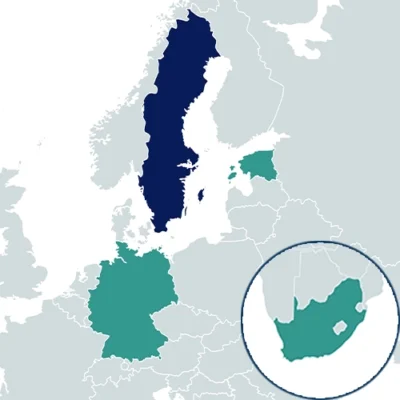
- International Climate Risk and Adaptation, The Stockholm Environment Institute Foundation, Stockholm, Sweden
- Environmental governance; Spatial planning and urban development; Anthropology and ethnology, German Institute of Development and Sustainability (IDOS), Bonn, Germany
- Sustainable Cities and Resilient Communities, The Stockholm Environment Institute Tallinn Center Foundation (SEI Tallinn), Tallinn, Estonia
- Agricultural Economics, Extension and Rural Development, University of Pretoria, Pretoria, South Africa
- Institute for Poverty, Land and Agrarian Studies, University of the Western Cape, Cape Town, South Africa
Context
As the world accelerates the shift to renewable energy to combat climate change, biodiversity loss remains an often-overlooked risk. Tripling renewable energy by 2030 creates unprecedented demands on natural resources, potentially harming ecosystems if mismanaged. This highlights a paradox of the energy transition: while essential for climate mitigation, it can inadvertently accelerate biodiversity loss and harm human health and well-being.
Governance efforts towards transformative change must consider the complex interdependencies between climate mitigation, the energy transition, and biodiversity conservation. Three key interactions warrant attention: misalignment between climate and biodiversity agendas; spatial competition between renewable energy infrastructure and conservation priorities; and increased pressure on environmental systems from resource extraction across global supply chains.
Main objectives
TRANS4BIO aims to provide evidence and analysis that support coordinated and enabling governance pathways needed for a transformative change to ensure nature and people-positive outcomes while reducing risks from narrowly-focused climate mitigation policies. To this end, the following sub-objectives are addressed:
- highlighting how the lack of integration between global climate and biodiversity agendas creates national energy transition implementation gaps;
- tracing how global supply chains and resource extraction for renewable energy connect to local biodiversity impacts across distant regions;
- examining how large-scale renewable energy infrastructure development in transboundary marine ecosystems can be aligned with biodiversity conservation priorities while balancing national energy security interests;
- understanding how urban energy transition impacts local biodiversity and citizen well-being across diverse socio-economic contexts.
Main activities
Stretching across Europe and South Africa, TRANS4BIO employs theory-driven empirical research to analyse the interplay between climate mitigation, energy transition, biodiversity protection and well-being. The project consists of several interwoven elements:
- applying a systems thinking approach to establish the project’s conceptual foundations, ensuring effective integration and transnational added value;
- combining AI-powered document analysis, stakeholder interviews and participant observations to examine interactions between international climate and biodiversity agendas, especially regarding climate mitigation;
- conducting case studies in South Africa and the North Sea to assess the interplay between global mineral demand for energy transition, social impacts, and (marine) biodiversity conservation in transboundary settings;
- using an interdisciplinary and justice-oriented approach to address urban energy transition impacts on local biodiversity and citizen well-being;
- organising science-policy workshops and synthesising project insights to help decision-makers implement integrated approaches that protect both biodiversity and human well-being while advancing climate goals.