Transformative change and Innovations for Diverse beach Ecosystems and sustainable Livelihoods through Enhanced wrack maNagEment Strategies
Call
Duration
01/04/2026 – 31/03/2029
Total grant
Approx. 1.3 mil. €
More information
Partners of the project
- Marine Biodiversity, Naturalis Biodiversity Center, Leiden, Netherlands
- Institute for Coastal and Marine Research, Nelson Mandela University, Gqeberha, South Africa
- Research Centre Global Dynamics, Leipzig University, Leipzig, Germany
- Department of Biology, University of Southern Denmark, Odense, Denmark
- Department of Biology – INMAR, University of Cádiz, Puerto Real, Spain
- Department of Ecological and Environmental Sciences and Technologies, University of Salento, Lecce, Italy
- Integrated Ecology Department – Genoa Marine Center, Stazione Zoologica Anton Dohrn, Genoa, Italy
- Center for Biosciences and Biotechnology – Environmental Science Laboratory, Darcy Ribeiro North Fluminense State University, Campos dos Goytacazes, Brazil
- Center for Exact, Natural and Health Sciences – Department of Biology, Federal University of Espírito Santo, Alegre, Brazil
Context
Sandy beaches, from the surf zone to the dunes, connect land and sea. They support unique biodiversity and provide benefits people rely on, including recreation and tourism, coastal protection, and fisheries. Yet management often prioritises appearance and short-term convenience, which can degrade habitats and accelerate biodiversity loss.
A key component of beaches is ‘wrack’: seaweed and seagrass that wash ashore. Wrack fuels beach food webs, offers feeding and shelter for wildlife, and contributes to nutrient and carbon cycling. It also influences sand dynamics and post-storm recovery. Despite this, wrack is commonly removed through mechanical grooming, while in some situations (e.g., invasive species) removal may be appropriate. Municipalities therefore face a practical question: when should wrack be retained, relocated, buried or removed to balance biodiversity, coastal resilience, recreation, public health and livelihoods?
TIDELINES will generate comparable ecological and social evidence across regions and translate it into feasible, locally adapted wrack management options co-produced with stakeholders and decision-makers.
Main objectives
- Identify which components of beach biodiversity depend on wrack, and how different wrack management regimes affect them.
- Understand how perceptions, cultural norms and governance frameworks shape wrack-related decisions.
- Assess key ecosystem services linked to wrack (e.g., habitat support, coastal protection, nutrient and carbon cycling) and quantify trade-offs under alternative management options.
- Co-develop and test practical interventions that can reconcile biodiversity outcomes with tourism and community needs, and deliver a Best Practice Guide and policy briefs for implementation.
Main activities
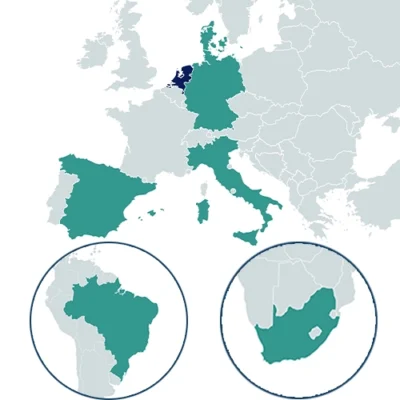
Across five model regions (Italy, Spain, the Netherlands, South Africa and Brazil), TIDELINES will use harmonised protocols to ensure results are comparable and transferable.
- Biodiversity and functioning: surveys of wrack-associated communities plus DNA-based metabarcoding; measurements of nutrient and carbon processes linked to wrack.
- Social and governance analysis: surveys, interviews and focus groups; review of rules, responsibilities and communication practices.
- Ecosystem-service scenarios: modelling and decision-support comparing strategies (retain, relocate, bury, remove) for biodiversity, coastal resilience and user experience.
- Management trials: field tests with managers to assess ecological outcomes and operational feasibility.
- Dissemination and knowledge transfer: at least two co-production workshops per region, targeted policy dialogues, public-facing materials, and a co-produced Best Practice Guide.
By clarifying when wrack retention supports biodiversity and resilience, and when removal is justified, TIDELINES will reduce conflict, improve transparency in beach management, and help municipalities align practices with biodiversity and climate goals while sustaining coastal tourism and community benefits.