
Building anticipatory governance of social-ecological tipping points in transformative change planning for ocean sustainability
Call
Duration
01/04/2026 – 31/03/2029
Total grant
Approx. 1.1 mil. €
More information
Partners of the project
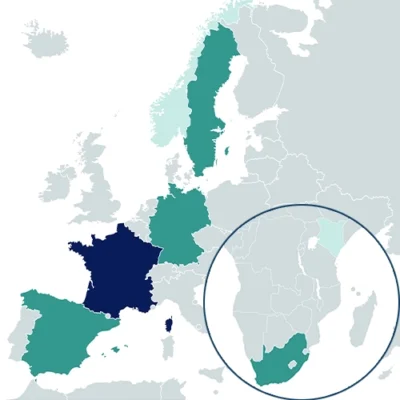
- Research Support Unit CRIOBE, French National Centre for Scientific Research, Paris, France
- Stockholm Resilience Centre, Stockholm University, Stockholm, Sweden
- Earth Resilience Science Unit, Potsdam Institute for Climate Impact Research, Potsdam, Germany
- Financial Economics and Accounting, Universidade de Santiago de Compostela, Santiago de Compostela, Spain
- Institute for Poverty, Land and Agrarian Studies, University of the Western Cape, Cape Town, South Africa
- School of Animal Plant and Environmental Sciences, University of the Witwatersrand, Johannesburg, South Africa
- Department of Entrepreneurship development and ecosystem building, African Hub for Ocean Impact, Cape Town, South Africa
- Department of Sociology and Human Geography, University of Oslo, Oslo, Norway
- Marine and Coastal Resilience Department, International Union for the Conservation of Nature, Nairobi, Kenya
Context
With the world facing a looming polycrisis of climate change, biodiversity loss and growing inequalities, there is an urgent need to enable societal transformation for the conservation and sustainable use of biodiversity and nature’s contributions to people (NCPs). However, what this transformative change looks like and how to achieve it will look different in different contexts and requires taking diverse peoples, their knowledge systems and aspirations into account. In this context, there is growing interest in the idea of positive tipping points, whereby it is possible to leverage the non-linear dynamics of complex systems to achieve aspirational transformative change. However, it is important to consider the feedback loops driving systems into negative change and what the potential risks are associated with ‘positive’ tipping, asking critical questions like positive to whom and positive where.
Main objectives
Innovative, multi-scale, and interdisciplinary approaches to research-based policy and action are essential to enable the transformative change needed to alleviate ongoing biodiversity loss and the erosion of NCPs. Drawing on this challenge, our overarching goal is to understand what transformative change is needed to achieve sustainable and equitable coastal and marine futures that are resilient to surprises in African ocean basins. This entails identifying what visions and pathways of transformative change should be fostered with more equitable outcomes, understanding co-benefits and synergies across scales, and mismatch in aspirations, leading to potential downsides and trade-offs between local, regional and global visions and pathways. The two main sub-objectives of the research are:
- anticipating and understanding coastal and marine social-ecological tipping points across scales in African ocean basins.
- building anticipatory governance to ensure that actions to achieve transformative visions at one scale do not lead to negative impacts at another.
Main activities
Our theory of change is that our scenario process and its outcomes would create more anticipatory capacity for improved governance of marine social-ecological systems in Africa, but also with important learnings for other places, both marine and terrestrial. It would do so both by building aspirational futures through which to orient actions, as well as by unpacking disruptive surprise events that could have irreversible impacts on the well-being of people and nature. To operationalise our overarching goal and two sub-objectives, we will use the following methods:
- co-designing visions and pathways to aspirational ocean futures drawing on diverse and potentially conflicting knowledge systems;
- analysing governance and other interventions that avoid negative tipping points and therefore build resilience to surprises in these marine social-ecological systems;
- co-producing bottom-up indicators across plural values for nature and include these in global visions.