
Transforming fishing vessels into stewards to protect biodiversity through the integration of eDNA metabarcoding, satellite data and AI
Call
Duration
01/03/2026 – 28/02/2029
Total grant
Approx. 465 thsd. €
More information
Partners of the project
- Department of Biology, University of Rome Tor Vergata, Rome, Italy
- Institute of Marine Sciences, Federal University of Ceará, Fortaleza, Brazil
- Department of Aquatic Resources, Swedish University of Agricultural Sciences, Lysekil, Sweden
- WWF Mediterranean Marine Initiative, WWF, Rome, Italy
Context
The global decline of marine biodiversity due to human-related pressures, especially pollution, climate change, and overfishing, is our time’s critical emergency. To identify interventions that can reduce human impacts and successfully slow or reverse this decline, we need to map and monitor the spatial distribution of biodiversity at sea. Hence effective management requires large-scale monitoring, easily accessible and integrated data, and decision-support tools. Currently, our approaches to monitoring and assessing marine biodiversity remain inefficient, complex, and expensive. SEAWATCH aims to explore a promising but potentially transformative direction: using fishing vessels as sentinels of marine biodiversity and the impacts it is facing. The idea is to combine the collection of environmental DNA (eDNA), carried out through new-generation passive probes, with satellite data and models based on artificial intelligence (AI).
Main objectives
The main aims that SEAWATCH will address are:
- to apply low-cost technologies for eDNA collection on board fishing vessels in order to generate reliable, high spatial and temporal resolution data on marine biodiversity;
- to harness AI, alongside traditional ecological analysis techniques, to explore metadata generated by the integration of eDNA, satellite data from vessel tracking devices, and Copernicus data, and to identify potential biodiversity hotspots such as Vulnerable Marine Ecosystems;
- to systematise the data collected through this approach to inform a shared platform for researchers, stakeholders and managers on the spatio-temporal structure of marine biodiversity, supporting the planning and harmonisation of different uses of maritime space;
- to standardise this approach and develop a roadmap for the progressive establishment of an integrated network for fishery-based monitoring of coastal and open seas.
Main activities
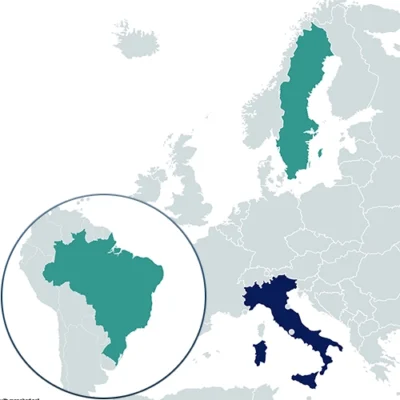
SEAWATCH will involve a large community of researchers and especially fishermen in three countries (Italy, Sweden and Brazil), who will collect eDNA samples and lead the mapping of marine biodiversity. Stakeholders will play an active role in both planning and sample collection through the identification of fishing areas, as well as in the analysis of the results, which will be shared with the main management bodies of the respective areas (ICES, MEDAC, Ministries). Through this shared path we will be able to standardise the methodology and generate scientific products (biodiversity maps, spatial models of human impact) that can be used for participatory spatial planning and biodiversity protection.