
Restoration and Depopulation Synergies for Nature
Call
Duration
02/03/2026 – 01/03/2029
Total grant
Approx. 1.4 mil. €
More information
Partners of the project
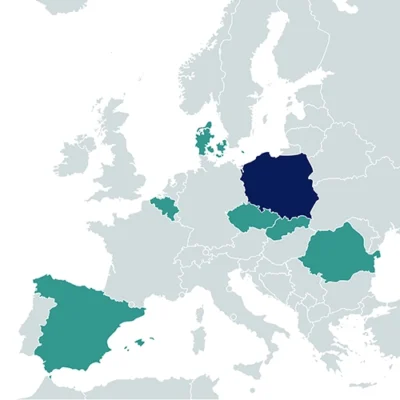
- Institute of Geography and Spatial Management, Jagiellonian University in Krakow, Krakow, Poland
- Department Earth and Environmental Sciences, KU Leuven, Leuven, Belgium
- Department of Biology, Aarhus University, Aarhus, Denmark
- Department of Conservation Biology and Global Change, Doñana Biological Station, Spanish National Research Council, Sevilla, Spain
- Department of Geoinformatics, Institute of Geography, Slovak Academy of Sciences, Bratislava, Slovakia
- Research and Development Institute for Wildlife and Mountain Resources, Miercurea Ciuc, Romania
- Department of Landscape Water Conservation, Faculty of Civil Engineering, Czech Technical University in Prague, Prague, Czech Republic
Context
The ongoing climate and biodiversity crises suggest that simply protecting species or ecosystems is insufficient and broader ecosystem restoration is needed. We hypothesise that depopulation, which is reshaping socio-ecological systems in rural Europe and driving fundamental changes to ecosystems, has the potential to be a key element in the transformative change needed to safeguard biodiversity and support climate change mitigation. At the same time, it reduces the demand for ecosystem services, offering new opportunities for nature restoration.
Main objectives
This project aims to deliver interdisciplinary insights into how past, present, and future depopulation processes across Europe affect biodiversity. Despite policies addressing climate and biodiversity decline, the human demographic dimension – especially depopulation – remains underexplored. We seek to understand how depopulation and land-use dynamics influence EU conservation targets and how these forces could support biodiversity restoration. Our research will identify recent depopulation trends in relation to land use, creating spatial insights for future restoration strategies. We will examine how past depopulation influenced biodiversity across Europe, analyse the link between current depopulation and land use, and identify effective restoration approaches. Future scenarios will assess potential demographic shifts and ecosystem changes to guide biodiversity restoration efforts.
Main activities
Key questions include:
- How can depopulation facilitate the EU Biodiversity Strategy 2030?
- Which areas stand to benefit from these demographic trends?
- What insights from past depopulation can aid in biodiversity recovery?
- What social challenges are associated with restoration in depopulating areas?
- How will future depopulation shape restoration efforts amid evolving ecosystems and climate challenges?
We hypothesise that a regional, archetypal approach to restoration, accounting for unique demographic and land-use characteristics, could enhance biodiversity outcomes while mitigating climate-related risks like water scarcity and wildfires. We plan to disseminate our project results in formats tailored to different target groups including stakeholders at the European, national and regional levels. Apart from scientific publications and research data, the project results will also be presented in accessible formats such as lay summaries and policy briefs, which will be published on the project website and distributed electronically to relevant practitioners.