
Fostering Systemic Societal Transformation for Biodiversity Conservation through Nature Reconnection
Call
Duration
02/02/2026 – 01/02/2029
Total grant
Approx. 804 thsd. €
More information
Partners of the project
- Department of Spatial Planning and Environmental Sciences, Faculty of Geodesy and Cartography, Warsaw University of Technology, Warsaw, Poland
- Institute of Ethnology and Cultural Anthropology, University of Warsaw, Warsaw, Poland
- Department of Geomatics, Forest Research Institute, Sękocin Stary, Poland
- Department of Landscape, Spatial and Infrastructure Sciences, Institute of Landscape Development, Recreation and Conservation Planning, University of Natural Resources and Life Sciences Vienna, Vienna, Austria
- Faculty Environment Design Therapy, Hochschule für Wirtschaft und Umwelt, Nürtingen, Germany
- Wegener Center for Climate and Global Change, University of Graz, Graz, Austria
- Stichting LE:NOTRE Institute, Wageningen, The Netherlands
Context
Biodiversity loss in urban and peri-urban regions is accelerating due to urbanisation, intensive recreation, climate change and fragmented governance. At the same time, cities concentrate populations whose everyday relationships with nature strongly influence environmental awareness, behaviour, and political support for conservation. Strengthening human-nature relationships, therefore, represents a key leverage point for transformative change.
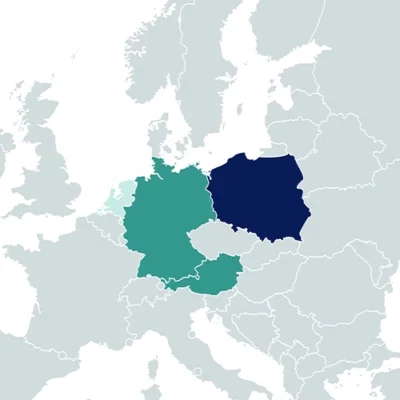
RECON addresses this challenge by positioning nature reconnection (through exposure, experience, learning, and advocacy) as a driver of systemic societal transformation for biodiversity conservation. The project aligns with the Kunming-Montreal Global Biodiversity Framework (Targets 12 and 19), the EU Biodiversity Strategy, the Nature Restoration Law, and the European Green Deal. It focuses on three urban functional areas in Central Europe (Warsaw, Vienna, Stuttgart), which face high development pressure and recreational demand, but also offer strong potential for policy-relevant learning and transfer.
Main objectives
The overall objective of RECON is to foster biodiversity conservation through systemic societal transformation driven by nature reconnection. This objective is pursued through three specific goals:
- to conceptualise and operationalise nature reconnection advocacy and improve understanding of socio-ecological systems in urban functional areas;
- to develop the Societal Transformation Laboratory for Nature Reconnection Advocacy (STLNRA) as a participatory and place-based methodological framework;
- to test and evaluate the STLNRA in real-life case studies, producing transferable knowledge, tools, and policy-relevant outputs.
Main activities
Scientific and analytical activities: RECON applies a mixed-methods, multi-case study approach combining social surveys, Public Participation GIS, spatial analysis of green infrastructure and ecosystem services, and qualitative methods like stakeholder mapping, ethnography and policy discourse analysis. These activities provide an integrated understanding of drivers, barriers and opportunities for biodiversity-positive transformation in metropolitan regions.
Development of transformative methods and tools: Based on this evidence, RECON develops and implements the STLNRA, grounded in Theory of Change, systemic design, and participatory action research. Core outputs include a strategy toolkit with co-creation methods, a portfolio of capacity-building activities and micro-credentials (e.g., Nature Reconnection Advocate or Steward), and monitoring tools supporting adaptability and scalability.
Stakeholder engagement, dissemination, and impact: Stakeholders (local and regional authorities, natural resource managers, NGOs, businesses, and citizens) are engaged throughout all project phases. Local Societal Transformation Laboratories enable co-creation of concrete outputs such as sustainable tourism and recreation strategies, integrated landscape management plans, and solutions to conservation-recreation conflicts.
Dissemination and knowledge transfer are ensured through an open-access learning portfolio, scientific publications, policy briefs, webinars and multiplier events. RECON is expected to strengthen multilevel governance, enhance citizen participation, improve land-use conflict management, and build lasting capacities for nature-positive planning and biodiversity conservation in Europe.