

Understanding and Shifting Power in Biodiversity Conservation by Integrating Insights from Social Change Movements
Call
Duration
01/04/2026 – 31/03/2029
Total grant
Approx. 1.1 mil. €
More information
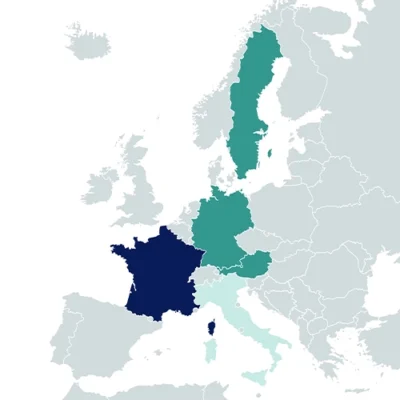
Partners of the project
- UMR Agroecology, National Research Institute for Agriculture, Food and the Environment, Dijon, France
- Institute of Applied Ecology, Rome, Italy
- Geography Department, Humboldt University, Berlin, Germany
- Faculty of Life Sciences, Department of Botany and Biodiversity Research, University of Vienna, Vienna, Austria
- Stockholm Resilience Centre, Stockholm University, Stockholm, Sweden
Context
Despite ambitious global commitments to halt biodiversity loss, conservation efforts often struggle to deliver equitable and lasting outcomes. Many initiatives focus on ecological solutions while overlooking the power dynamics that shape decision-making, resource access, and whose knowledge is valued. As a result, conservation actions can reinforce inequalities, marginalise local and Indigenous actors, and remain fragmented across scales.
POWERSHIFT addresses this challenge by placing power and collective action at the centre of biodiversity conservation. The project examines how power operates within and across conservation initiatives, and how greater power awareness can help conservation actors move from isolated efforts towards a more cohesive, inclusive, and transformative movement.
Main objectives
POWERSHIFT aims to improve biodiversity governance by understanding and shifting power relations in conservation. Its main objectives are to:
- analyse how power dynamics shape conservation practices and outcomes across contexts and scales;
- strengthen strategic alignment among conservation actors through participatory futures and scenario-building;
- support reflexive and learning-oriented conservation practices by addressing positionality and assumptions;
- translate power-sensitive insights into policy and practice through engagement with policymakers, conservation networks, and social movements.
Main activities
POWERSHIFT works across local, national, and international levels and combines social science, ecology, and participatory approaches to generate actionable, power-sensitive knowledge. Key activities include:
- comparative case studies of conservation initiatives dealing with human-wildlife conflicts in Europe, Africa, and Central Asia, involving local communities, NGOs, practitioners, and authorities;
- interviews and surveys with conservation practitioners, initiative leaders, and network coordinators to examine how power dynamics influence collaboration and effectiveness;
- participatory workshops where conservation actors map power relations, explore future scenarios, and align strategies for transformative change, supporting knowledge co-production and collective learning;
- action-learning and reflective processes that help conservation actors adapt practices and build capacity to address power imbalances;
- structured dialogues with policymakers and cross-sectoral actors to co-develop power-sensitive policy recommendations;
- exchanges with broader social and environmental movements to strengthen alliances beyond the conservation sector.
Project results are shared through policy briefs, practitioner-oriented tools, stakeholder meetings, and open-access publications, supporting more inclusive and effective biodiversity conservation.