

Invasion Syndromes: transforming the understanding and management of biological invasions
Call
Duration
01/03/2026 – 28/02/2029
Total grant
Approx. 1.2 mil. €
More information
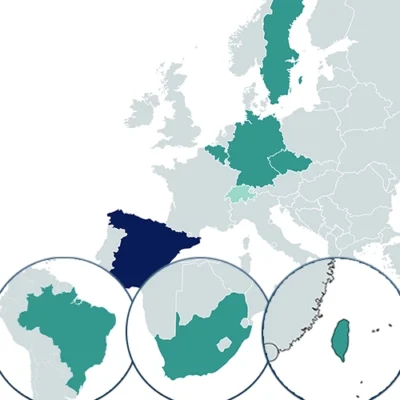
Partners of the project
- Senckenberg Research Institute and Natural History Museum, Frankfurt, Germany
- Department of River Ecology and Conservation, Senckenberg Research Institute, Gelnhausen, Germany
- Department of Biology, University of Duisburg-Essen, Essen, Germany
- Department of Ecology, University of Innsbruck, Innsbruck, Austria
- Department of Ecology and Genetics, Uppsala University, Uppsala, Sweden
- Department of Biological Sciences, University of Bergen, Bergen, Norway
Context
Human activities are moving species around the world at an unprecedented rate. Most introduced species cause no harm, but a small proportion become invasive, spreading rapidly and damaging biodiversity, ecosystems, economies and human well-being. As a result, invasive species are now recognised as one of the main global drivers of biodiversity loss. Managing biological invasions is a major societal challenge, yet predicting which species will become invasive, and where, remains extremely difficult. Invasions are highly context-dependent, influenced by species traits, environmental conditions and humans. The InvaSyn project proposes a new approach to managing biological invasions based on identifying recurring ‘invasion syndromes’. By integrating ecological, social and economic information at a global scale, the project aims to develop practical, evidence-based strategies to support more effective responses to biological invasions.
Main objectives
- Group invasion events into shared ‘invasion syndromes’ based on similar causes, impacts and management needs.
- Collaborate with policymakers, managers, NGOs and local communities to improve invasive species policies and management.
Main activities
- Build a comprehensive global database on plant invasions, integrating ecological, social and economic information.
- Use machine learning to identify patterns and classify invasion events into distinct invasion syndromes.
- Hold workshops with policymakers, practitioners and communities to validate results and incorporate practical knowledge.
- Evaluate how the invasion syndromes approach can be incorporated into existing policies.
- Design tailored management options for each identified invasion syndrome.
- Share data and tools openly and communicate results through scientific and outreach activities.
By shifting the focus from individual invasions to broader invasion contexts, InvaSyn will help:
- make invasive species management more efficient and cost-effective;
- improve cooperation between scientists, policymakers and practitioners;
- enable proactive and effective responses to biological invasions.