
From knowledge to action: Empowerment and Training of Floodplain Restoration Managers
Call
Duration
01/04/2026 – 31/03/2029
Total grant
Approx. 1.1 mil. €
More information
Partners of the project
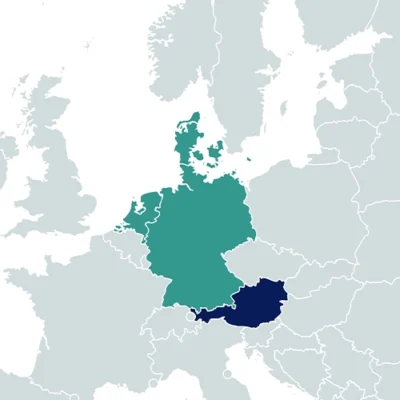
- Department of Ecosystem Management, Climate and Biodiversity, Institute of Hydrobiology and Aquatic Ecosystem Management, BOKU University, Vienna, Austria
- Department of Aquatic Ecology, University of Duisburg-Essen, Essen, Germany
- Water Team, Ecologic Institute GmbH, Berlin, Germany
- Environmental Sciences, Wageningen University & Research, Wageningen, The Netherlands
- WaterITech, WaterITech ApS, Skanderborg, Denmark
Context
FLOODTRAIN advances Europe’s Nature Restoration Regulation (NRR) by translating floodplain science into practical, evidence-based training that accelerates policy-aligned, landscape-scale restoration. By focusing on floodplains – critical for biodiversity, flood retention, drought mitigation, carbon sequestration and ecosystem health – the project targets high-impact societal benefits. It closes the science-practice gap through guidance co-creation with practitioners, land users and local communities.
Based on the MERLIN Academy and web app, interactive tools will support evidence-based planning, financing and monitoring of restoration. Comprehensive meta-analyses synthesise best practices into actionable strategies, improving site selection, methods and success assessment. A training programme for ‘Floodplain Restoration Managers’ builds capacity across authorities and NGOs and supports consistent implementation across regions. The approach enhances compliance with EU policies and enables measurable progress towards NRR targets. Overall, FLOODTRAIN delivers policy relevance, societal impact and durable stakeholder collaboration to accelerate biodiversity recovery and climate resilience.
Main objectives
FLOODTRAIN aims to advance transformative floodplain restoration by transferring knowledge between science and practice and offering a certified curriculum to restoration managers. It will:
- deepen understanding of ecological and functional restoration outcomes by synthesising scientific knowledge across Europe;
- identify how restoration improves ecosystems and services such as flood protection and water quality, and explain how outcomes vary by context;
- translate science into practical guidance bridging researchers and on-the-ground practitioners;
- design and deliver a transformative training programme with digital tools and certification;
- engage stakeholders to minimise conflicts;
- align with EU policies to scale successful approaches;
- enable shared learning across countries.
Main activities
- Establishing and managing a community of practice based on pre-proposal survey responses from consultancies, water boards, NGOs and government agencies. These insights help to refine needs, prioritise module topics, formats, and languages, and identify additional content experts for co-development.
- Conducting a systematic meta-analysis to quantify the effectiveness of floodplain restoration on ecological (biodiversity, hydrology) and economic outcomes. In parallel, developing a case study database to document restoration projects across Europe.
- Synthesising evidence-based data as the basis of the digital learning modules, covering legal background, ecosystem services, prioritisation/site selection, stakeholder partnerships, effect analysis and case studies. The integration of theory into practice is achieved by videos, hands-on exercises and GIS cartography (MERLIN web app).
- Disseminating the course and certification through a targeted outreach to professionals, social media campaigns and practitioner journal publications. First test-runs will be carried out within the established community of practice before being upscaled to the European context.