
Ecological Pilgrimage: Engaging with biodiversity through walking interventions
Call
Duration
02/02/2026 – 01/02/2029
Total grant
Approx. 973 thsd. €
More information
Partners of the project
- Faculty of Social Sciences, University of Lapland, Rovaniemi, Finland
- Natural Resources Institute Finland, Rovaniemi, Finland
- Department of Urban and Rural Development, Swedish University of Agricultural Science, Uppsala, Sweden
- Department of Business Administration, Umeå School of Business, Economics and Statistics, Umeå, Sweden
- Nature and Society Department, Norwegian Institute for Nature Research, Lillehammer, Norway
- Subcontracted partner 5a: National pilgrim centre, Trondheim, Norway
- Philosophy and Archaeology, Faculty of History, University of Iceland, Reykjavik, Iceland
Context
This transdisciplinary project explores how the novel methodology and societal innovation of ‘Ecological Pilgrimage’ can transform the recreational use of hiking trails to meet biodiversity conservation objectives. Departing from historical connotations of colonial expeditions or religious ceremonies, pilgrimage is approached here as a reparative journey that enables meaningful engagement with non-human communities amid existential ecological crises. The project brings together diverse knowledge systems to generate insights on how biodiversity and human activities can coexist in reciprocal and regenerative ways. This ambition is guided by sustainability scientists who view biodiversity loss as a symptom of a profound relational crisis and highlight human-nature connectedness as key to sustainability transformations at individual and societal levels. The project draws theoretical and methodological guidance from ‘ecological reparation’ as a bottom-up, relational approach that seeks to mend damaged ecologies and bridge the nature-culture divide. The notion highlights transversal experimentation and the reinvention of lost knowledge, skills, and practices of repair.
Main objectives
The project’s scientific objective is to develop and cultivate reparative practices that can transform human-nature relations and safeguard biodiversity in recreational settings. This objective is divided into three research questions: What can ‘Ecological Pilgrimage’ do as a methodological innovation? How can various stakeholders engage in reparative practices through walking interventions? How can ‘Ecological Pilgrimage’ be cultivated as an innovation for societal change?
Main activities
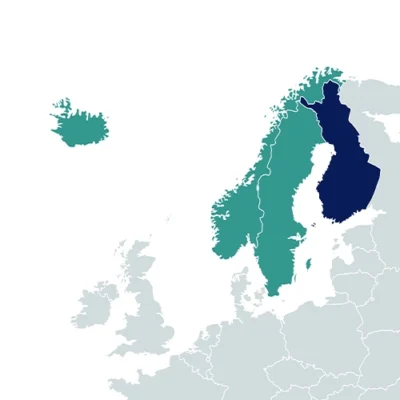
The project focuses on situated biodiversity issues along four hiking trails in Norway, Iceland, Finland, and Sweden, within landscapes shaped by industrial, conservation, and recreational activities. The walking interventions are designed to enable transnational learning among project partners, knowledge brokers, local guardians of ecological relations, hikers, outdoor and tourism associations, and representatives from municipalities and regional councils. By exploring how ‘Ecological Pilgrimage’ can contribute to the development of Nature-based Solutions and healthy ecosystems, the project expands the potential of outdoor recreation and tourism development, informs tourism strategies, and supports the Biodiversity Strategy 2030 to restore nature across Europe.