
Enabling Transformative Actions to Leverage Sustainability of Eurasian Grasslands
Call
Duration
01/02/2026 – 31/01/2029
Total grant
Approx. 2.2 mil. €
More information
https://boku.ac.at/lawi/ilap/projekte
Partners of the project
- Department of Landscape, Water and Infrastructure, Institute of Landscape Planning, BOKU University, Vienna, Austria
- Life Sciences and Facility Management, Institute of Natural Resource Sciences, Zurich University of Applied Sciences, Wädenswil, Switzerland
- Department of Environmental Science, Aarhus University, Aarhus, Denmark
- Department of Social Anthropology and Cultural Studies, University of Zurich, Zurich, Switzerland
- Institute of Ecology and Botany, HUN-REN Centre for Ecological Research, Budapest, Hungary
- Institute of Landscape Ecology, Biodiversity and Ecosystem Research Group, University of Münster, Münster, Germany
- Graduate School of Public Policy, Nazarbayev University, Astana, Kazakhstan
Context
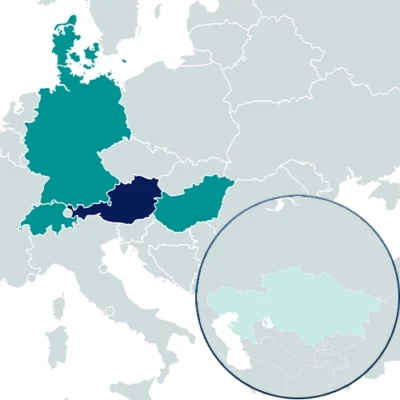
Grasslands are among the largest terrestrial ecosystems, yet are highly threatened due to long-term transformations such as fragmentation, degradation, and land-use change across Eurasia. Addressing biodiversity loss in these systems requires understanding and leveraging the roles of institutions, social norms, and plural biodiversity values that underpin human-nature relationships and shape governance outcomes. ActSustainably investigates how these deep leverage points can impact societal sustainability transformations by aligning formal and informal rules with collective actions for sustainable grassland use across Austria, South Tyrol, Denmark, Hungary, and Kazakhstan. The project’s relevance lies in providing actionable knowledge for policy and practice to prevent biodiversity loss and improve governance effectiveness across diverse socio-economic and geopolitical contexts. It advances an integrative approach to identify values, institutions and technologies that enable biodiversity-positive transformations, linking institutional regimes, social norms, and plural values to the sustainability of grassland socio-ecological systems.
Main objectives
- Diagnose patterns, drivers, and implications of past, current, and future grassland transformations for biodiversity across environmental and socio-economic gradients in Eurasia.
- Evaluate historical and contemporary rules of access, actor coalitions, and institutional regimes and identify informal rules and institutional complementarities critical for sustainable resource governance.
- Elicit and analyse plural biodiversity values, social norms, and usage regimes within local communities to understand leverage points for sustainability transformations.
- Co-develop with actors cooperative rules, actionable future scenarios, and pathways for integrating informal institutions into formal governance and policy instruments to enable collective action to restore biodiversity or reduce biodiversity loss.
Main activities
- Map grassland dynamics, associated land uses, and their impacts on biodiversity and ecosystem services, including scenario-based projections of biodiversity under alternative futures.
- Develop an Institutional Resource Regimes (IRR) conceptual model; conduct structured actor mapping; analyse institutional complexity.
- Investigate historical and contemporary rules of access; assess complementarities and conflicts between formal and informal institutions; and analyse social and cultural values, traditional ecological knowledge related to grassland, land-use practices and biodiversity.
- Implement continuous science-society interactions, using co-creative workshops, futuring and scenario processes, but also continuous feedback loops to integrate diverse knowledge systems and avoid extractive interactions, ensuring mutual learning and local impacts.
- Generate actionable, co-produced knowledge that can be integrated into policy instruments and local practices across diverse settings, improving the sustainability of grassland socio-ecological systems.