“Strategic Research & Innovation Agenda – 2026 Update”
Published: September 2026 | DOI: 10.5281/zenodo.23593524
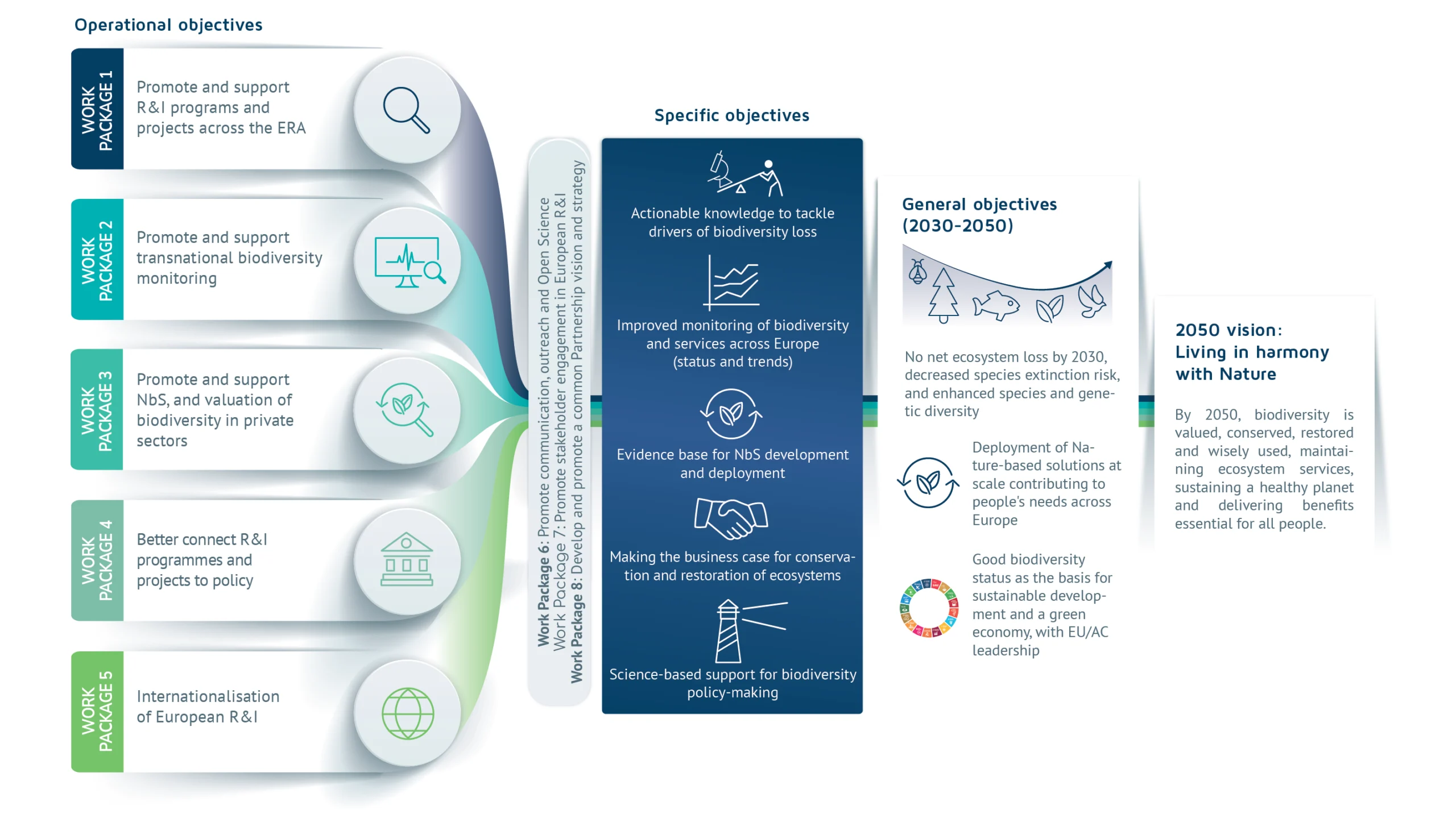
Halting and reversing biodiversity loss requires knowledge of how nature is changing, which measures are effective, and how they can be implemented. This, in turn, calls for coordinated research and innovation that connect scientific knowledge with the needs of policymakers, practitioners, businesses and society. The updated Biodiversa+ Strategic Research and Innovation Agenda (SRIA) provides this shared framework, setting out the priorities guiding Biodiversa+’s action. In doing so, it supports the implementation of the EU Biodiversity Strategy for 2030 and contributes to the global vision of living in harmony with nature by 2050.
Building on the 2021 edition, this update draws on mapping and foresight activities, input from Biodiversa+’s governance boards, and consultations with partners and the European Commission. It reflects developments in science and policy, including recent IPBES assessments, the Kunming-Montreal Global Biodiversity Framework and the EU Nature Restoration Regulation. The agenda also highlights the interconnections between biodiversity, climate, water, food and health, and addresses the risks that biodiversity loss poses to societies, economies, and human well-being.
Research priorities
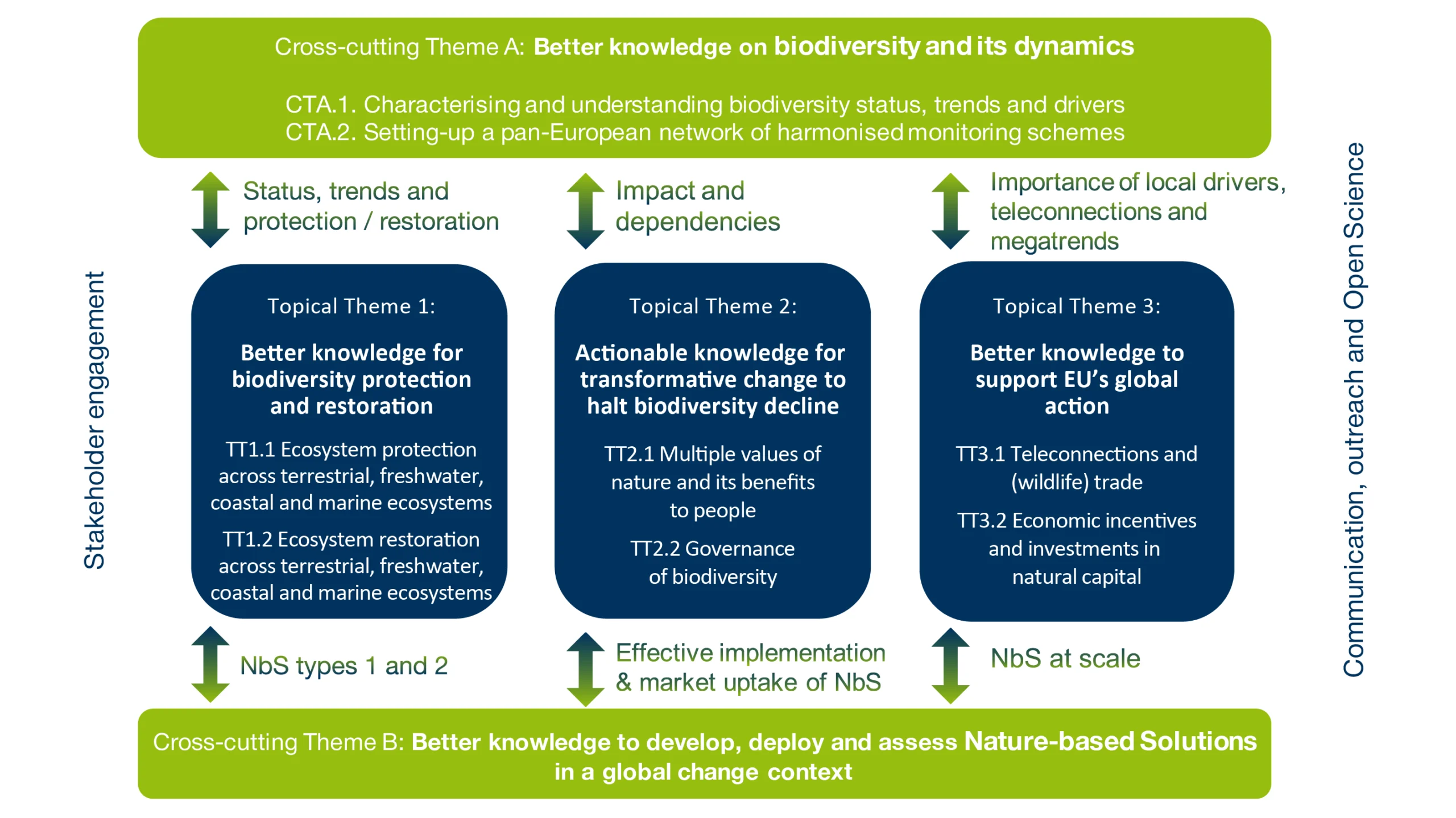
The agenda covers terrestrial, freshwater, coastal and marine environments, identifying knowledge needs across five themes:
- Biodiversity protection and restoration: improving understanding of how to protect and restore biodiversity, from genetic diversity to ecosystems, and assess the effectiveness of conservation and restoration measures.
- Transformative change: exploring how values, governance and changes in social and economic systems can help address the underlying causes of biodiversity loss.
- The EU’s global action: understanding how trade, consumption and other connections between regions affect biodiversity, and how economic incentives and investment can support its conservation and sustainable use.
- Biodiversity and its dynamics: strengthening knowledge of biodiversity status, trends and drivers of change, and developing a transnational network of harmonised monitoring schemes.
- Nature-based Solutions: improving the evidence needed to develop, deploy and assess solutions that address societal challenges while benefiting biodiversity.
For each theme, the SRIA outlines key knowledge needs, expected impacts and connections with other priorities.
From priorities to activities
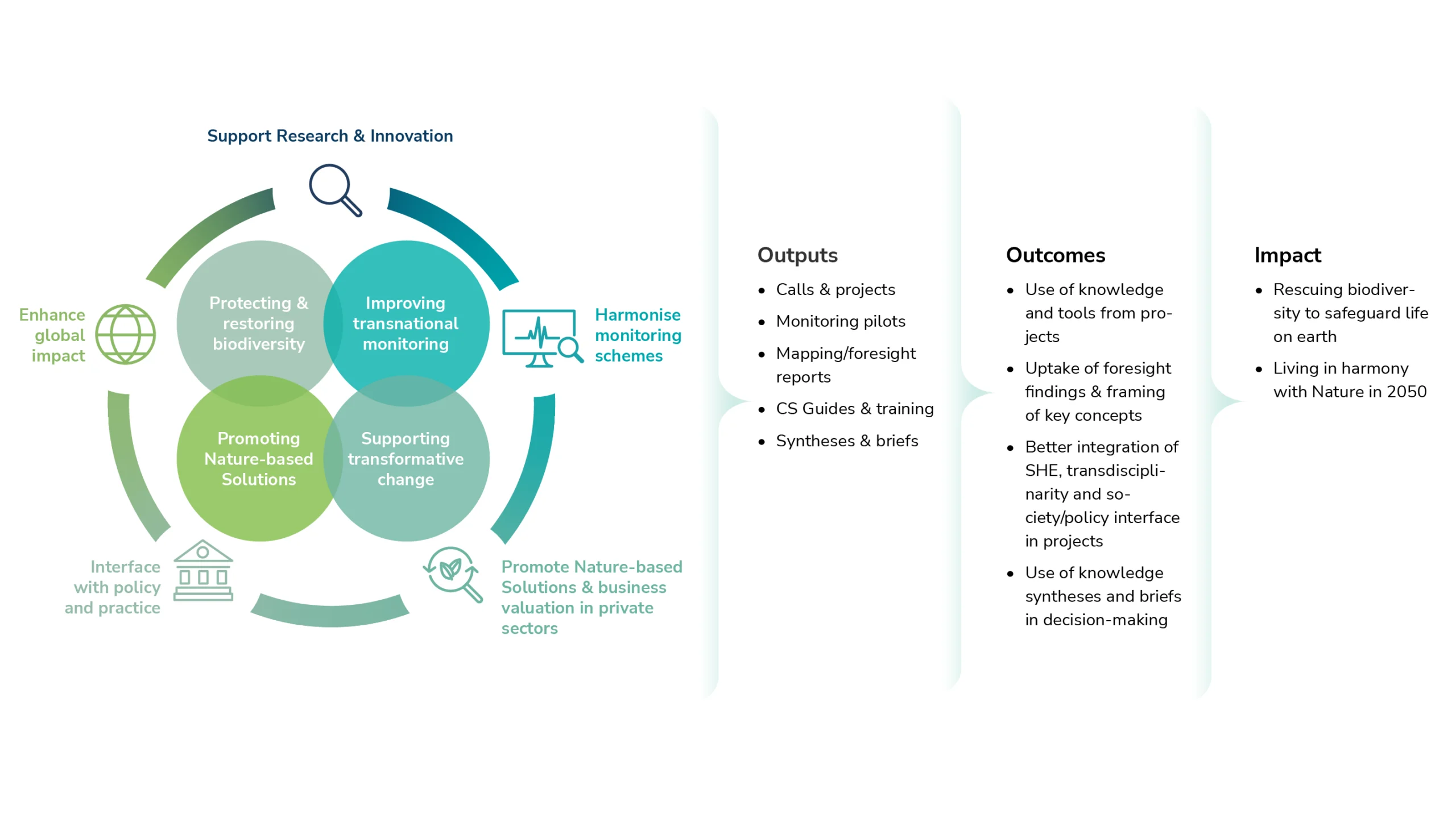
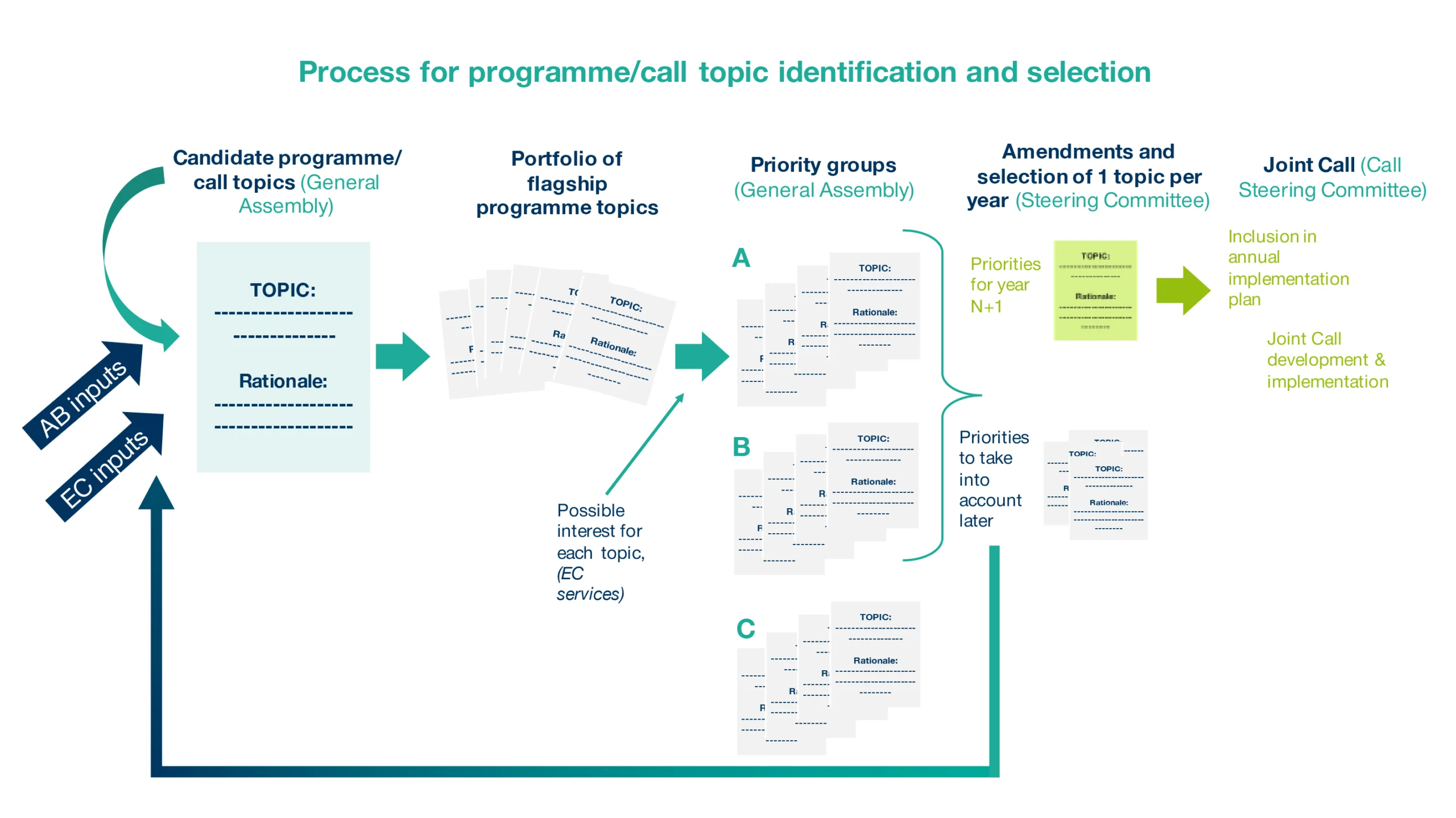
The SRIA guides Biodiversa+’s activities beyond research funding. Its implementation brings together joint research calls, monitoring activities, knowledge synthesis, capacity building and support for policy and practice. Flagship programmes structure these efforts around key topics over multiple years, while Annual Work Plans translate strategic priorities into specific activities
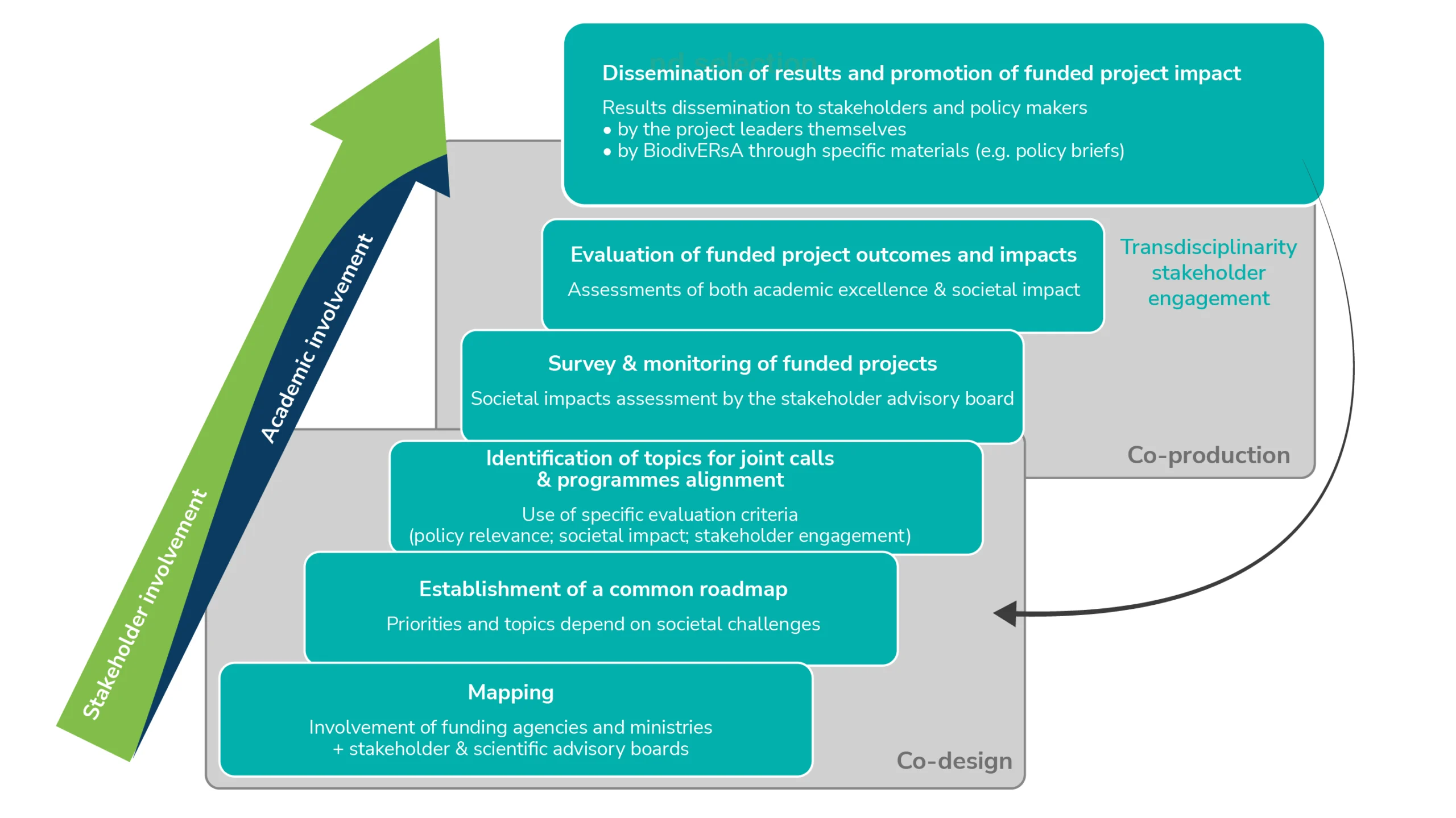
Stakeholder engagement, communication and open science run through the agenda. Biodiversa+ promotes collaboration between researchers and those who influence, use or are affected by research, from defining priorities to applying knowledge. It also fosters cooperation with European partnerships, Horizon Europe missions and international initiatives, helping connect expertise and coordinate efforts across sectors and countries. More broadly, the agenda supports strengthening links between natural sciences, social sciences and humanities, knowledge co-production, and the accessibility and reusability of research outputs and biodiversity data.