“Communication handbook: Practical guidance for Biodiversa+ funded researchers”
Published: April 2026
Communication matters, but it should not become another full-time job. This handbook is a flexible toolkit to help you communicate your research more purposefully and realistically.
Short on time? You do not need a full communication strategy to start well. Focus on these five essentials.
- Start with the change. Before deciding to make a video, write a post or organise an event, ask yourself: What do I want to be different because this research exists? Who can influence that change? What is realistic at this stage of the project? Go deeper in chapter 2 “Setting communication objectives”.
- Pick one audience. “The public” is not an audience. Neither are “stakeholders” in general. For each communication activity, ask yourself: Who most needs this now? What do they already know or assume? What matters to them in practice? What would count as a useful response? Go deeper in chapter 4 “Knowing your audience”.
- Get the message clear. Before drafting anything, ask yourself: Why should this matter to this audience? What is the one thing I want them to remember? What, if anything, do I want them to do next? Go deeper in chapter 5 “Crafting your message”.
- Choose the channel that fits their reality. Relevance, not visibility, is the goal. Ask yourself: Where does this audience already pay attention? What format fits their role, habits and available time? What can we realistically maintain? Go deeper in chapter 7 “Choosing channels and formats”.
- Don’t do it alone. You are not expected to become a one-person communications department. Ask yourself: Have I involved my institution’s communication or press team? Is there someone who can give me quick, honest feedback? Could Biodiversa+ or another partner help amplify this? Is it clear who drafts, reviews, approves and shares? Go deeper in chapter 3 “Building your support system”.
Not sure where to look? Start with the question closest to what you need.
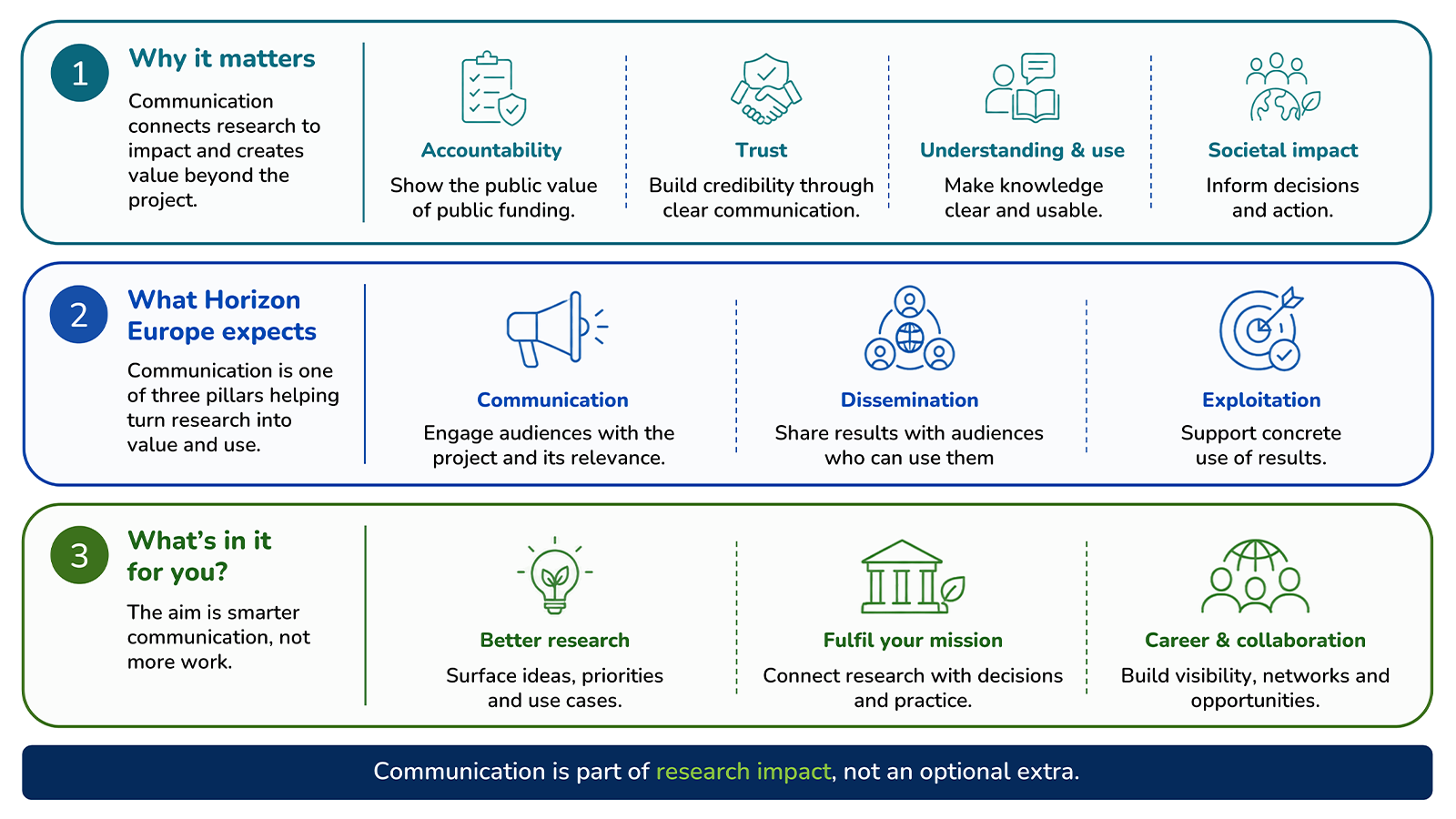
Ch.1: Why should I spend time on communication?
See how communication can support your research, impact and career, and what Horizon Europe expects.
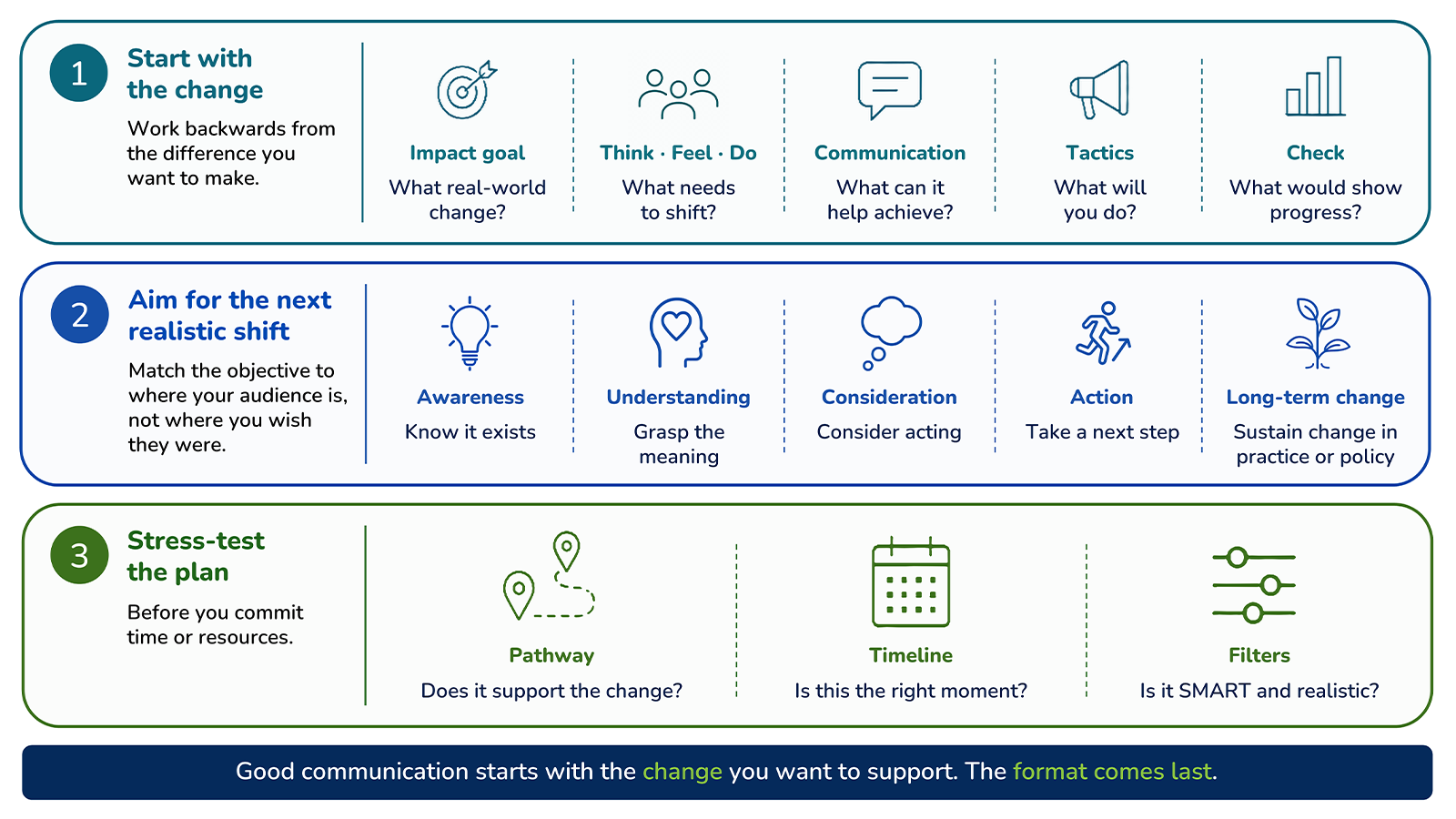
Ch.2: What could I actually be trying to achieve?
Start with the change you want to support, then identify what communication can realistically contribute.
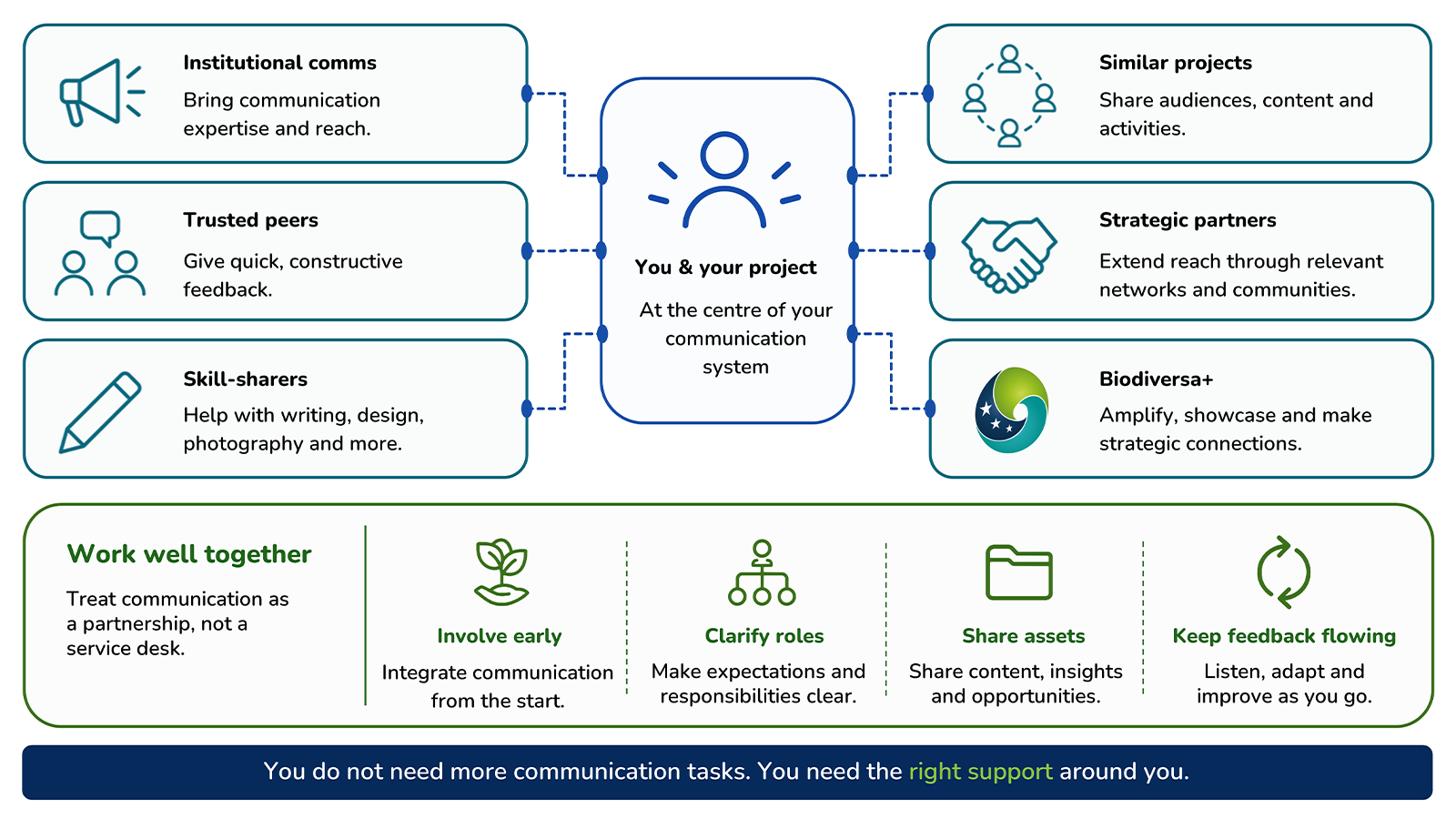
Ch.3: Who can help you?
Build a support system around trusted colleagues, communication teams, partners and Biodiversa+.
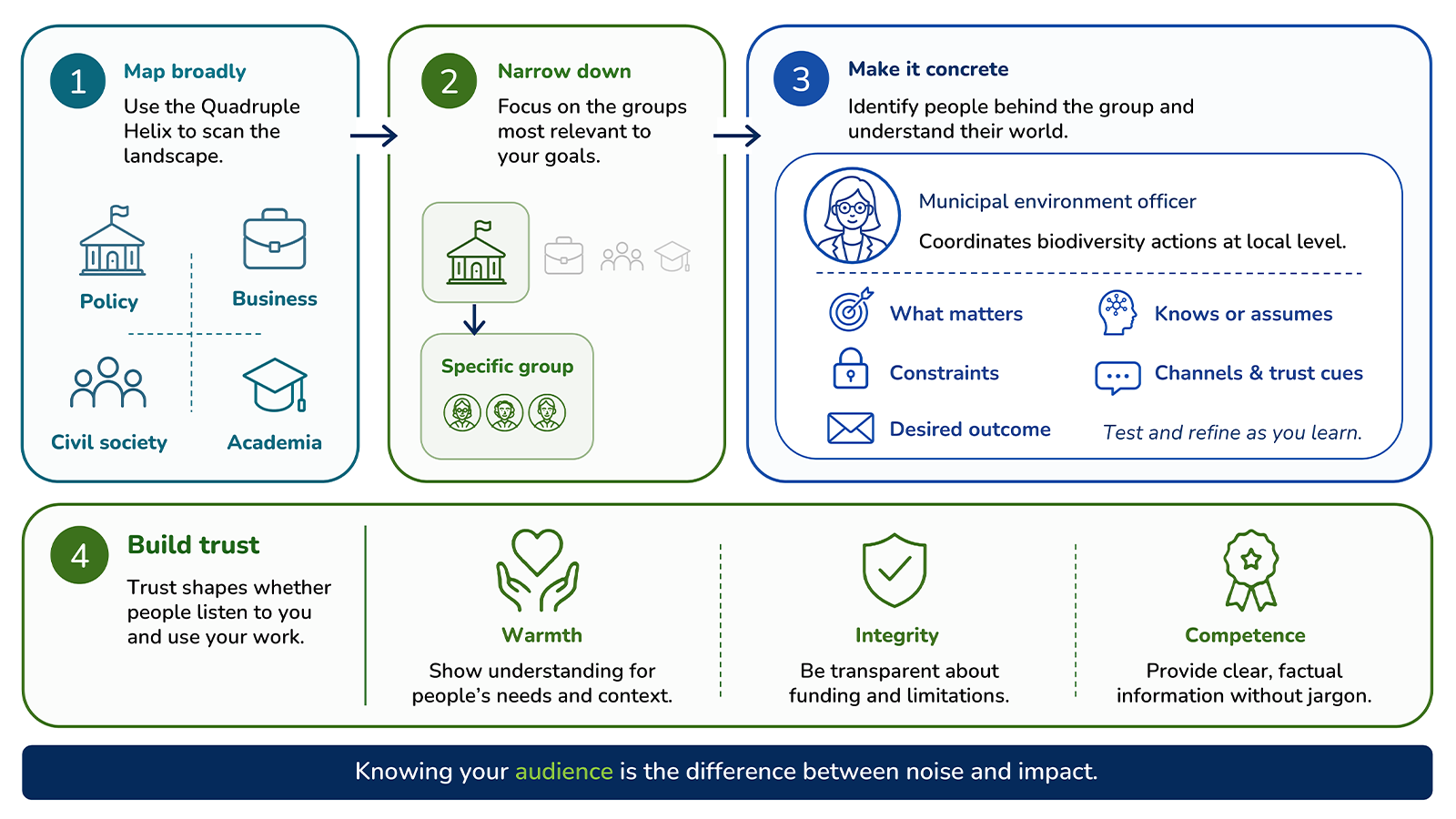
Ch.4: Which audiences should I focus on?
Move beyond broad labels and understand who matters, what matters to them and what builds trust.
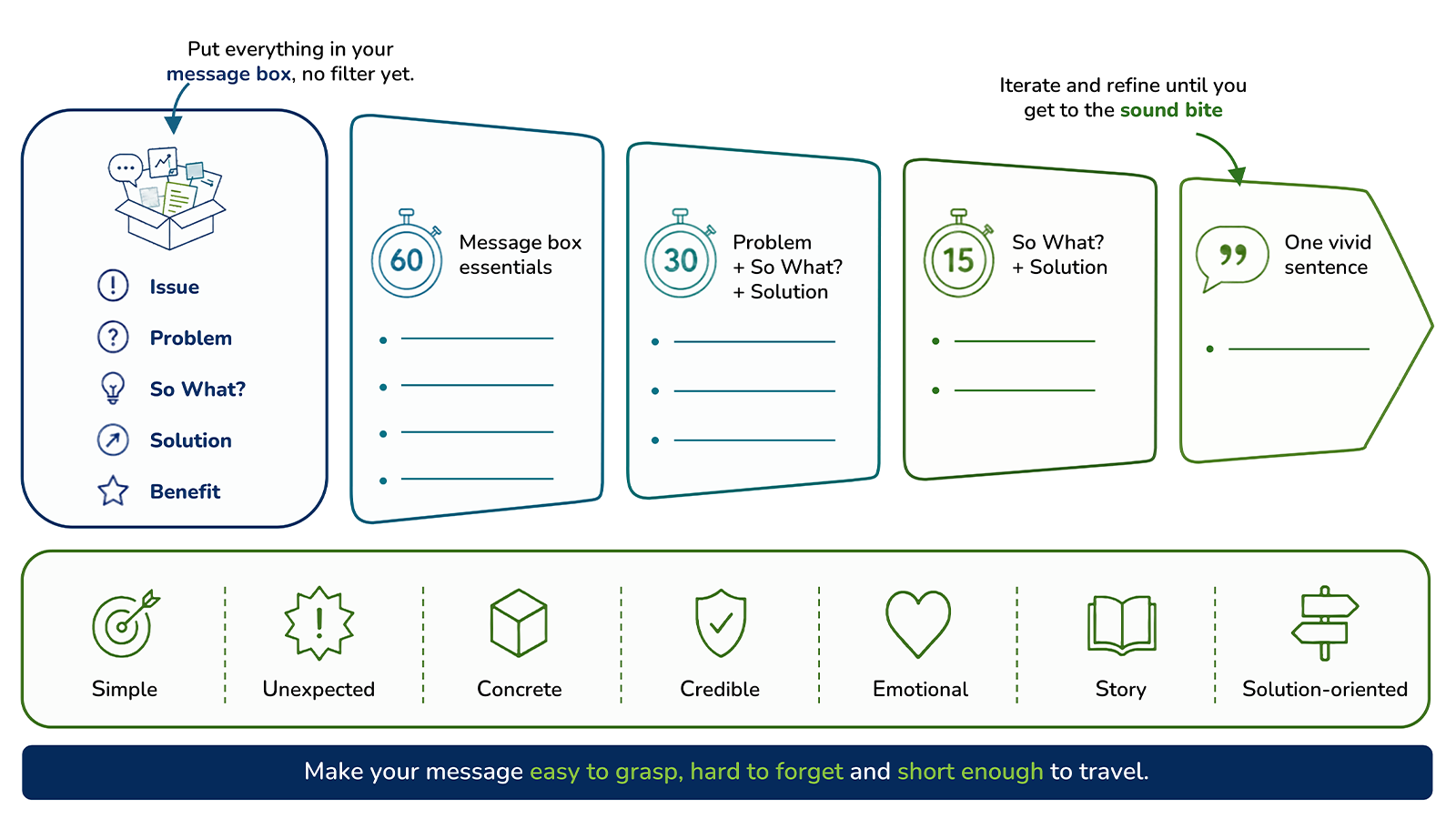
Ch.5: How do I turn my research into a clear message?
Turn complex research into messages that are accurate, clear, memorable and useful.
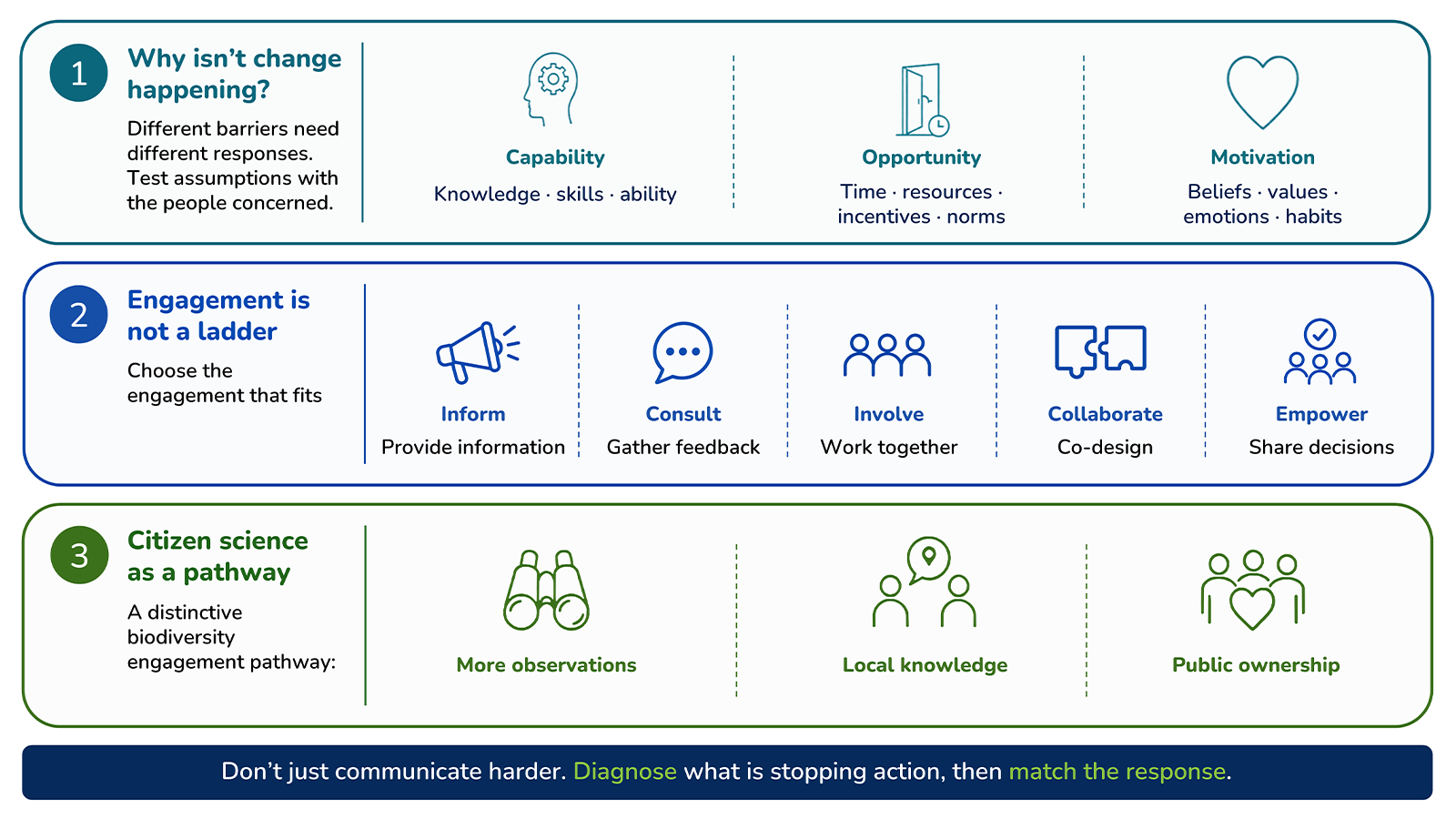
Ch.6: What if information alone isn’t enough?
Diagnose what may be preventing action and choose the right level of communication or engagement.
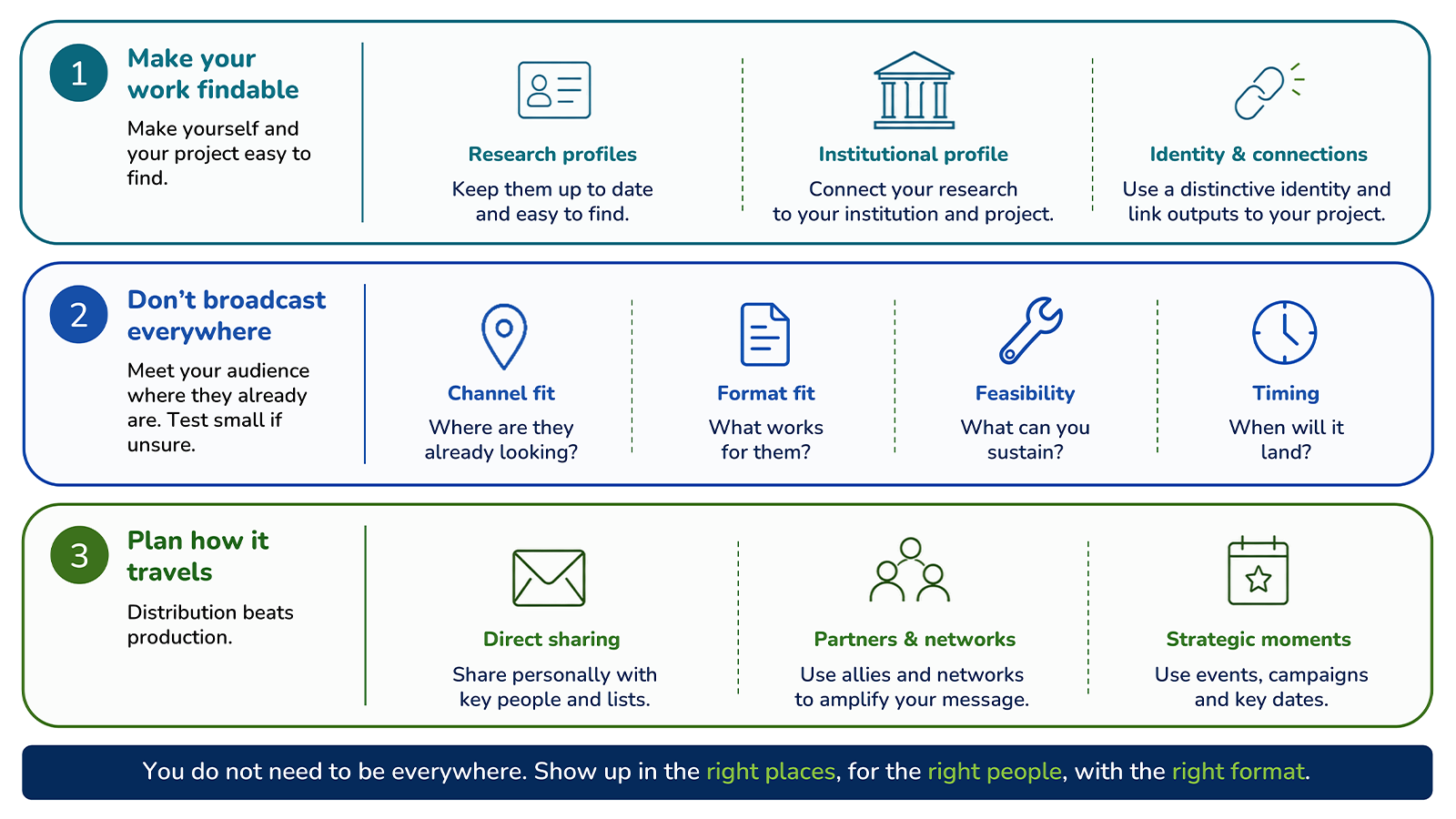
Ch.7: Where and how should I communicate?
Choose channels and formats based on audience fit, feasibility and timing, then plan how your message will travel.
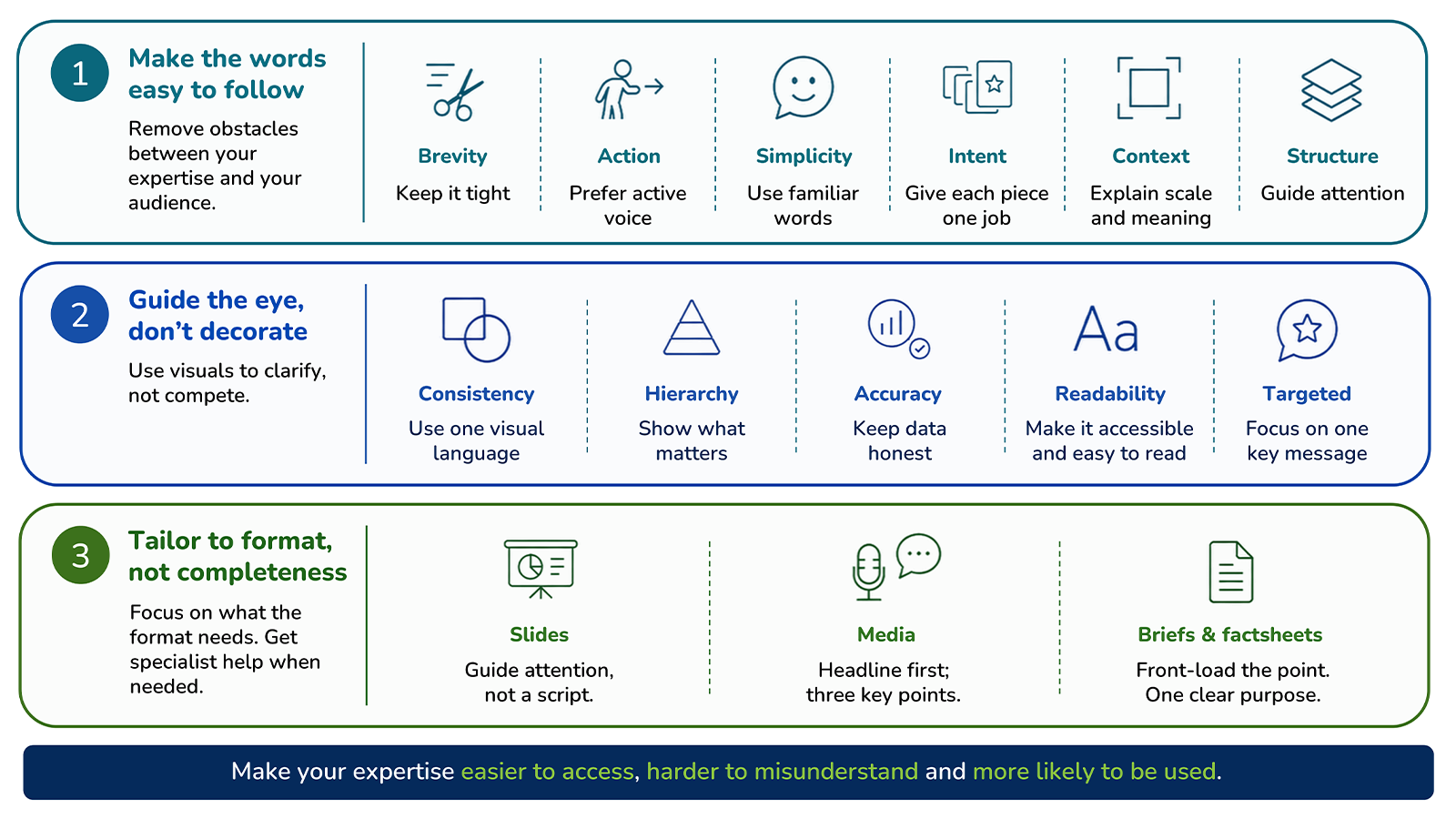
Ch.8: How do I produce something that works?
Improve writing, visuals, presentations and common communication formats without trying to become a professional
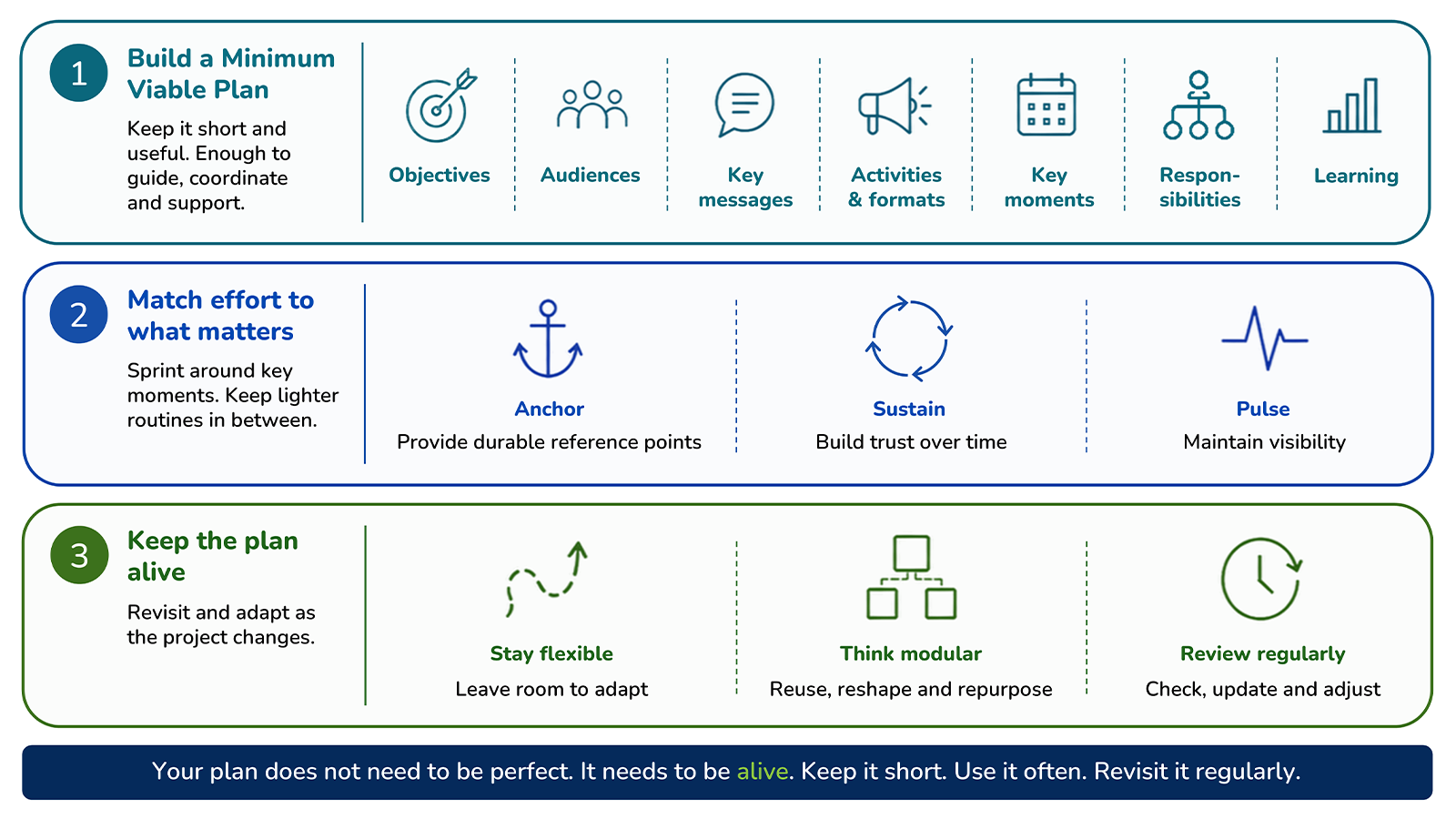
Ch.9: How much planning do I really need?
Build a short, useful plan that helps you prioritise, coordinate and adapt.
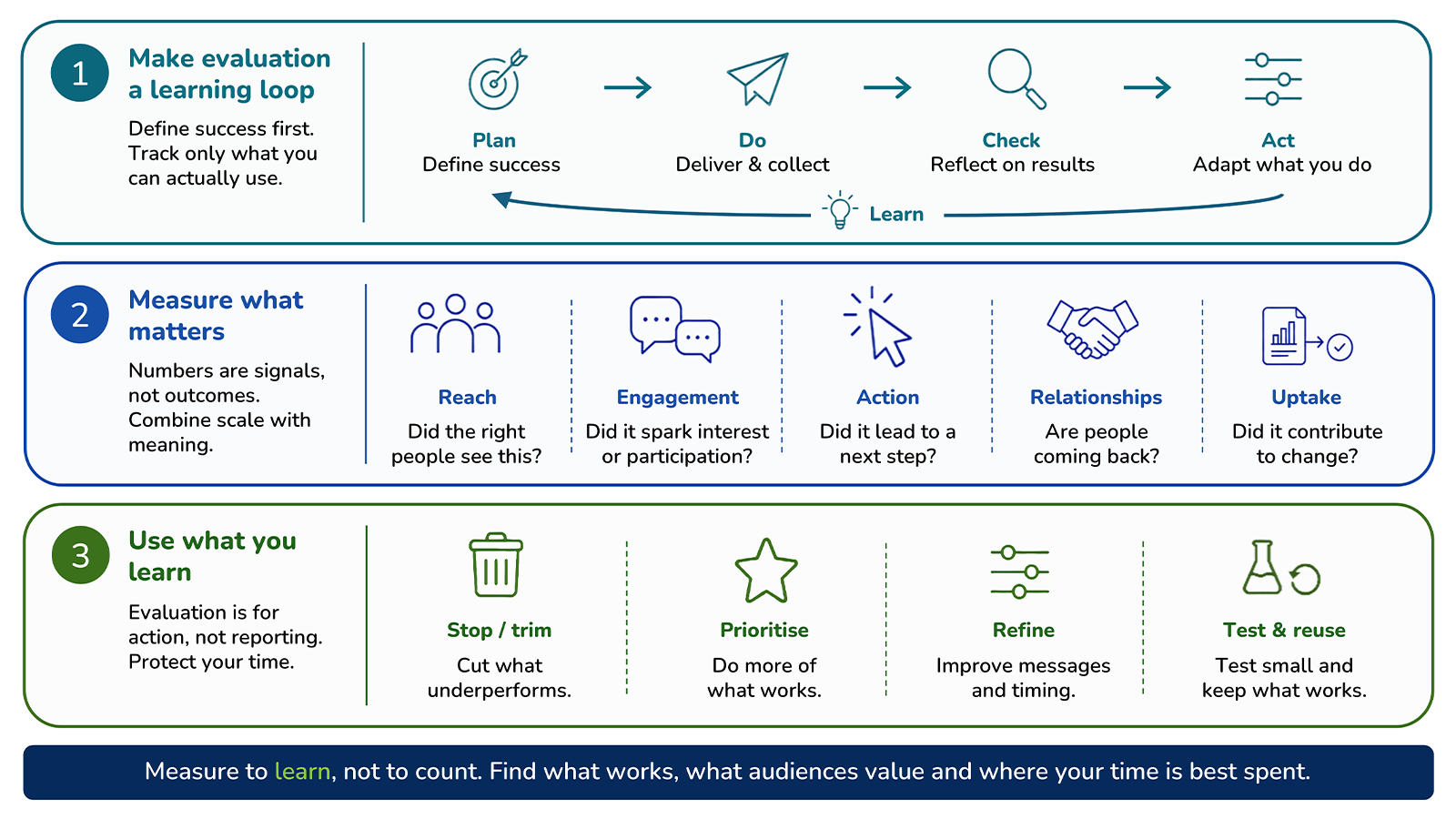
Ch.10: How will I know whether it worked?
Use evaluation to learn, improve what you do and decide where your communication effort is best spent.